English| EUR
Suggested for you
More currencies
Book Now
Open today · 09:00 – 19:00

Pompeii And Vesuvius Tour

Pompeii And Vesuvius Tour — Reserved Entry & Guided Access

Ash held the city still, a volcano keeps its watch.

212K+ travelers chose this
Free Cancellation
Right now: Heavy — summer peak season Arrive at opening for a Pompeii and Vesuvius tour to beat midday heat and tour-bus crowds
6-8 hours recommended
1 Languages
Up to 15 people
Free Cancellation
Free cancellation Instant confirmation Mobile voucher Skip-the-line Verified partner
66 ha
Site size
Ancient city footprint
~2/3
Excavated
Roughly 44 of 66 hectares
1,944 yrs
Buried
79 AD eruption to today
1,281 m
Vesuvius crater
Elevation above sea level
4M+
Annual visitors
To Pompeii archaeological park
Choose your ticket

Ticket options at a glance

Compare fares, pick the fit — all bookings are mobile-voucher and eligible for free cancellation where shown.

Pompeii & Mt. Vesuvius Full-Day Expedition 8 hr
Guided Experience

Pompeii & Mt. Vesuvius Full-Day Expedition

4.7 (4895)
€98
  • Expert local guide
  • Small group
  • Skip-the-line access
  • Free cancellation
Book this ticket
Pompeii & Vesuvius Small-Group Experience with Lunch from Naples 8 hr
Guided Experience

Pompeii & Vesuvius Small-Group Experience with Lunch from Naples

4.7 (2911)
€65
  • Expert local guide
  • Small group
  • Skip-the-line access
  • Free cancellation
Book this ticket
Compare options

Which ticket fits your trip?

A pompeii and vesuvius tour usually starts with one core decision: how much ground you actually want under your feet. Pompeii Express covers only the walled ancient city, Pompeii Plus adds the outlying suburban villas, and a combined day ticket or guided pompeii vesuvius day tour bolts on the volcano crater itself.

Pompeii Express (Ancient city only) Top pick
Pompeii Plus (City + suburban villas)
Pompeii + Vesuvius Combined (City + crater rim)
What's included Main archaeological park entry only Park entry plus separate Vesuvius crater admission
Sites covered Forum, theatres, baths, houses Ancient city plus Vesuvius summit path
Typical duration 2-3 hours Full day, two locations
Best for Short visits, tight schedules Pairing ruins with the volcano that buried them
Vesuvius access ✓ crater-rim path, separate entry point

Is it worth it?

Worth it for most, if you have time

For 20 EUR, the pompeii and vesuvius tour delivers more raw ground per euro than almost any archaeological site in Italy. The park sprawls across roughly 44 hectares of excavated Roman streets, frescoed villas, the Forum, bathhouses, and plaster casts frozen mid-eruption. Add the Vesuvius crater leg and you pair the ruins with the volcano that buried them, which sharpens the whole story. That pairing is why the guided Pompeii ruins tour earns its keep. The math works cleanly for first-timers, history-minded travellers, and anyone spending three hours or more on-site. It works less well if you have half a day, since rushing UNESCO heritage this dense wastes the entry. Those with mobility limits should weigh the uneven basalt paving and Vesuvius's steep gravel path before booking skip-the-line Pompeii tickets. Strong value overall, provided you match your stamina and schedule to the scale.

What makes it worth it

  • Vast 44-hectare site, huge value per euro
  • Volcano leg deepens the eruption story
  • Plaster casts and frescoes seen up close
  • Entry cheap versus comparable European sites
  • Rewards a full unhurried half-day

Keep in mind

  • Uneven ancient paving tough on limited mobility
  • Half-day visits feel rushed and wasteful
  • Midday summer heat and crowds intensify
  • Vesuvius path adds cost and steep effort

Bottom line: Give it real hours and the pompeii and vesuvius tour tickets repay the 20 EUR many times over.

Featured Experiences

Popular tours & activities

Hand-picked experiences loved by thousands of travelers

Recommended Experience

Powered by GetYourGuide

Another traveler favorite

Powered by GetYourGuide
Pompeii & Mount Vesuvius Full-Day Expedition from Sorrento 8.5 - 9 hours Free Cancellation

Pompeii & Mount Vesuvius Full-Day Expedition from Sorrento

Uncover Roman history at Pompeii and take in stunning Gulf of Naples views from the summit of Mount Vesuvius.

4.8 (1815)
FromFrom €96.6
See details
Naples: Pompeii, Mount Vesuvius & Wine Tasting Deluxe Tour 7 - 8 hours Free Cancellation

Naples: Pompeii, Mount Vesuvius & Wine Tasting Deluxe Tour

A premium all-inclusive day trip from Naples covering ancient history, breathtaking volcano hikes, and local volcanic wine.

4.8
FromFrom €170
See details
Pompeii Day Trip from Rome with Optional Vesuvius & Lunch 9 - 12 hours Free Cancellation

Pompeii Day Trip from Rome with Optional Vesuvius & Lunch

Uncover Roman history at Pompeii with an expert guide and optional climbs to the summit of Vesuvius.

4.5 (5523)
FromFrom €69
See details
Your journey

Step-by-step — what your day looks like

1

Porta Marina entry

Enter through the main gate closest to Pompei Scavi station and collect a site map

What you'll see

Highlights not to miss

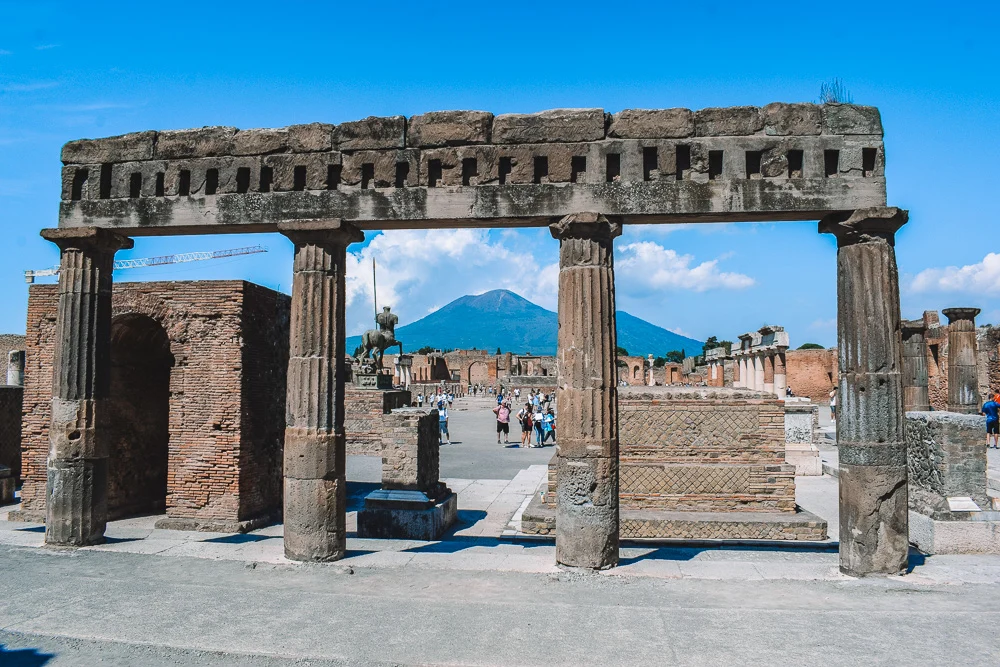
Forum of Pompeii

The civic and religious center of the ancient city, framed by the Temple of Jupiter and flanked by colonnaded porticoes. Excavators found the Forum still lined with pedestal bases for statues that were never recovered after the eruption.

The experience

What the visit is really like

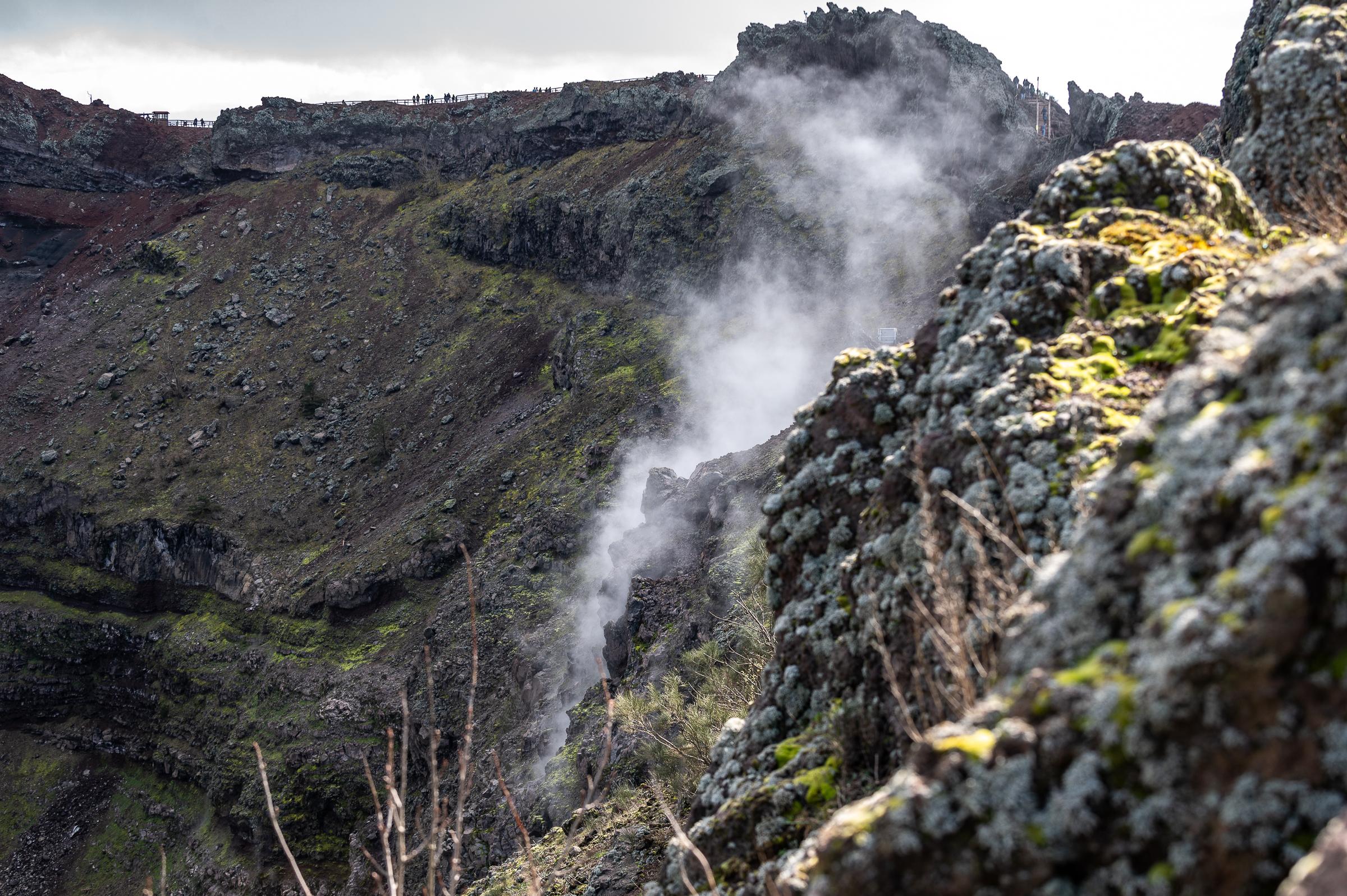
You enter at Porta Marina, the old sea gate, and the modern world drops away behind you as the basalt paving tilts uphill under your feet. Within minutes you reach the Forum, where you pause: the colonnade frames Vesuvius dead ahead, and the scale of what happened here settles in. You walk north along the Via dell'Abbondanza, reading painted slogans still legible on the plaster, tracing the deep grooves cart wheels wore into stone. You step into the House of the Faun, cross its atrium, and stand where the Alexander Mosaic once lay. Further on you duck through a low doorway into the baths and feel how the air cools beneath the vaulting. You linger at the plaster casts, then push west to the Villa of the Mysteries to take in the red fresco cycle at close range. By early afternoon you trade the ruins for the volcano. A shuttle climbs the switchbacks; you finish the last stretch on foot, gravel shifting underfoot, until the crater opens below you and steam threads from the rock. From this height the whole bay lays itself out, and the logic of the pompeii and vesuvius tour becomes plain — the buried city and the mountain that buried it, finally seen together. You descend as the light lengthens, legs tired, the site rearranged in your mind.

Everything You Need to Know

Your complete experience guide

All the details about your upcoming adventure in one place

Exploring the Pompeii and Vesuvius Tour

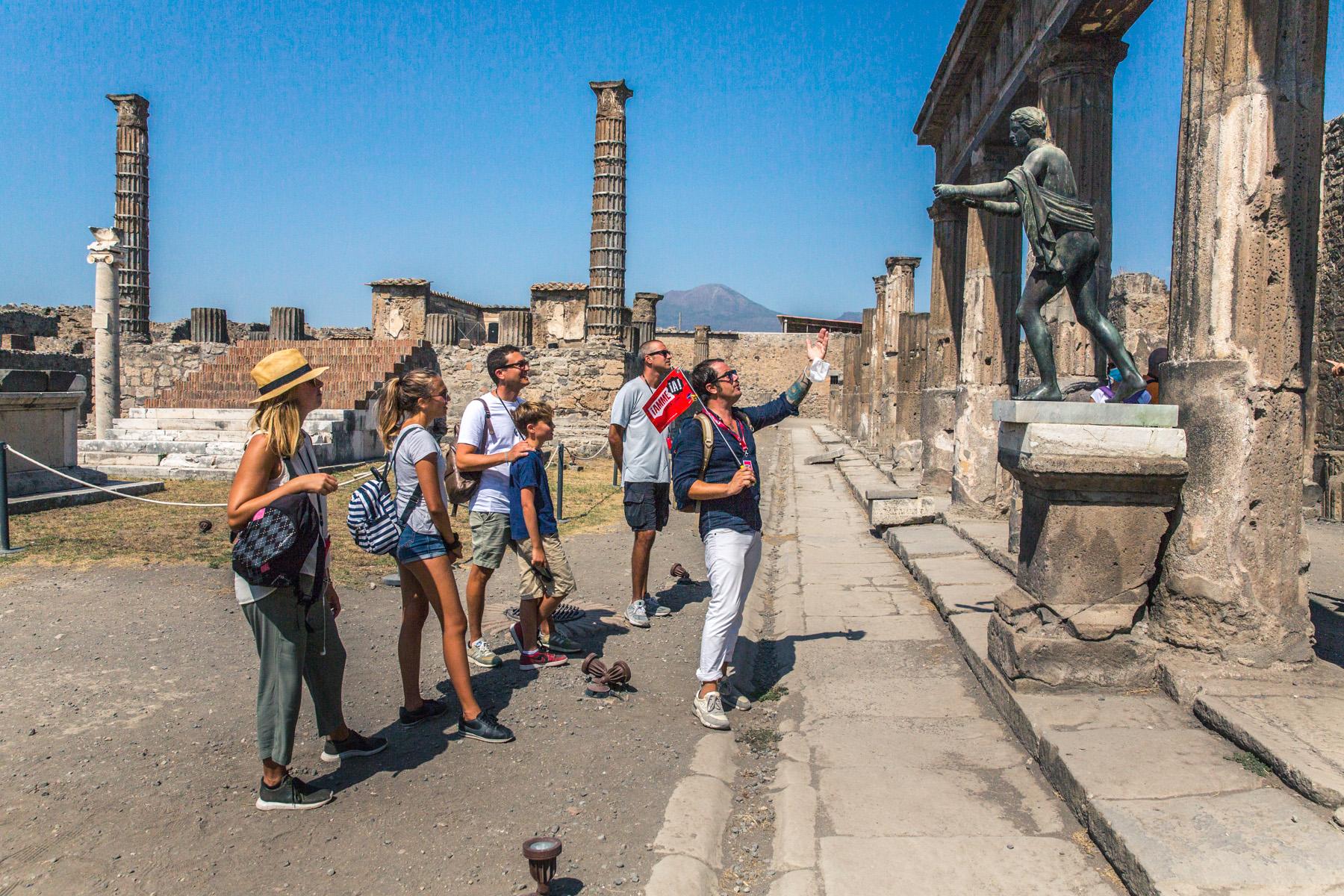
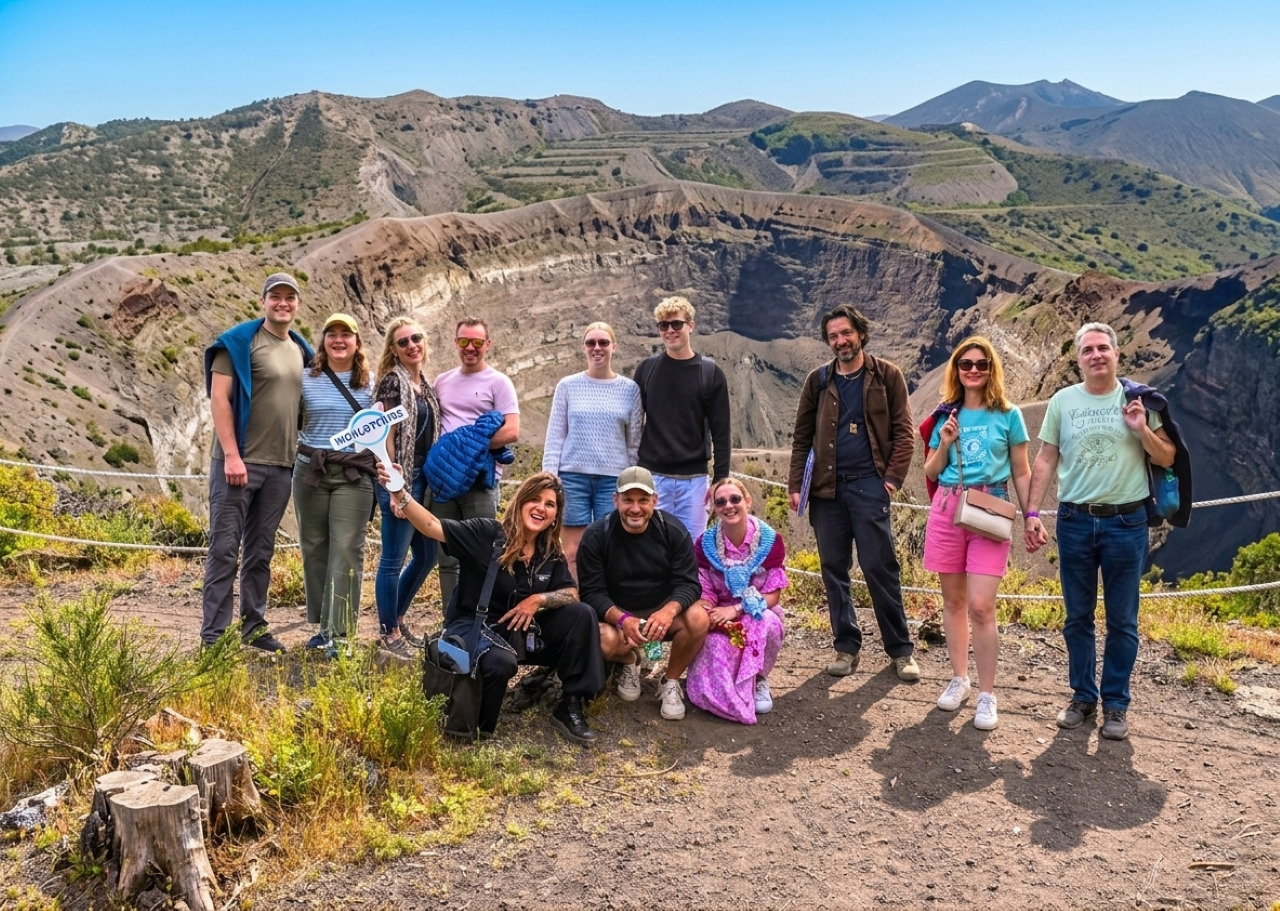
A pompeii and vesuvius tour pairs the excavated Roman streets buried by the AD 79 eruption with the volcano that shaped them, guided by licensed archaeologists who read the plaster casts and frescoes for you. These Pompeii archaeological site tours climb from the ancient forum to the crater rim of Mount Vesuvius, where sweeping views stretch across the Bay of Naples. Booking pompeii and vesuvius tour tickets in advance secures your entry and keeps the day moving between the two Campania landmarks.

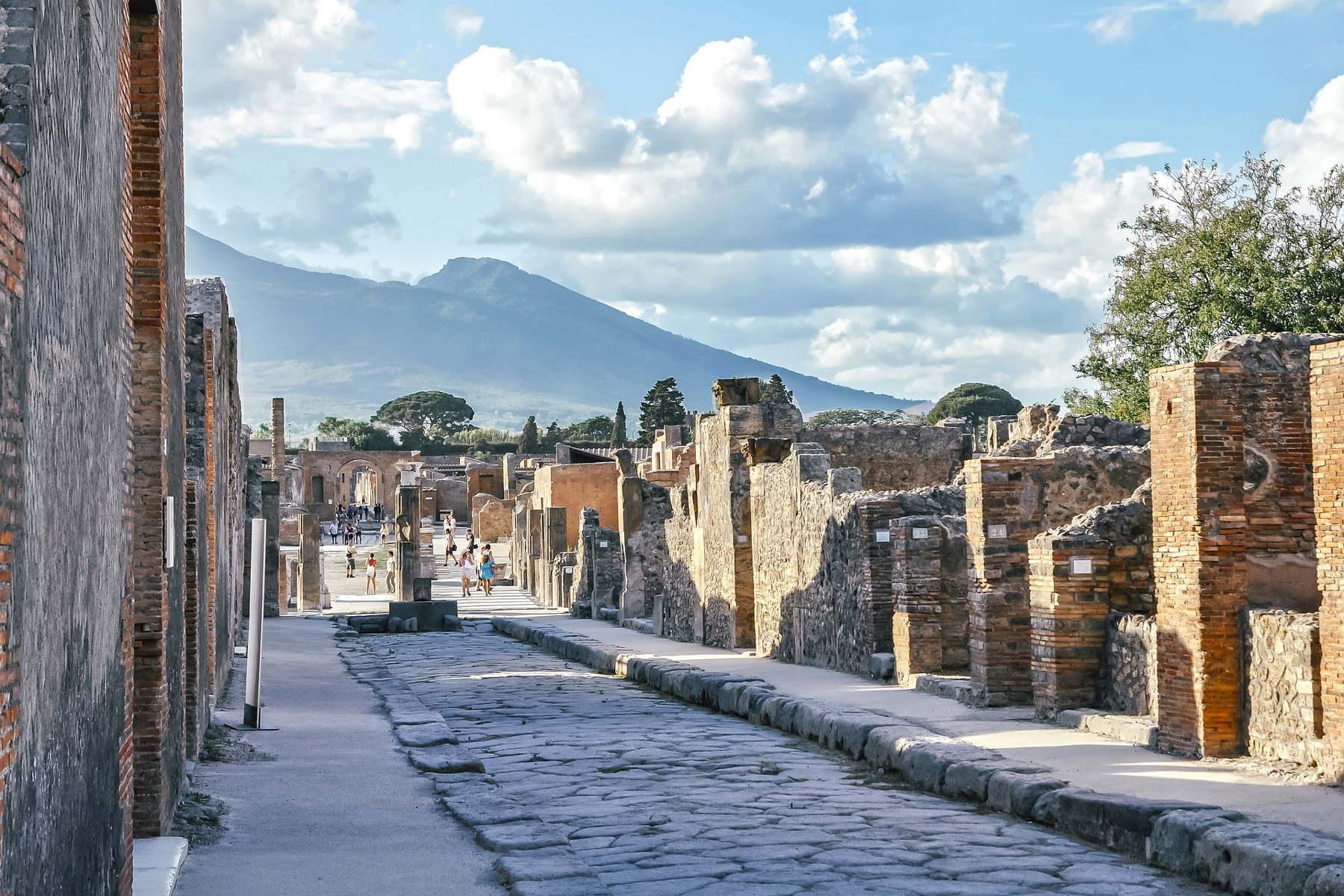
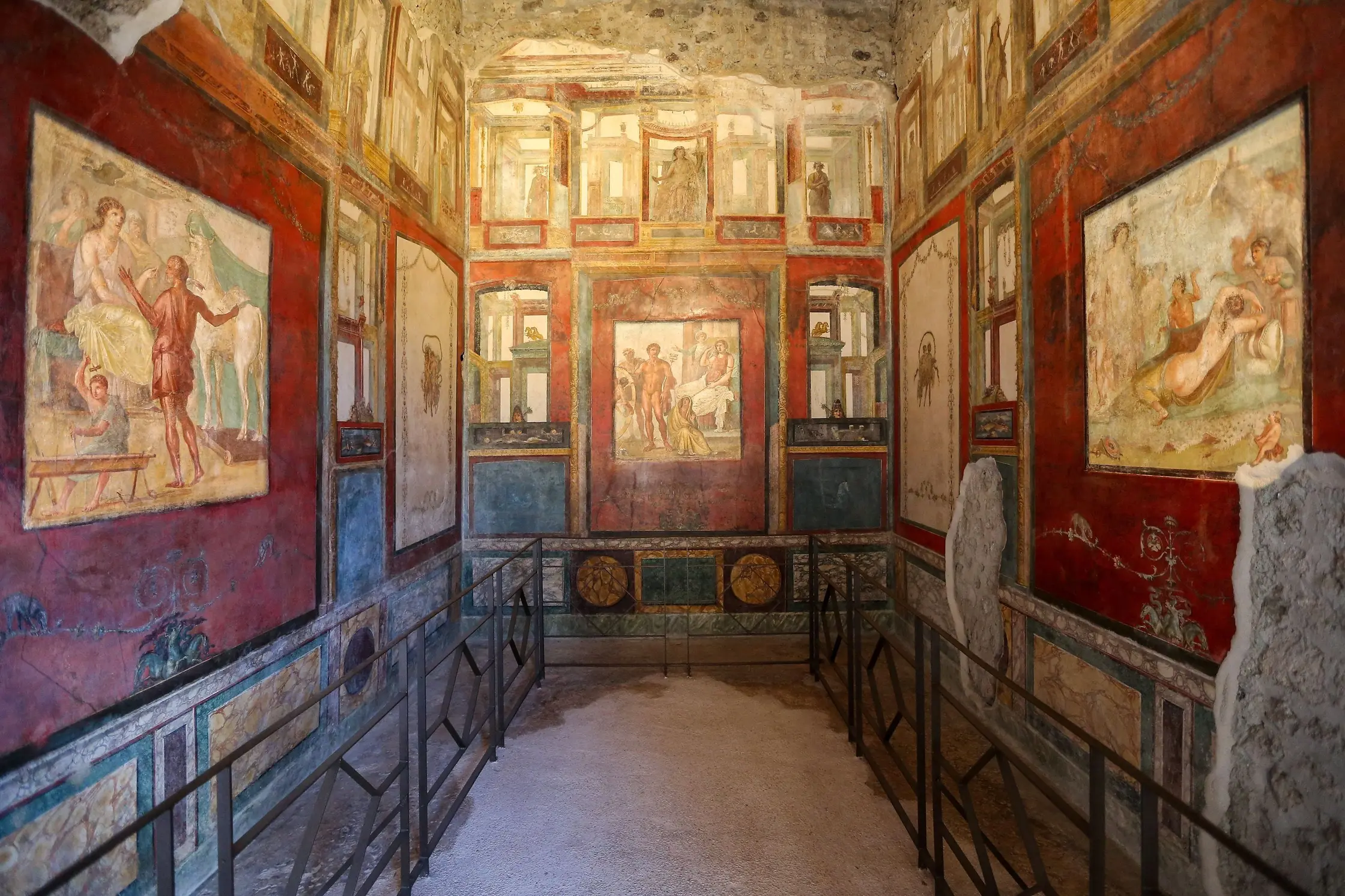
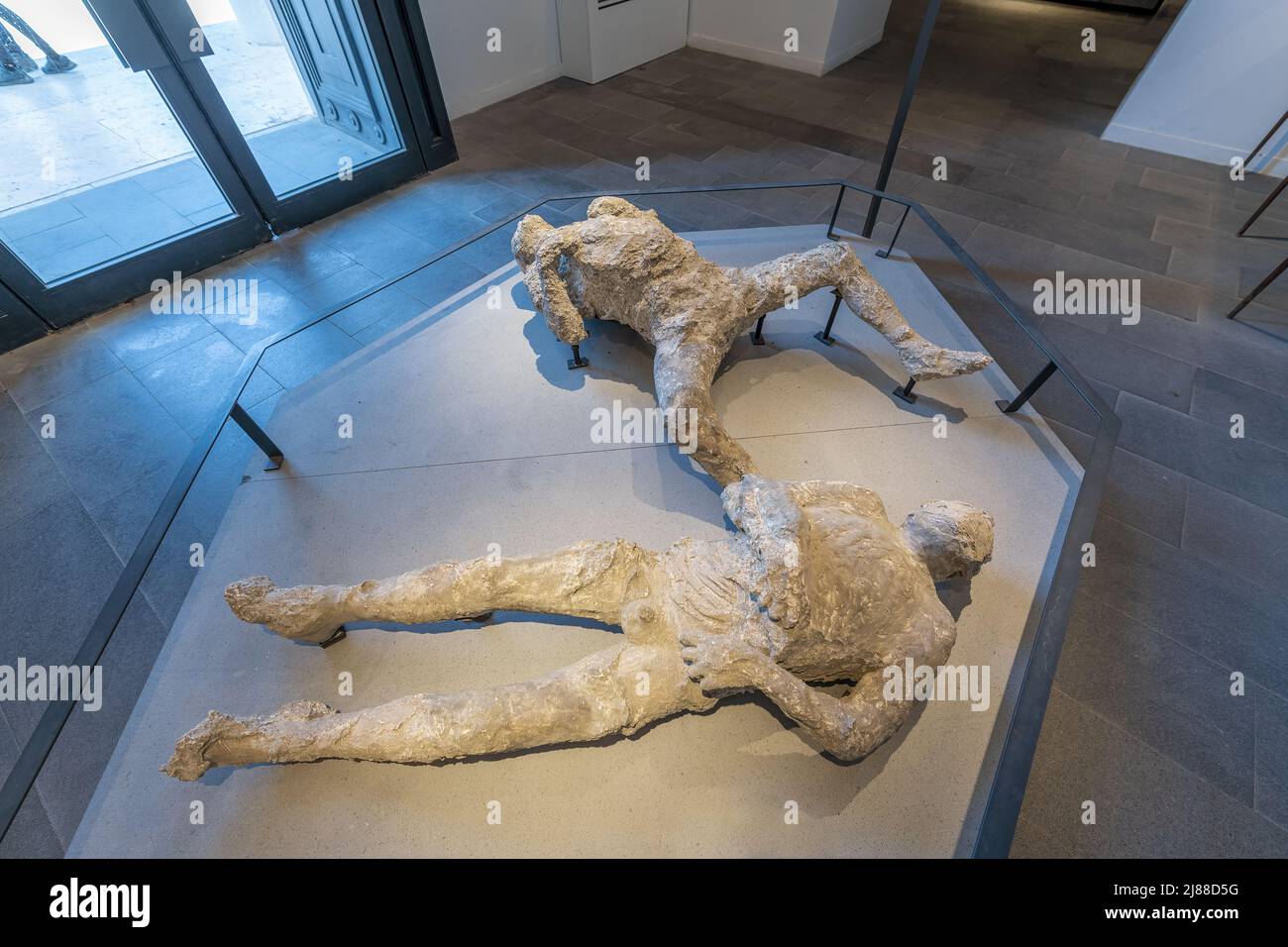
In AD 79, a column of pumice and gas rose an estimated 33 kilometres above the Bay of Naples, and within roughly eighteen hours the Roman town of Pompeii vanished beneath four to six metres of volcanic debris. What that debris preserved is the reason a pompeii and vesuvius tour draws visitors from every continent: not ruins in the ordinary sense, but a city arrested mid-gesture, its bakeries, brothels, election notices and bread ovens sealed as they stood. The archaeological park covers around 44 hectares, of which two-thirds have been excavated since Charles of Bourbon ordered the first formal digs in 1748. Streets still run in their Roman grid, rutted by cart wheels, flanked by stepping stones set to keep pedestrians above the wastewater. The Forum opens toward Vesuvius itself, the sightline uninterrupted, so that the instrument of destruction remains permanently in view of the destroyed. This visual argument — town and volcano in a single frame — is what a scavi di pompei visit turns on, and it is why the two sites are so often paired. The architecture rewards slow attention. The Villa of the Mysteries holds a fresco cycle in vivid Pompeian red, its figures nearly two thousand years old yet startlingly present. The House of the Faun, one of the largest private residences of the Roman world, once floored the Alexander Mosaic across its exedra. Public baths retain their vaulted ceilings, stucco reliefs and the flues that carried heat beneath marble floors. The plaster casts of victims, formed by pouring into voids left in the hardened ash, remain the most quietly devastating objects on the site. Above it all stands Vesuvius, still classified as an active stratovolcano and monitored continuously by the Osservatorio Vesuviano, the oldest volcano observatory in the world, founded in 1841. A well-organised pompeii and vesuvius tour treats the crater rim not as a viewpoint but as context: from 1,281 metres the whole doomed coastline resolves into geography, the Sarno plain, the bay, the buried towns of Herculaneum and Oplontis. Many pompeii and vesuvius tour tours therefore build the ascent into the same itinerary, letting the ruins and the summit explain one another. Designated a UNESCO World Heritage Site in 1997, the park continues to yield discoveries; excavations in the Regio V and Regio IX insulae have surfaced new frescoes and inscriptions in recent seasons. Pompeii endures less as a monument than as a document — a Roman afternoon interrupted, and never resumed, legible to anyone who walks its stones.

Pompeii endures less as a monument than as a document — a Roman afternoon interrupted, and never resumed.

Dress code

Wear closed-toe walking shoes with grip, since the original basalt paving stones of Pompeii are uneven, rutted by ancient cart wheels, and can be slick after rain. Summer visitors should bring a hat and sun-protective clothing, as most of the 170-acre site has no shade. If continuing on to the Vesuvius crater rim, sturdy trekking shoes and a light jacket are advisable for the wind at altitude.

Bags & security

Bags, backpacks, or cases larger than 30x30x15 cm are not permitted inside the Pompeii excavations and must be left at the free cloakroom near Porta Marina entrance. Airport-style security screening and bag checks apply at all park entrances, including Porta Marina, Piazza Esedra, and Piazza Anfiteatro.

Photography

Personal photography and video for non-commercial use are permitted throughout the excavated streets, villas, and the Forum. Tripods, monopods, and drones require prior written authorization from the Pompeii Archaeological Park office, and flash photography is restricted inside frescoed rooms and the Antiquarium to protect pigments.

Families & strollers

Children under 18 receive free admission with valid ID, and strollers can navigate the main accessible route through the Forum. Shade and seating are limited, so families should plan water breaks between houses.

Accessibility

A dedicated accessible route covers the Forum, the Amphitheatre, and several restored domus along mostly level, resurfaced paths suitable for wheelchairs and strollers. Some side streets retain their original stepping-stones and uneven Roman paving, which limits access to certain smaller houses; free wheelchair loan is available at the Porta Marina entrance on request.

Food & drink

Eating and picnicking are not allowed inside the excavated houses, temples, or the Amphitheatre, though a snack bar and vending machines operate near the Forum. Refillable water bottles are recommended, as free drinking-water fountains are located at each main entrance and near the Forum Baths.

Not allowed

× Large backpacks or suitcases over 30x30x15 cm × Selfie sticks in enclosed structures × Tripods and monopods without permit × Drones without authorization × Glass containers × Alcoholic beverages × Picnic food inside excavated houses × Sharp objects or tools × Umbrellas with pointed tips near frescoes × Pets other than service animals × Flash photography in fresco rooms × Camping or sleeping equipment

What to bring

✓ Printed or downloaded ticket QR code ✓ Sun hat and sunscreen ✓ Refillable water bottle ✓ Sturdy walking or hiking shoes ✓ Small day bag under 30x30x15 cm ✓ Portable phone charger ✓ Light jacket for Vesuvius altitude

Opening hours

Mon 09:00 – 19:00

Ticket lines shortest before 10:00

Tue 09:00 – 19:00

Suburban villas (Pompeii+) closed today

Wed 09:00 – 19:00

Midweek, moderate crowds

Thu 09:00 – 19:00
Fri 09:00 – 19:00

Crowds build toward weekend

Sat 09:00 – 19:00

Peak tour-bus arrivals

Sun 09:00 – 19:00

Busiest day, book ahead

Closures & exceptions

  • ·Jan 1 — New Year's Day
  • ·Dec 25 — Christmas Day

At a glance

Hours today

09:00–19:00 (Pompeii archaeological park);location

Getting there

Public transport · 36 min from Naples · Around €3.40 one way;Car

Take the Circumvesuviana train from Napoli Garibaldi to the Pompei Scavi-Villa dei Misteri stop, then walk about 5 minutes to the Porta Marina entrance.

Cancellation policy

Official Pompeii archaeological park tickets can be cancelled or rescheduled up to 24 hours before the booked entry slot for a full refund of the 20 EUR adult fee. Combined Pompeii and Vesuvius tour packages booked through operators typically follow the same 24-hour window, though some third-party providers apply stricter cutoffs.

Plan ahead

When to go — year at a glance

Weather · crowds · average price — dots go green to amber to red as each metric rises.

Spring

March to May brings mild temperatures around 15-22°C and moderate crowds, making it a strong season for a Pompeii and Vesuvius tour before summer heat sets in.;Summer

Insider tips

Helpful tips for your visit

Book the earliest entry slot

Reserve the 09:00 opening slot online in advance, since a Pompeii and Vesuvius tour that starts before 10:30 avoids both the worst heat and the bulk of tour buses.;Separate your Vesuvius ticket

Where to meet

Meeting points

Porta Marina entrance

Via Villa dei Misteri 2, 80045 Pompei, Naples, Italy

Main gate, 5-minute walk from Pompei Scavi-Villa dei Misteri station

Get directions
The story

The history behind the site

In August or October of 79 AD, Mount Vesuvius erupted. Ash and pumice buried Pompeii under roughly six metres of debris. Pliny the Younger recorded the event in two letters to Tacitus. His uncle, Pliny the Elder, died at Stabiae during the disaster. The city vanished from view. Its name faded from maps. For over fifteen centuries the site lay forgotten, sealed beneath volcanic sediment that preserved streets, frescoes, and bodies in remarkable detail. Rediscovery came in stages. In 1599 the architect Domenico Fontana cut a channel through the buried ruins and struck inscribed walls. The find was noted, then ignored. Systematic digging began in 1748 under Charles of Bourbon, King of Naples. Early excavators tunnelled for treasure rather than knowledge. The scholar Giuseppe Fiorelli, appointed director in 1863, transformed the work. He divided the town into regions and insulae, and he devised the plaster-cast technique that captured the voids left by decomposed victims. Any modern pompeii and vesuvius tour still follows the grid he imposed. Excavation continues today. As of 2026, more than a third of the city remains buried under unexcavated ground. Recent digs in Regio V have uncovered new frescoes and a preserved thermopolium. The archaeological park, a UNESCO World Heritage Site since 1997, manages this fragile ground alongside daily visitors. Many arrive on a Pompeii ruins tour that pairs the streets with the volcano above. Vesuvius itself has not gone quiet. Its last eruption came in 1944, during the Second World War. Vulcanologists classify it as active and closely monitored. Roughly three million people live in its shadow. That living danger frames every pompeii and vesuvius tour and gives the ancient catastrophe present urgency. Visitors weighing skip-the-line Pompeii access or booking pompeii and vesuvius tour tickets confront a plain fact. The mountain that destroyed this Roman town remains capable of doing so again. Guides on a pompeii and vesuvius tour tour and independent pompeii and vesuvius tour tours alike return to that unresolved threat.

79 AD

Vesuvius erupted and buried Pompeii under metres of ash and pumice.

1599

Domenico Fontana cut a channel through the ruins but the site went unrecognised.

1748

Systematic excavation began under Charles of Bourbon, King of Naples.

1863

Giuseppe Fiorelli took charge, mapping the city and creating plaster casts of victims.

1944

Vesuvius produced its most recent eruption during the Second World War.

1997

Pompeii was inscribed as a UNESCO World Heritage Site.

2020s

Digs in Regio V revealed new frescoes while over a third stays buried.

Photo spots

Best photo spots

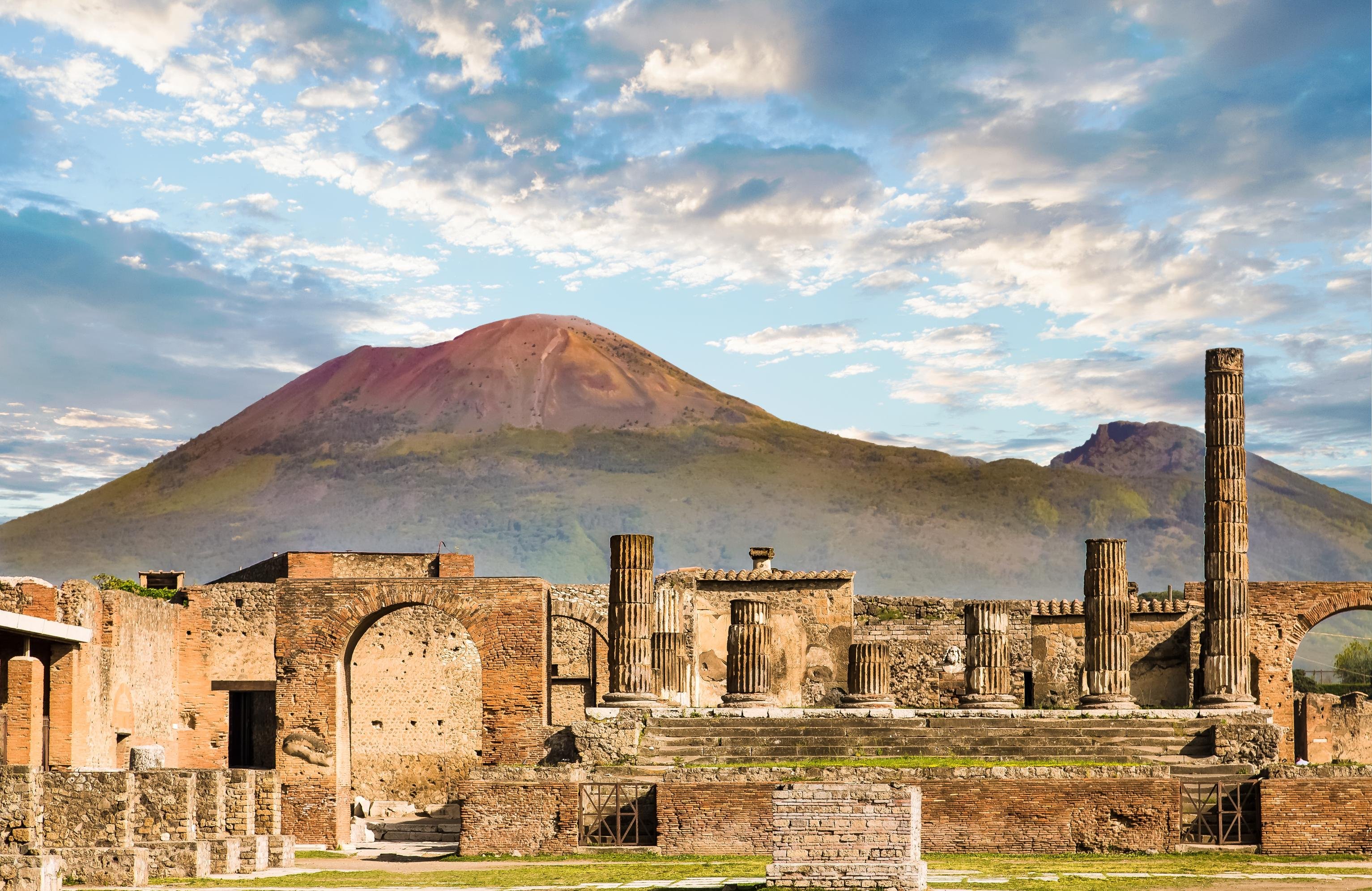
Pompeii Forum with Temple of Jupiter

Best light · Before 09:00, soft morning light

Stand at the south end of the Forum and frame the Temple of Jupiter's columns with Mount Vesuvius rising directly behind, the classic composition that anchors most every pompeii and vesuvius tour photo set. Wide-angle lenses capture the full colonnade and volcano in one frame. Tripods are not permitted, so shoot handheld.

Triangular Forum colonnade

Best light · Golden hour, late afternoon

Walk to the Doric Temple ruins inside the Triangular Forum's 95-column portico, perched on a ridge above the old Sarno valley. Golden hour light rakes across the tuff columns and framed sea-facing view. Fewer visitors reach this quieter corner than the main Forum.

Garden of the Fugitives

Best light · Midday shade

Photograph the row of plaster casts sheltered under a canopy in this walled garden in Regio I, a quiet, sobering counterpoint to the grander architectural shots elsewhere in the park. Stand at the walkway railing facing the casts for an unobstructed angle. Shade makes this a good midday option when light elsewhere is harsh.

Via dell'Abbondanza street view

Best light · Late afternoon

Shoot down this long straight street with its worn stepping-stone crossings leading the eye toward distant ruins, a favorite composition among visitors doing pompeii and vesuvius tour tours for its depth and symmetry. Stand at either end for a full-length view.

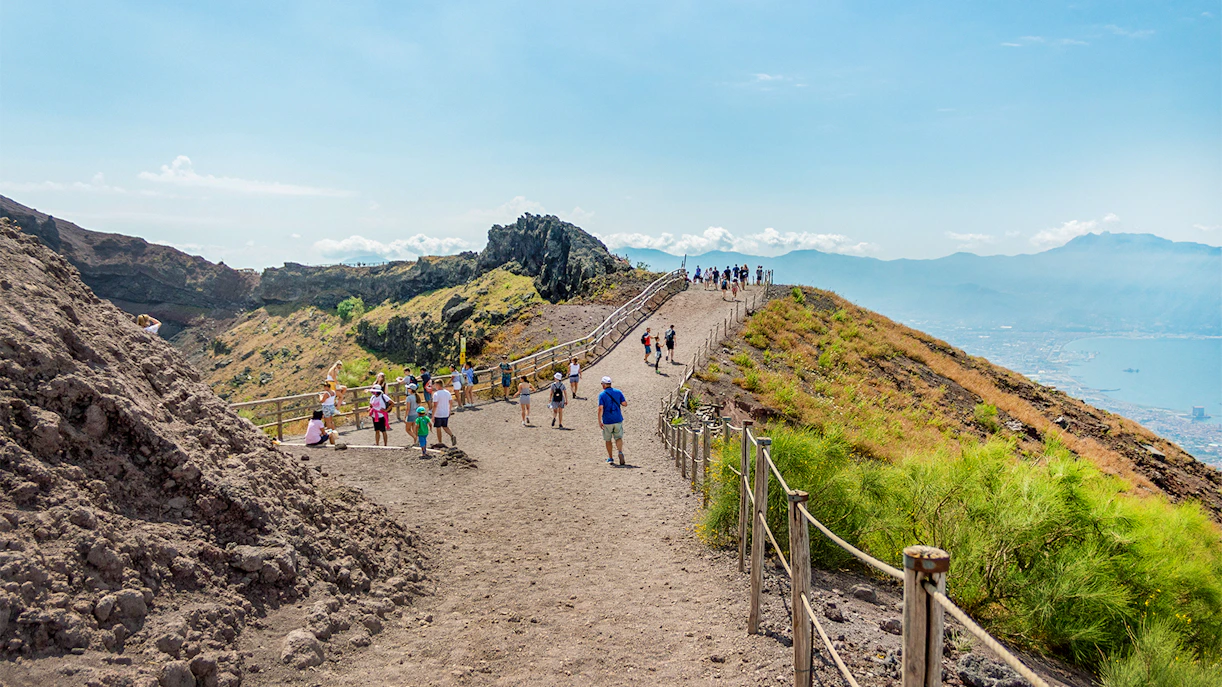
Vesuvius crater rim overlook

Best light · Morning, clear sky

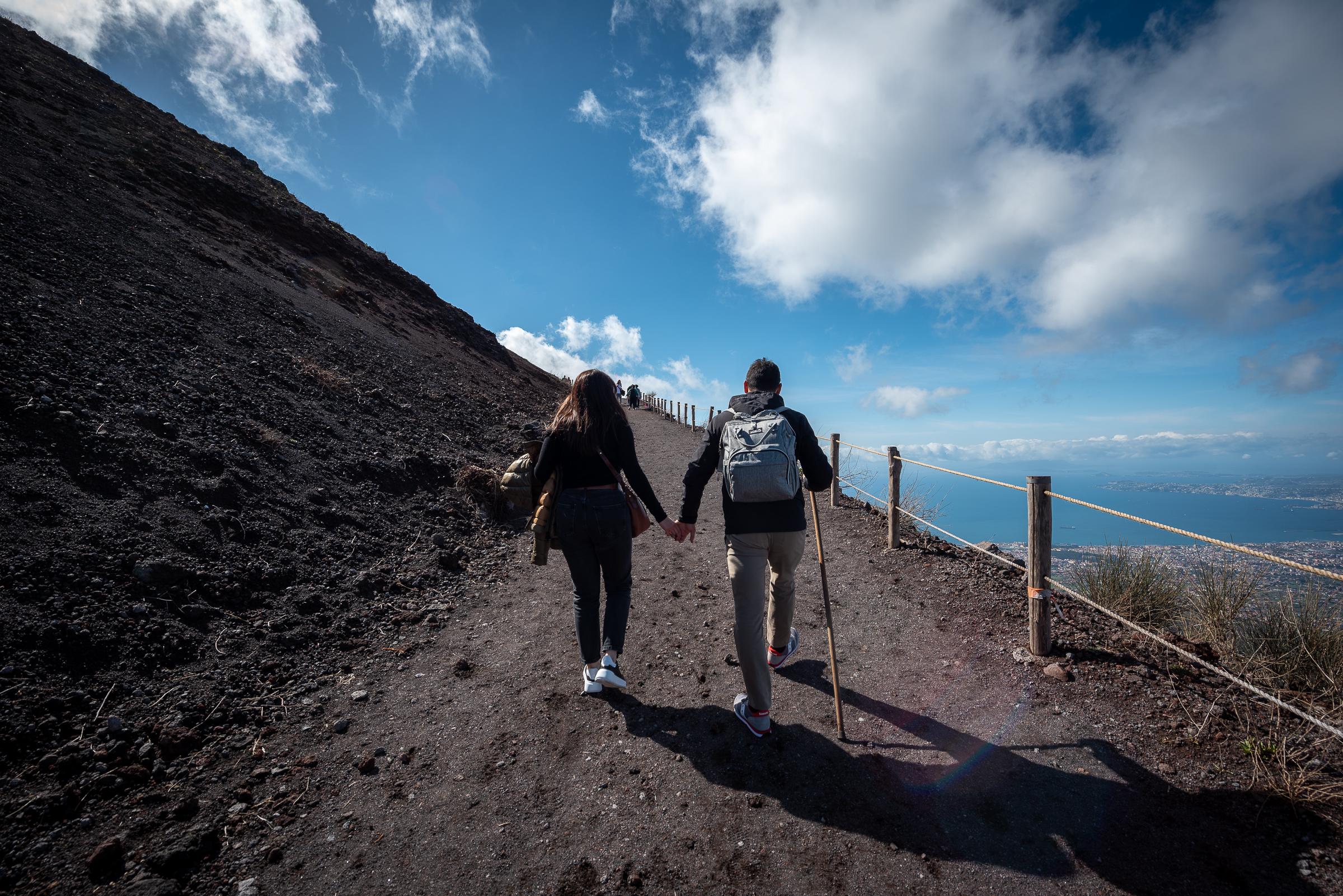
From the summit path circling the crater, look back down over the Bay of Naples toward the excavated city far below, a reverse view that completes the pompeii and vesuvius tour tour narrative. The rim trail is loose ash and gravel, so sturdy shoes help. Clearer skies typically appear earlier in the day.

Gallery

Moments from the experience

With kids

Visiting with kids

A pompeii and vesuvius tour with young children means two very different kinds of walking in one day: flat but uneven Roman streets, then a steep gravel climb to the crater. Pace it right and both sites stay manageable; rush it and toddlers will melt down by mid-afternoon.

Strollers

Skip them entirely. Pompeii's basalt streets have deep gaps and no consistent path, and the Vesuvius crater trail is steep loose gravel, so a soft-structured carrier or hiking backpack for anyone under about 4 is far more practical than pushing a pram.

Best ages

Pompeii suits curious kids from about age 5 up who can handle 2-3 hours of walking and treasure-hunt style engagement. Vesuvius is tougher: most guides and parents put the realistic minimum around 6-7, since the summit path has unguarded drop-offs and single-file stretches.

Sequencing

Do Pompeii first while energy and attention are freshest, ideally arriving 09:00-10:30 before heat and crowds build, then move to Vesuvius in the early afternoon. Reversing the order risks tackling the steepest climb on tired legs.

Pacing across the day

A combined day easily stretches to 10-12 hours once you count transfers between the two sites, so budget a proper lunch break and treat Vesuvius as the shorter, sharper effort after the longer Pompeii wander. Watch for signs of fatigue by early afternoon and be ready to shorten the crater visit rather than push through.

Facilities

Pompeii has designated baby-changing points near the main restroom areas, useful given the site's size, while Vesuvius has only basic facilities at the entrance and none along the trail itself. Carry water and snacks for both legs, since shade is limited on Pompeii's streets and nonexistent on the volcano path.

Food & drink

Where to eat nearby

Most people combine a pompeii and vesuvius tour with a packed lunch, since real sit-down meals mean stepping outside the ruins into the modern town of Pompei near Piazza Anfiteatro; on-site options are limited to one café and a snack kiosk, and the volcano side is even sparser.

CHORA Café

€€

Café inside, near the Forum

Behind the Temple of Jupiter, this is the main on-site stop for Campanian charcuterie, pizza slices, sandwiches, and gelato. Expect long queues 12:00–14:00; better for a quick refuel mid-visit than a leisurely sit-down.

Autogrill Pompeii Café

Snack bar at Porta Marina

A basic cafeteria-style counter for coffee, panini, and ice cream just past the entrance. Fine for a fast bite before or after the skip-the-line pompeii and vesuvius tour tickets check-in, but don't expect much beyond service-station quality.

Ristorante Pizzeria Anfiteatro

€€

Sit-down pizzeria — 2 min walk

Just outside Piazza Anfiteatro, this local pizzeria serves Neapolitan-style pies and seafood pasta. A solid choice for lunch after finishing the amphitheater end of the site, popular with pompeii and vesuvius tour tours groups.

Ristorante Pompeii al Vecchio Frantoio

€€

Bistro — short walk from the ruins

Traditional Campanian dishes served in a courtyard setting, a step up from the tourist-menu spots clustered right at the gates. Good for a slower lunch if you have time before or after your pompeii and vesuvius tour tour.

Vesuvius crater kiosks

Snack stands near the summit

A handful of small stalls at the entrance and along the rim sell water, panini, and limoncello tastings; there's no real restaurant on the mountain. Bring a snack for the climb and treat the kiosks as backup, not lunch.

Customer Reviews

What travelers say

Real experiences from real travelers

4.5
Based on undefined reviews
1 ★ 840
2 ★ 610
3 ★ 1450
4 ★ 4200
5 ★ 16800
M
Marcus H.
United States · 2026-06-14

Ruins then the rim

Our pompeii and vesuvius tour started early which meant the ancient streets were still cool and half-empty before the July heat set in. The guide walked us past the Forum and the House of the Faun, pointing out the mosaics you would completely miss on your own. Standing on the crater rim afterward with the whole Bay of Naples below made the eruption feel real.

S
Sofia R.
Spain · 2026-05-29

Vale la pena

The gita a Pompei ed il Vesuvio was long but paced well, with a break for lunch between the site and the mountain. What stayed with me was the plaster casts in the Garden of the Fugitives and the wheel ruts worn into the basalt paving stones. Bring a hat, there is almost no shade on the summit trail.

K
Kenji T.
Japan · 2026-04-08

Windy at the top

The Pompeii archaeological tour portion was the highlight for me, especially the frescoes in the Villa of the Mysteries which are far brighter in person than in any photo. The Vesuvius climb was shorter than expected but the wind on the gravel rim was fierce and cold even in spring. Solid pompeii and vesuvius tour tour overall, just manage your expectations on the volcano.

A
Amara O.
United Kingdom · 2026-07-11

History underfoot

Walking the decumanus at Pompeii with Vesuvius looming in the distance is something I keep thinking about. Our guide explained the bakeries, the thermopolia counters, and the frescoes in a way that made the AD 79 city feel inhabited rather than abandoned. The skip-the-line Pompeii entry saved us a good forty minutes in the ticket queue.

L
Lukas B.
Germany · 2026-02-17

Off-season gem

Going in February meant we nearly had the ruins to ourselves and the light was gorgeous mid-morning. This pompeii and vesuvius tour covered the Forum baths, the amphitheatre, and then the crater, which was capped with a little snow. Good value considering the pompeii and vesuvius tour tickets included both entries and transport.

B
Beatriz M.
Brazil · 2026-06-30

Two worlds in one day

Seeing the Naples landmarks context first and then the excavated streets made the scale click for me. The pompeii and vesuvius tour tours we compared beforehand all looked similar but ours had a small group which meant we could actually hear the guide. The pumice underfoot on the Vesuvius trail is loose, wear proper shoes.

E
Elena V.
Italy · 2026-05-03

Casts and craters

I grew up nearby and still learned things on this pompeii and vesuvius tour, particularly about the resin casts that reveal root cavities and doors, not just bodies. Late afternoon on the crater rim the sulphur smell drifts up from the fumaroles which surprised everyone. Book the earliest slot to beat both the crowds and the heat.

D
David C.
Australia · 2026-03-22

Long but rewarding

The Pompeii ruins tour was thorough and the guide clearly loved the material, though it is a lot of walking on uneven stone. Vesuvius was cloud-covered when we reached the top so the famous view of the bay was hidden, which is nobody's fault. Still glad we did the combined pompeii and vesuvius tour rather than splitting them across two days.

I
Ingrid S.
Sweden · 2026-01-19

Frescoes stole it

Cold clear January morning, low winter sun lighting up the columns of the Forum beautifully. The guide on our Pompeii and Vesuvius day trip knew exactly which houses had the best surviving wall paintings and mosaics. The crater walk felt genuinely alpine with the wind, so pack a layer even if the coast is mild.

P
Paulo F.
Portugal · 2026-07-02

Worth the early start

We left before dawn to reach Pompeii ahead of the tour buses and it paid off completely. Seeing Vesuvius from inside the ruins it destroyed, then standing on its rim looking back down at the site, is a perspective no guidebook gives you. The pumice and ash layers in the trail cut are still visible if you look.

FAQ

Frequently asked questions

Everything you need to know for your journey

Around the corner

Nearby landmarks worth a detour

Pompeii Antiquarium

5-minute walk

museum

A museum near Porta Marina housing frescoes, everyday objects, and plaster casts of eruption victims. It reopened after renovation and gives useful context before entering the excavations.

Where to stay

Where to stay nearby

Hotel Forum Pompei

5-minute walk

mid-range

A modest hotel steps from the Porta Marina entrance, popular with visitors doing an early Pompeii and Vesuvius tour before the heat sets in.

Ready for Adventure?

Join thousands of happy travelers who have discovered this incredible experience

Book Your Experience Now