13 hr
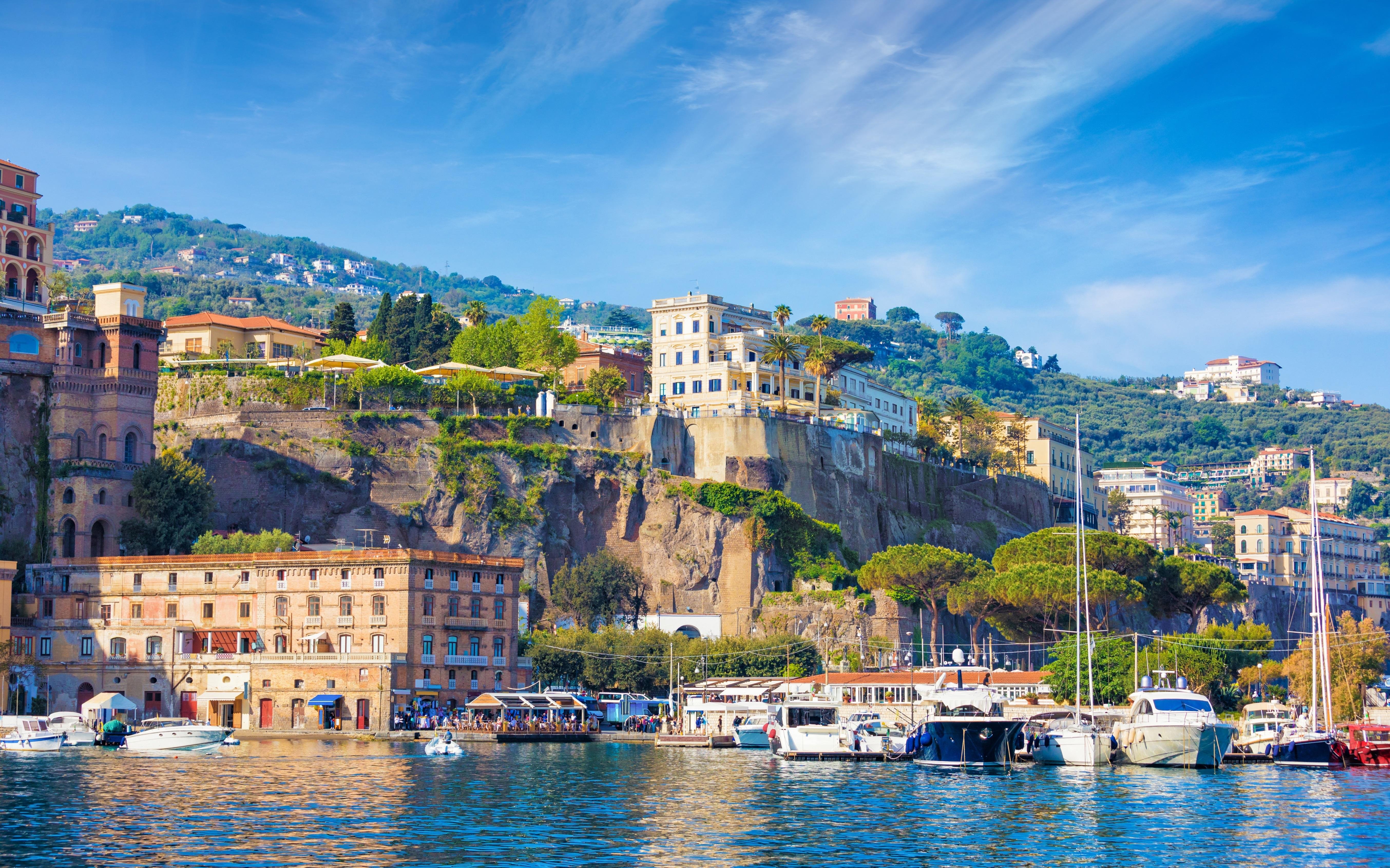
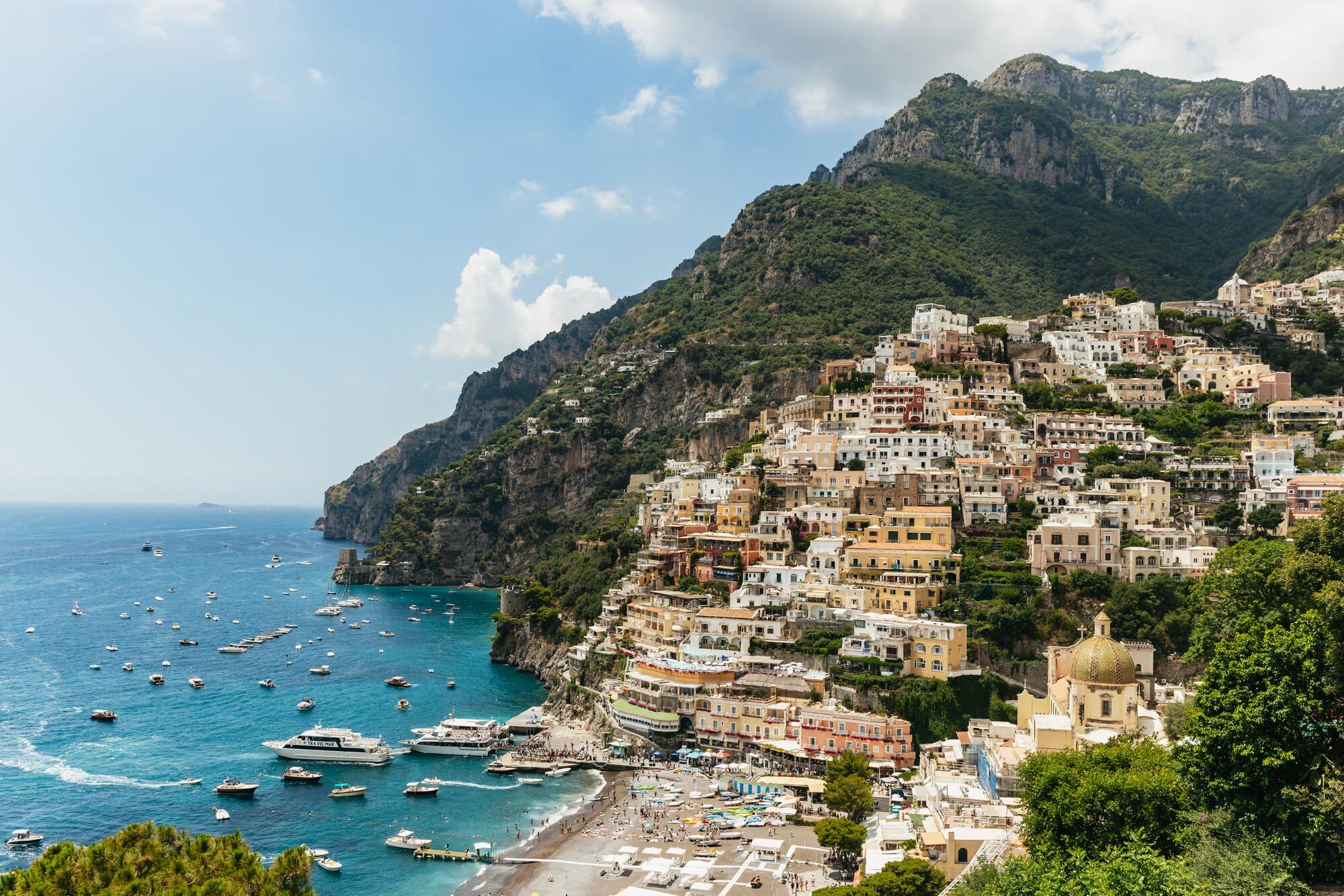
Pompeii, Sorrento & Amalfi Coast Day Trip from Rome
- Expert local guide
- Small group
- Skip-the-line access
- Free cancellation
Day Trip To Pompeii From Rome — Reserved Entry & Guided Ruins
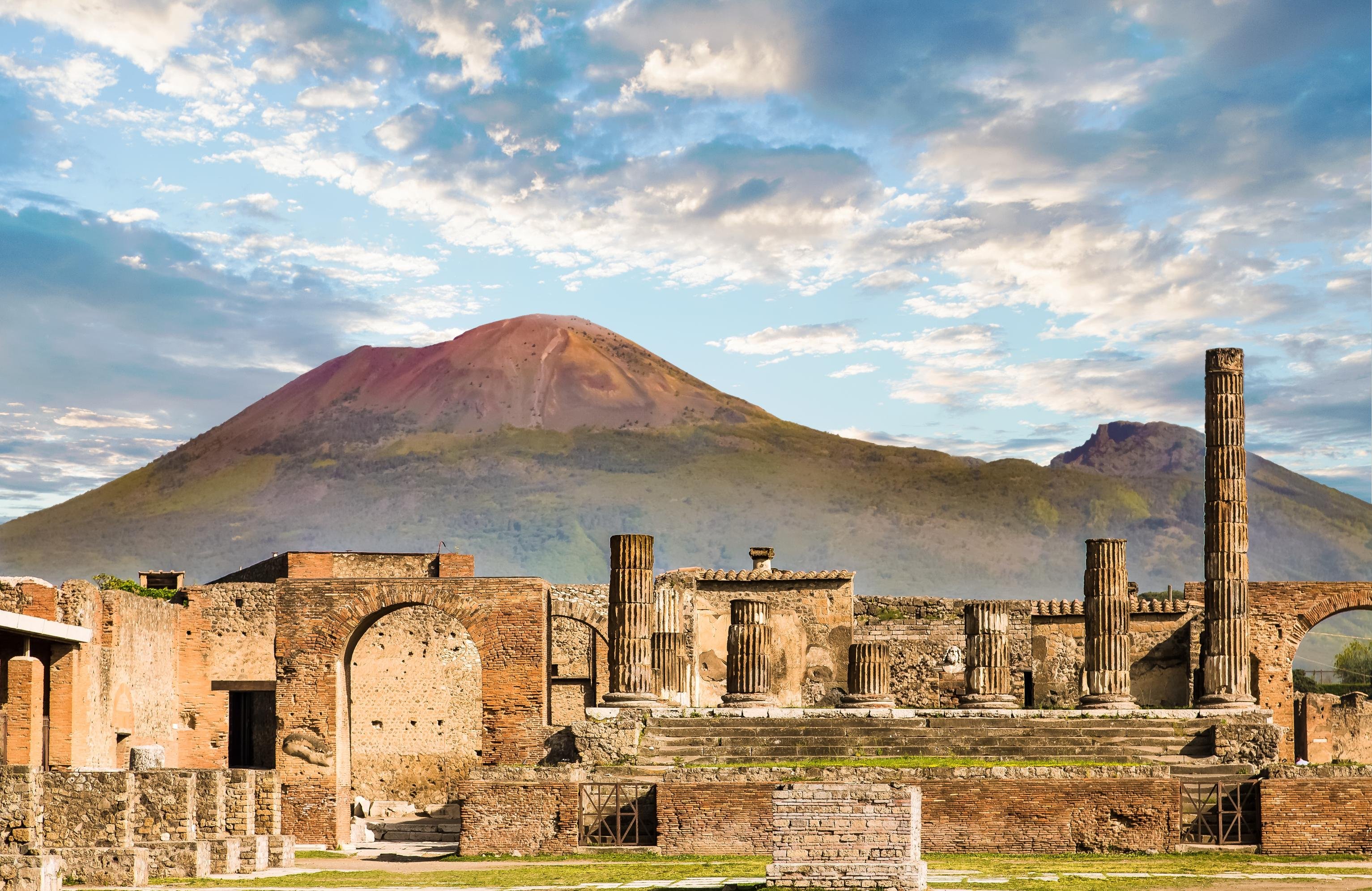
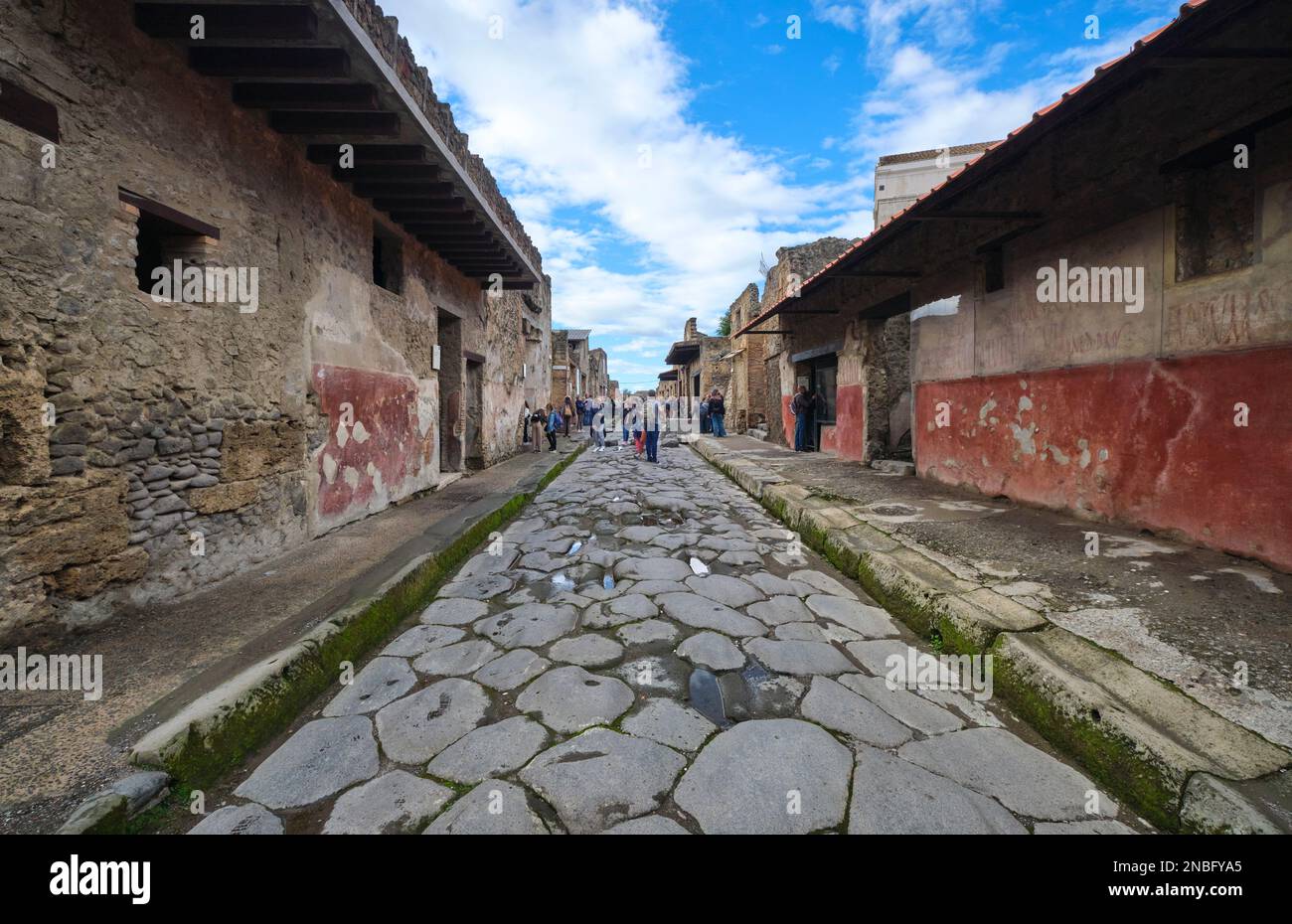
Ash-sealed streets at dawn, Vesuvius on the far horizon.
Compare fares, pick the fit — all bookings are mobile-voucher and eligible for free cancellation where shown.
13 hr
13 hr
12 hr
Worth it for history-minded first-timers
A day trip to pompeii from rome asks a lot: roughly five to six hours of round-trip travel against an 18 EUR Pompeii Express standard adult ticket. For that fee you walk a real Roman city frozen mid-life — paved streets, frescoed villas, the forum framed by Vesuvius, plaster casts of the eruption's victims. The value math favors anyone who cares about antiquity: no reconstruction anywhere matches this scale of preserved daily life, and the ticket itself is modest for a UNESCO archaeological site. The travel and summer heat are the real cost, not the money. Most day trip to pompeii from rome tours bundle transport that softens the logistics, and skip-the-line Pompeii tickets spare you the gate queue. It pays off for first-timers, ruins enthusiasts, and photographers. It disappoints travelers wanting a quick, air-conditioned box-tick with minimal walking.
Bottom line: If Roman history moves you, the day trip from Rome to Pompeii earns its long day; if you want minimal effort, skip it.
Both ruins sit on the same Circumvesuviana rail corridor from Naples, but a day trip to Pompeii from Rome demands the fuller day — Herculaneum suits travelers who want depth over scale in a couple of hours.
|
Top pick Pompeii |
Herculaneum (Ercolano Scavi) | |
|---|---|---|
| Site size and walking distance | 66 hectares, 1–2 miles of pathways | 4–4.5 hectares, compact grid |
| Preservation style | Ground-floor ruins, ash-buried | 2–3 storeys intact, mud-sealed |
| Typical visit duration | 3–6 hours | 1.5–2.5 hours |
| Crowd levels | 8,000–20,000 daily visitors | 1,500–3,000 daily visitors |
| Distance and travel time from Rome | High-speed train to Naples, then Circumvesuviana | Same route, plus 15–25 min further train |
| Best fit for first-time vs repeat visitors | First-time visitors wanting full scope | Repeat visitors wanting architectural detail |
| See tickets & prices |
Verdict: Choose Pompeii for scale and the classic Vesuvius-and-forum imagery associated with any skip-the-line Pompeii tour, and add Herculaneum only if your Rome day trip allows extra hours for its far quieter, better-preserved streets.
Hand-picked experiences loved by thousands of travelers
9 - 12 hours
Free Cancellation
Experience ancient history with a guided tour of Pompeii and optional adventures at Mount Vesuvius.
9 hours
Free Cancellation
Experience Pompeii on a seamless day trip from Rome featuring high-speed rail, guided ruins tour, and local volcanic wine.
13 hours
Free Cancellation
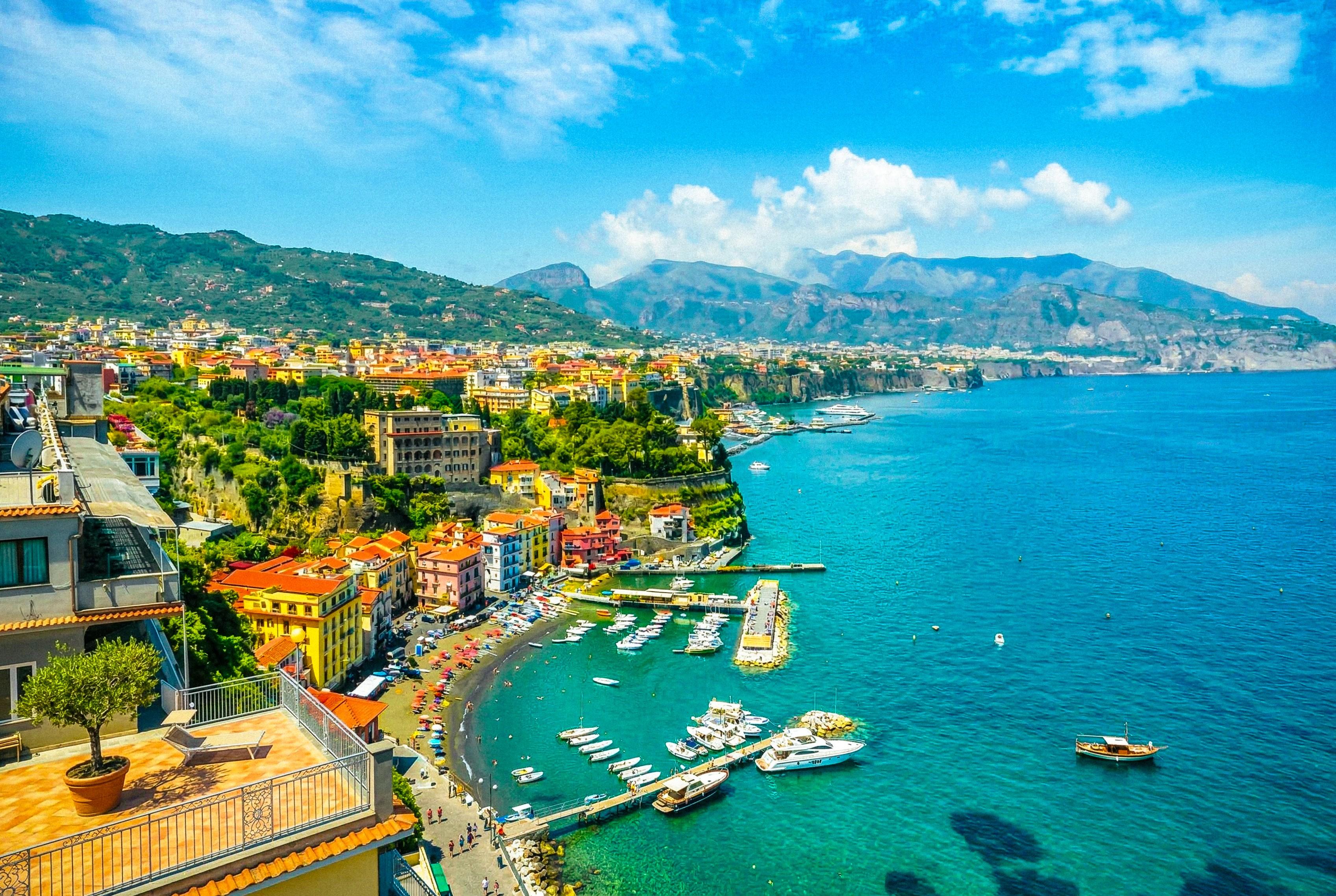
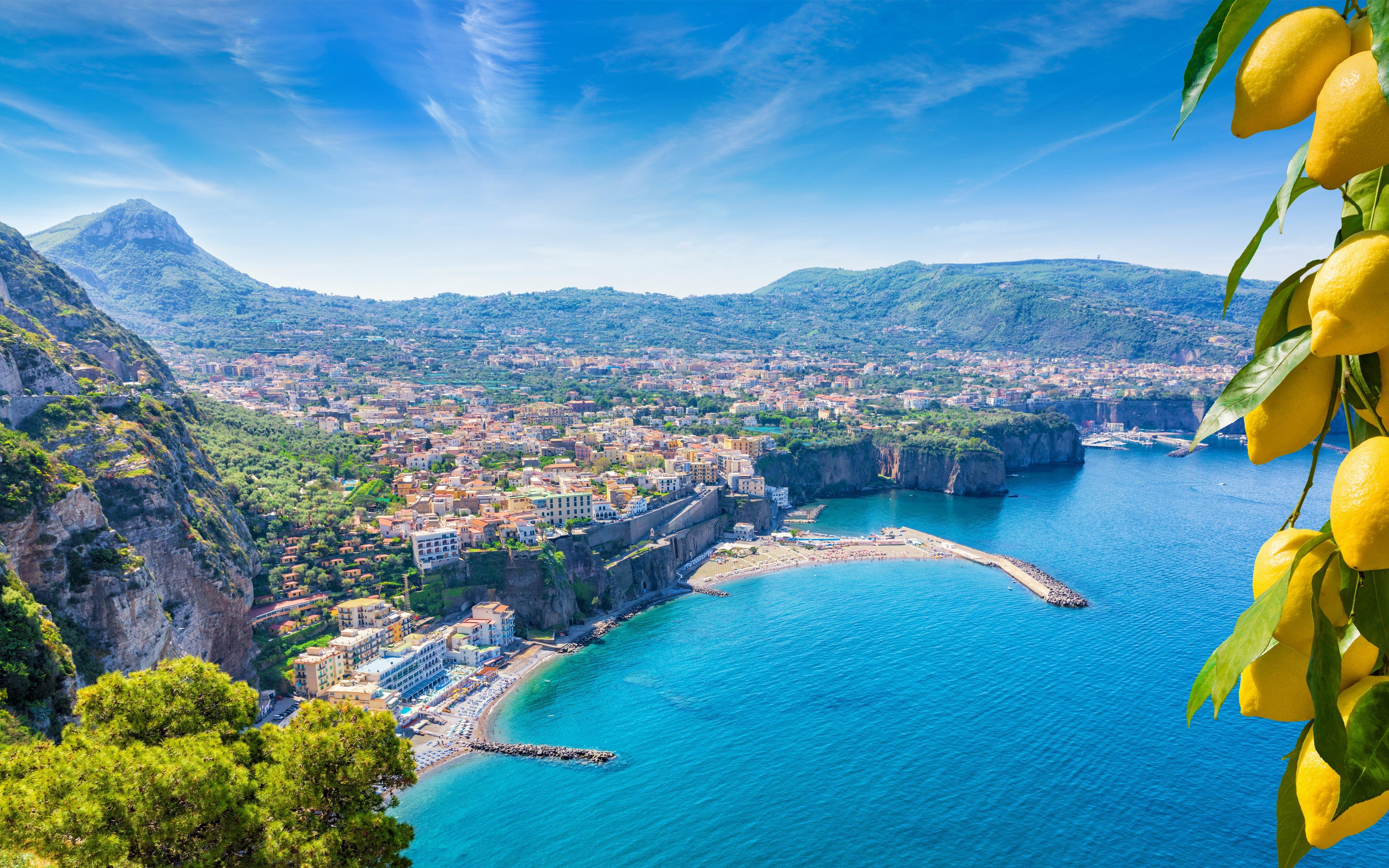
Uncover ancient Roman history and coastal charm on this full-day adventure to the ruins of Pompeii and beautiful Sorrento.
Enter through the main gate closest to Pompei Scavi–Villa dei Misteri station and pick up a site map.
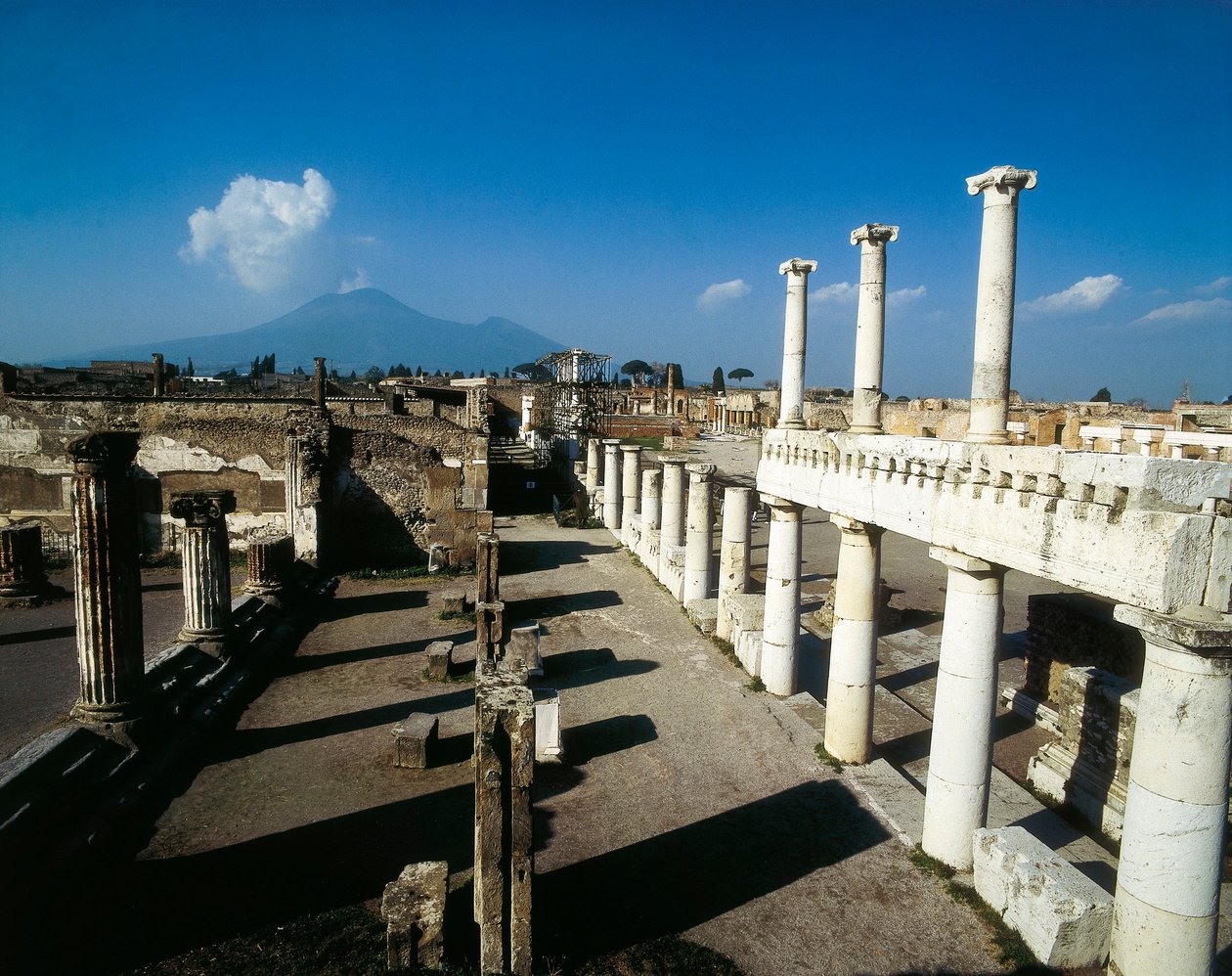
Walk the civic and religious heart of the ancient city, with Mount Vesuvius visible in the background.
View the site of the famous Alexander Mosaic and the largest private residence in the ancient city.
Visit the oldest surviving stone amphitheatre in the Roman world and the plaster casts of victims.
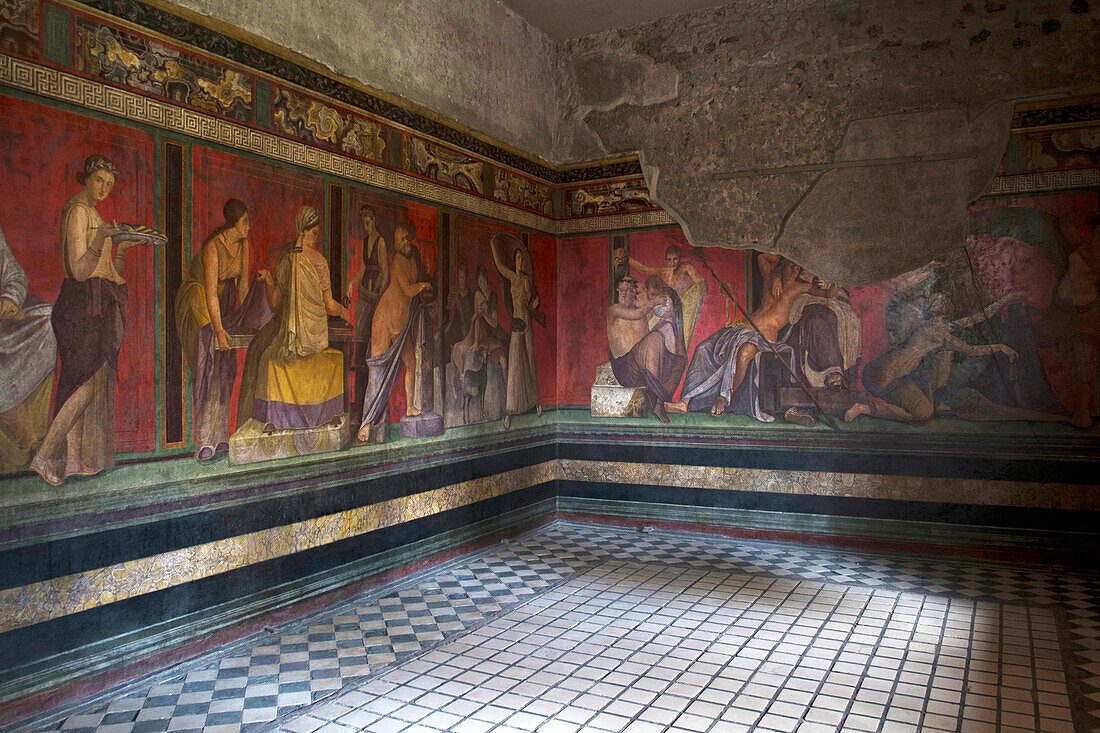
Finish at the suburban villa known for its Dionysiac fresco cycle, a short walk beyond the city walls.
A suburban villa built in the 2nd century BC and enlarged under Augustus, famous for its Dionysiac fresco cycle spanning three walls of the triclinium, a painting roughly 17 meters long and 3 meters high. First excavated in 1909, it sits just outside the city walls along Via Villa dei Misteri.
At nearly 3,000 square meters, this is the largest private residence uncovered in Pompeii, named for the bronze dancing faun statue found at its center. It once held the original Alexander Mosaic depicting the Battle of Issus, now preserved in the Naples Archaeological Museum.
The civic and religious core of ancient Pompeii, framed by the Temple of Jupiter and surrounded by colonnades, with a direct sightline to Mount Vesuvius looming beyond the ruins. Public assemblies, markets, and religious ceremonies once converged here daily.
Built around 70 BC, this is the oldest known permanent stone amphitheatre in the Roman world, predating Rome's Colosseum by more than a century, with capacity for roughly 20,000 spectators. It hosted gladiatorial games until the city's destruction in 79 AD.
Pompeii's best-preserved brothel, identifiable by erotic frescoes displayed above each of its small stone chambers, believed to have depicted services available within. It remains one of the most visited single buildings in the entire park.
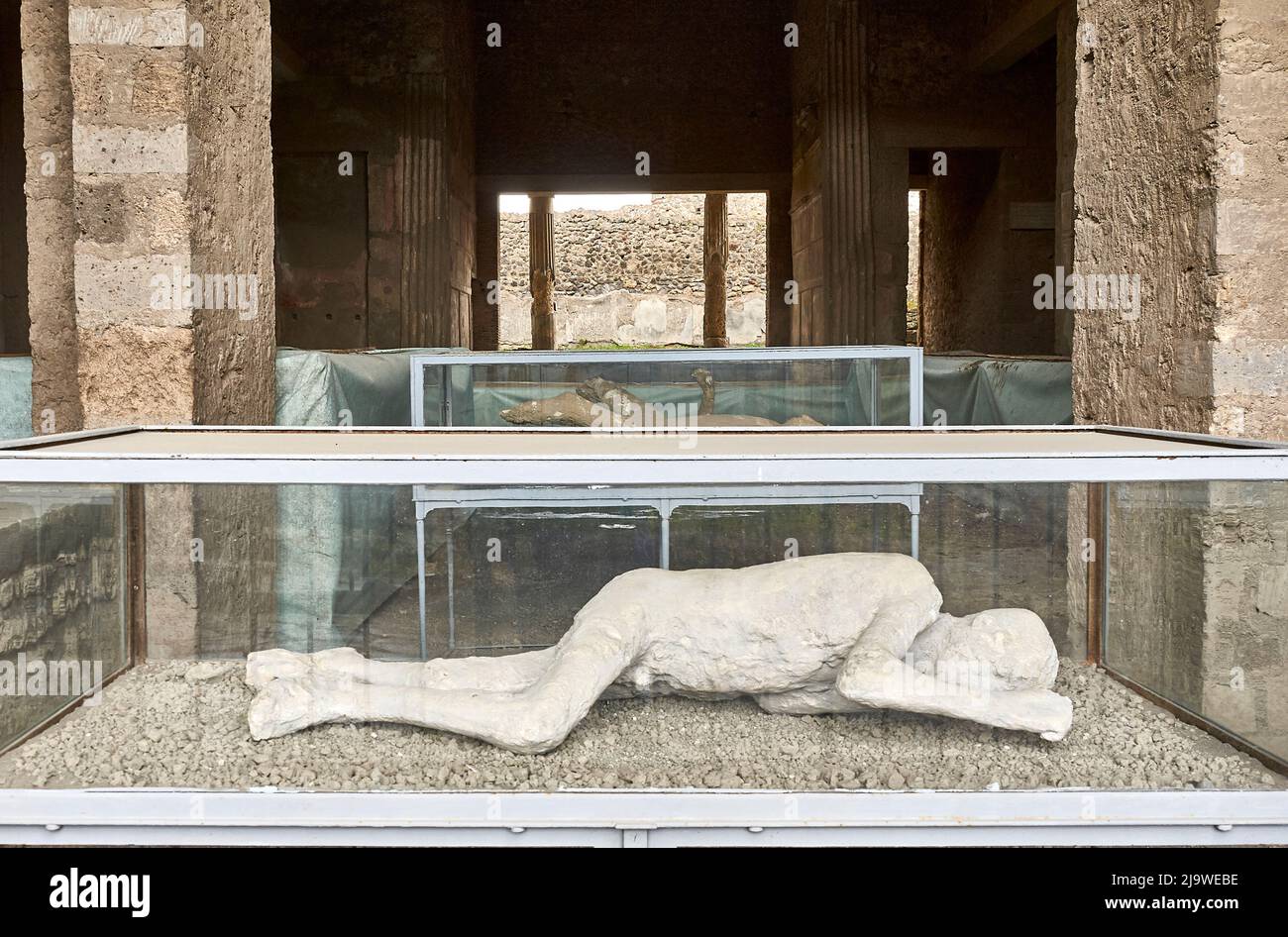
A walled orchard area containing plaster casts of victims caught in their final moments during the 79 AD eruption, created by pouring plaster into voids left in the hardened ash. The casts capture postures of families and individuals overtaken while fleeing.
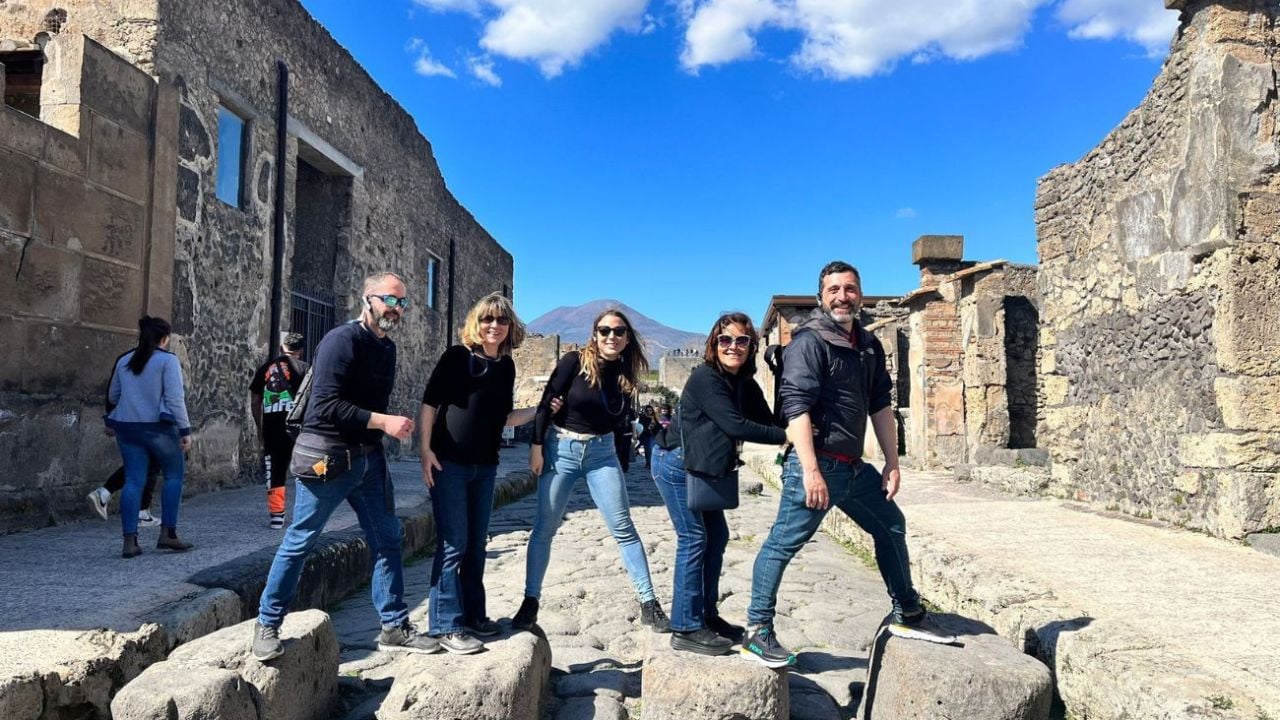
You board an early train south and arrive at the Porta Marina gate as it opens at 09:00, stepping onto a ramp worn smooth by two thousand years of feet. You choose the cooler morning slant of light and turn toward the Forum, where broken columns frame Vesuvius on the skyline. You walk the Via dell'Abbondanza, tracing the raised stepping-stones that let ancient pedestrians cross without touching the wet street. You pause at a thermopolium, its marble counter still pitted with the round holes that once held food jars. You duck into the House of the Faun and stand over the welcome mosaic, then move on to the bathhouse, where you crane up at the coffered ceiling and vaulted caldarium. In the amphitheatre you climb the stone tiers and sit where 20,000 spectators once roared. Midway through your day trip to pompeii from rome, you reach the Villa of the Mysteries at the site's western edge and stand quietly before the red frieze. You fill your bottle at a public fountain, check your mobile voucher, and let the plaster casts hold your attention longer than you expected before the walk back to the gate.
All the details about your upcoming adventure in one place
A day trip to Pompeii from Rome carries you south past the Bay of Naples to the buried Roman city preserved beneath Vesuvius ash, where you'll walk stone streets past the Forum, frescoed villas, and the plaster casts of the ancient population. Guided day trip to Pompeii from Rome tours pair a licensed archaeologist with a comfortable coach transfer, so the long journey becomes part of the experience rather than a chore. Booking ahead secures your seat and confirms the entry logistics before you leave the city.
Vesuvius buried Pompeii under roughly six metres of ash and pumice in 79 AD, and that same suffocating blanket preserved the town for seventeen centuries. What lay beneath was not rubble but a Roman city arrested mid-breath: loaves of bread still in ovens, election slogans painted across walls, wheel-ruts worn into basalt streets. A day trip to pompeii from rome carries a traveller 240 kilometres south into that paused world, where an entire municipality of some 11,000 people was returned, room by room, to daylight. The significance of the site lies in its completeness. Few ancient places survive as a whole urban organism rather than a scatter of temples; here the Forum, the amphitheatre, the bakeries, the brothels, and the private houses coexist as a legible plan. The stone city reveals how Romans actually lived — how water ran through lead pipes to public fountains, how a wealthy family arranged a garden peristyle, how a snack bar served hot food from marble counters. This is why a gita a pompei da roma remains one of Campania's landmarks of enduring pull; the ruins teach through ordinary detail rather than grandeur alone. Architecturally, Pompeii is a catalogue of Roman building at domestic scale. The House of the Faun sprawls across an entire block, its threshold mosaic reading HAVE — welcome — beneath a bronze dancing satyr. The Villa of the Mysteries holds a frieze of deep vermilion, its ritual figures among the finest wall paintings to survive from antiquity. Colonnaded courtyards, frescoed cubicula, and intricate opus sectile floors show a decorative sophistication that a Pompeii ruins tour brings within arm's reach. The plaster casts remain the site's most human artefact. Nineteenth-century excavators poured plaster into the voids left by decomposed bodies, recovering the exact postures of the dying — a technique that turned absence into portraiture. These figures give the archaeological park its unmatched intimacy. Administered today by the Parco Archeologico di Pompei, the excavation continues, with new frescoes and inscriptions emerging as recently as 2026. A well-planned day trip to pompeii from rome rewards visitors with a rare directness: not a reconstruction, not a museum diorama, but a real city where the distance between antiquity and the present narrows to a single ash-covered step.
Vesuvius buried a Roman city mid-breath, and the ash that killed it kept it alive for seventeen centuries.
There is no strict dress code for a day trip to Pompeii from Rome since the site is an open-air archaeological park rather than a religious building. Sturdy, closed-toe walking shoes are strongly recommended for the uneven ancient stone streets, and a hat plus sun protection are advised given the site's largely shadeless terrain.
Bags, backpacks, and similar items larger than 30x30x15cm are not permitted past the entrance gates of the Pompeii archaeological park and must be left at the free cloakroom near the Porta Marina entrance. Security checks are standard at all entrances, and staff may ask to inspect bags before allowing entry onto the site.
Personal photography and video are permitted throughout the excavations of Pompeii, including inside most houses and public buildings. Tripods, monopods, and any professional filming or audio equipment require prior written authorization from the Archaeological Park administration, and drones cannot be flown over the site without a specific permit.
Pushchairs and prams are allowed inside the archaeological park, and Baby Points near the main entrances offer private space for changing or feeding infants. Guide dogs assisting visitors with disabilities are admitted with appropriate certification, though other dogs are restricted to small breeds carried or kept on a short leash.
Pompeii offers a dedicated accessible route of roughly 3 kilometers starting from the Piazza Anfiteatro entrance, covering the Amphitheatre, the gymnasium, and several houses on a surface adapted for wheelchairs and pushchairs. Much of the wider site retains original uneven basalt paving and high stepping-stones at road crossings, so visitors with mobility limitations should plan around the marked accessible itinerary rather than the full nine-region layout.
Eating is only permitted in designated picnic and cafeteria areas near the Forum and other rest points inside the park; consuming food elsewhere on the site, including near ruins or frescoed buildings, is prohibited. Water in plastic bottles is allowed, and small snacks may be carried in, but alcohol is strictly forbidden anywhere on site.
Quietest midweek day
Groups increase by afternoon
Busiest day of the week
First Sunday: free admission for all
Hours
09:00–19:00 daily, all week
Address
Via Villa dei Misteri 2, 80045 Pompei, Naples, Italy
Access
Wheelchair-friendly route from Piazza Anfiteatro entrance
Best window
09:00–11:00 for cooler temperatures and thinner crowds
Bag limit
Max 30x30x15cm, free cloakroom at entrance
Public transport · Around 2.5–3 hours total · €40–70 return
Take a high-speed train from Roma Termini to Napoli Centrale, then transfer to the Circumvesuviana line toward Sorrento and alight at Pompei Scavi–Villa dei Misteri station, a two-minute walk from the entrance.
Car · About 2.5 hours each way · €30–40 tolls plus parking
Drive south from Rome on the A1 motorway toward Naples, then the A3 toward Salerno, taking the Pompei exit; paid parking lots are available near Piazza Anfiteatro and Piazza Esedra.
Taxi · 2–2.5 hours from Rome · €150–250 one-way from Rome
A private transfer or taxi can be arranged directly from Rome or from Naples Centrale station to the Pompeii entrance, useful for groups or those with heavy luggage.
Tickets for the Pompeii Express standard adult ticket (18 EUR) can typically be cancelled or rescheduled up to 24 hours before the visit date for a full refund when booked through the official site or an authorized reseller. Cancellations made after that window, or no-shows, are generally non-refundable.
Weather · crowds · average price — dots go green to amber to red as each metric rises.
March to May brings mild temperatures around 15–22°C and moderate crowds before peak summer season begins. Wildflowers around the ruins add color to photos of the Forum and surrounding hills.
June to August sees temperatures often exceeding 30°C with little shade across the 66-hectare site, plus the heaviest tour-bus traffic from Rome and Naples. Early mornings from 09:00 to 11:00 are essential to avoid both heat and crowds.
September and October offer cooler weather in the low-to-mid 20s°C and thinning crowds after the summer peak, making it a favored season for a day trip to Pompeii from Rome. Late-day light in October is favorable for photography around the Forum columns.
November through February brings cooler, sometimes rainy days with highs around 10–15°C and the thinnest crowds of the year. Shorter daylight hours mean earlier closing times, so plan an early departure from Rome.
Reserve tickets ahead of a day trip to Pompeii from Rome, since walk-up ticket-office lines can run 45–90 minutes during peak season.
Aim to reach the gates between 09:00 and 11:00 for cooler temperatures and thinner crowds before large tour groups arrive.
The Pompei Scavi–Villa dei Misteri stop places visitors within a two-minute walk of the Porta Marina entrance, making rail the most direct transit option from Naples.
Bags larger than 30x30x15cm must be checked at the free cloakroom, so a small daypack saves time at security.
Some individual buildings, including the Villa of the Mysteries and the House of the Faun, can close temporarily for conservation, so verify status on the official site before prioritizing a route.
The ancient basalt streets and high stepping-stones are uneven, making closed-toe walking shoes far more practical than sandals.
The on-site Antiquarium museum near the Forum is included with entry and houses artifacts and casts worth 20–30 extra minutes.
Via Villa dei Misteri 2, 80045 Pompei, Naples, Italy
Main entrance nearest Pompei Scavi–Villa dei Misteri train station
Get directionsPiazza Anfiteatro, 80045 Pompei, Naples, Italy
Secondary entrance closer to the Amphitheatre and accessible route
Get directionsPompeii began as an Oscan settlement and grew into a Roman colony after Sulla installed veterans in 80 BC. By the first century AD it was a prosperous trading town near the mouth of the Sarno, its forum ringed by temples, its walls marked with painted electoral notices. A severe earthquake struck in AD 62, and much of the town was still under repair seventeen years later. The visitor who now plans a day trip to pompeii from rome walks streets that were, at the moment of catastrophe, half rebuilt. On 24 August AD 79, Vesuvius erupted. Pliny the Younger, watching from Misenum, recorded his uncle's death in two letters to Tacitus. Falling pumice and pyroclastic surges buried the town under metres of ash. That same ash sealed frescoes, loaves, and bodies in place. Preservation was the accident that made the ruins legible. For centuries the site lay forgotten beneath the fields the locals called La Civita. Formal excavation opened in 1748 under the Bourbon king Charles III, following the earlier find at Herculaneum. Early digging was closer to treasure-hunting than archaeology. The transformation came with Giuseppe Fiorelli, appointed director in 1863, who imposed system on the chaos. Fiorelli devised the plaster-cast method, pouring liquid plaster into the voids left by decayed corpses to recover their final postures. His stratigraphic approach turned looting into science, and organised Pompeii landmarks into the numbered regions still used today. Excavation never truly stopped. Twentieth-century campaigns exposed the Villa dei Misteri, whose megalographic frieze remains the draw of many a Pompeii archaeological tour. The 21st century brought the Great Pompeii Project, and fresh work in Regio V during 2018 to 2024 uncovered a thermopolium, new inscriptions, and further casts. Those booking day trip to pompeii from rome tours today see a site still yielding evidence. Anyone comparing day trip to pompeii from rome tickets should know the ruins remain an active dig. The story of any single day trip to pompeii from rome tour is layered over two thousand years of ash, silence, and slow recovery.
Sulla settles Roman veterans, making Pompeii a colony.
A major earthquake damages the town, prompting long repairs.
Vesuvius erupts on 24 August, burying Pompeii in ash.
Bourbon excavations begin under Charles III of Naples.
Giuseppe Fiorelli becomes director and systematises the dig.
Fiorelli perfects the plaster-cast method for buried victims.
Regio V excavations reveal a thermopolium and new frescoes.
Stand at the north end of the Forum's paved square, aligning the broken columns of the Temple of Jupiter with the cone of Vesuvius behind them. This is the classic wide shot people plan an entire day trip to Pompeii from Rome around, so keep the frame low and let the mountain fill the skyline.
Enter through the colonnaded propylaeum onto the raised, grassy platform overlooking the old theaters. Doric columns frame long diagonal views toward the Bay of Naples, and the quiet, less-trafficked corner makes it easy to shoot without crowds in frame.
Inside the Orto dei Fuggiaschi, plaster casts of victims lie along a vineyard row behind glass, best photographed straight-on through the barrier at eye level. It's one of the more emotional stops on any Pompeii landmarks itinerary, so keep gestures respectful and avoid flash.
Look through the entrance mosaic reading HAVE toward the atrium and the small bronze Dancing Faun statue framed by impluvium and columns beyond. Viewing is from the roped threshold only, giving a naturally layered, symmetrical composition.
Stand at the entrance grille to frame the restored, brightly frescoed peristyle garden with its fountains and statuary through the doorway. The vivid reds of the Vettii frescoes photograph best without flash, which is prohibited throughout the site.
A day trip to Pompeii from Rome asks a lot of small legs: uneven cobblestones, near-zero shade, and a long train journey bookending the ruins themselves. With realistic pacing built in, though, most kids handle it fine and even get a kick out of the ash-cast figures and ancient streets.
Break the site into 90-minute stretches with a seated rest after each — cobblestones and hidden curbs tire small ankles faster than flat pavement, so slower is genuinely faster here.
Kids six and up manage the walking and heat best; a skip-the-line Pompeii ruins tour with a guide keeps younger children engaged with stories rather than just ruins.
Shade is scarce across the site, so plan indoor pauses at the on-site café near the Forum and keep water bottles refilling at the fountains rather than rationing.
Expect kids to tap out after 2-3 hours of active walking, well short of what adults can manage, so treat the visit as one flexible block within the long Rome-Pompeii day rather than a fixed itinerary.
Restrooms and a café with high chairs sit near the Forum entrance, useful anchor points for splitting the visit into manageable segments.
Since the rail journey each way already eats several hours, build slack into departure times so an overtired child does not have to rush the return trip.
Food logistics on a day trip to Pompeii from Rome are simple: eat inside the park or wait until you're out near Piazza Anfiteatro or Porta Marina, since there's little in between. Most visitors treat lunch as a mid-visit pause rather than a full sit-down stop.
The main on-site option, tucked behind the Temple of Jupiter, with pizza, sandwiches, cheeses and coffee. It gets busy 12:00-14:00, so aim earlier or later. Good for a proper sit-down break mid-visit rather than a rushed stop.
A quick-service spot for coffee, snacks and cold drinks right by the entrance/exit. Handles the queue-averse traveler well since it's built for fast turnover. Best used as a bookend rather than a meal.
Sits just outside the amphitheater gate under a vine-covered terrace, popular for pizza and pasta right after finishing the site. Families and groups tend to linger here post-visit. Reliable rather than refined.
A no-frills pasta counter on Piazza Bartolo Longo known for generous portions at low prices. Locals and tourists mix here, and it can queue at peak lunch hours. Suits travelers wanting a fast, hearty refuel before heading back.
Real experiences from real travelers
We booked a day trip to pompeii from rome and the early pickup near Termini was smooth despite the sleepy start. By the time we reached the site the sun was already strong, so bring a hat and water. Walking the paved streets with Vesuvius looming behind was quietly moving.
Our excursion to Pompeii from Rome ran on a comfortable coach and the guide brought the frescoes and bakeries to life. Standing in the Forum with the mountain in the distance gave real weight to what happened here. The heat around midday was intense, so pace yourself.
The day trip to pompeii from rome tour covered a lot, though I wished for more free time at the Villa dei Misteri. The high-speed train portion was fast and the transfer to the ruins was well organized. Wear real shoes, the ancient stones are uneven.
Booking the day trip to pompeii from rome tickets in advance saved us a long queue at the entrance. The plaster casts in the Garden of the Fugitives stayed with me for days. Go in the morning if you can, the afternoon sun bakes the open squares.
As a local I still recommend the gita a Pompei da Roma for out-of-town friends because the logistics are handled for you. The site is vast and the amphitheatre at the far end is often overlooked. Bring a refillable bottle, there are fountains along the way.
This day trip to pompeii from rome tours option paired a knowledgeable guide with skip-the-line Pompeii entry, which mattered on a hot July morning. Rutted cart tracks in the stone streets showed how busy the town once was. The scale surprised me, we barely saw half.
We caught light rain in the morning which actually cooled the walk through the ruins. The Rome to Pompeii ruins tour included a decent lunch stop before the return leg. Just know it is a full, long day with a lot of travel time.
The deep red walls of the villas were the highlight of our Pompeii day tour, brighter than any photo suggests. Our small group meant we could hear the guide clearly among the crowds. Comfortable seats on the coach made the return to Rome easy.
The day trip to pompeii from rome tickets included headsets, which helped in the busier houses. Late afternoon light on the columns of the Forum was the moment I remember most. Pack sunscreen, shade is scarce across the excavation.
Exploring the ancient Roman landmarks on foot with Vesuvius always on the horizon felt surreal. The day trip to pompeii from rome tour kept a steady pace without feeling rushed for us. Start hydrated, the walk from the coach to the gate is longer than expected.
Everything you need to know for your journey
The archaeological park is open daily from 09:00 to 19:00, seven days a week, which gives ample time for a full day trip to Pompeii from Rome.
Yes, the standard adult Pompeii Express ticket costs 18 EUR per person regardless of whether it is booked as part of an organized day trip to Pompeii from Rome or purchased independently at the gate.
Many operators sell skip-the-line day trip to Pompeii from Rome tickets that bundle rail or coach transport with priority entry, cutting the wait at the ticket office during peak season.
Pompeii has a dedicated accessible route of about 3 kilometers from the Piazza Anfiteatro entrance covering the Amphitheatre and several houses, though much of the wider ancient street network remains uneven cobblestone.
Bags and backpacks must not exceed 30x30x15cm to enter the site directly; larger items can be left free of charge at the cloakroom near the main entrance.
Personal photography is welcomed throughout the ruins, but tripods, professional filming equipment, and drones require prior written authorization from the park.
Arriving between 09:00 and 11:00 offers cooler temperatures and thinner crowds before large tour groups arrive, making it the best window for day trip to Pompeii from Rome tours.
There is no formal dress code since Pompeii is an open-air archaeological park, though sturdy walking shoes and sun protection are strongly advised.
Food may only be eaten in designated picnic or cafeteria areas near the Forum; alcohol is prohibited anywhere on site.
The most direct route is a high-speed train from Roma Termini to Napoli Centrale, followed by the Circumvesuviana line to the Pompei Scavi–Villa dei Misteri station just steps from the entrance.
Yes, pushchairs are permitted and Baby Points near the entrances offer private space for changing or feeding infants during a family day trip to Pompeii from Rome.
Tickets booked in advance can typically be cancelled or rescheduled up to 24 hours before the visit date for a full refund; the 18 EUR entrance fee is generally non-refundable after that window.
Herculaneum and the approach to Mount Vesuvius are popular additions, along with the modern town of Pompei and its Sanctuary of the Madonna del Rosario for those extending beyond the ruins.
A dedicated museum near the Forum displaying artifacts, frescoes, and some of the plaster casts of eruption victims recovered from the site.
The Circumvesuviana rail stop that most rail travelers use to reach the Porta Marina entrance directly.
A 19th-century basilica in the modern town of Pompei, distinct from the ancient ruins, known for its pilgrimage tradition.
Roadside points along the approach road to Vesuvius offer clear views of the volcano that destroyed the ancient city in 79 AD.
A cluster of small hotels and B&Bs within walking distance of both the ruins and the modern town's restaurants.
A wider choice of hotels ranging from budget to luxury, well-connected to Pompei via the Circumvesuviana line.
Seaside boutique hotels overlooking the Bay of Naples, often paired with a Pompeii day trip.
Join thousands of happy travelers who have discovered this incredible experience
Book Your Experience Now