English| EUR
Suggested for you
More currencies
Book Now
Open today · 09:00 – 19:00

Pompeii Guided Tour

Pompeii Guided Tour — Reserved Entry & Expert Guides

Ash-sealed streets wake in morning light, silent as memory.

88K+ travelers chose this
Free Cancellation
Right now: Moderate — summer school-holiday season Arrive by the 09:00 opening for a Pompeii guided tour before midday heat and coach groups build up
3-5 hours recommended
1 Languages
Max 15 people
Free Cancellation
Free cancellation Instant confirmation Mobile voucher Verified partner Skip-the-line
66 ha
Site area
Full ancient city footprint
3.5M+
Annual visitors
Reference year figure
2/3
Excavated share
Rest still buried
~2,000 yrs
Since eruption
79 AD Vesuvius eruption
18 EUR
Entry price
Pompeii Express adult ticket
Choose your ticket

Ticket options at a glance

Compare fares, pick the fit — all bookings are mobile-voucher and eligible for free cancellation where shown.

Pompeii Guided Walking Tour with Priority Access 3 hr
Guided Experience

Pompeii Guided Walking Tour with Priority Access

4.9 (858)
€50
  • Expert local guide
  • Small group
  • Skip-the-line access
  • Free cancellation
Book this ticket
Pompeii: Expert-Led Historical Walking Tour 2 hr 30 min
Guided Experience

Pompeii: Expert-Led Historical Walking Tour

4.9 (168)
€24
  • Expert local guide
  • Small group
  • Skip-the-line access
  • Free cancellation
Book this ticket

Is it worth it?

Worth it for first-timers, optional for repeat visitors

For 18 EUR you get Pompeii Express standard entry and the freedom to roam 66 hectares of Roman streets, houses, and frescoes on your own. A pompeii guided tour typically adds 25 to 40 EUR per person on top, and for most first-timers that premium pays off: the ruins carry almost no signage, and a good guide turns anonymous rubble into the story of a living city buried by Vesuvius. Skip-the-line Pompeii access also saves real minutes at the gate in summer. Guided Pompeii ruins tours make sense if you have three hours or less and want context fast. Confident readers who bring an app or guidebook can skip the tour and pocket the difference, spending only the 18 EUR entry. Serious Roman-history buffs get the most from these Pompeii archaeological park tours; casual walkers exploring the wider Bay of Naples landmarks lose little going solo.

What makes it worth it

  • Guide decodes unlabeled ruins across vast site
  • Context on Vesuvius eruption and daily life
  • Pompeii guided tour tickets often bundle skip-the-line entry
  • Efficient route through 66 hectares
  • Hidden houses you would walk past alone

Keep in mind

  • Tour fee doubles or triples the 18 EUR
  • Fixed pace suits groups, not lingerers
  • Midday heat and crowds strain long walks
  • Self-guided app covers highlights for less

Bottom line: For a first visit, a pompeii guided tour earns its markup; return visitors do fine on the 18 EUR entry alone.

Head to head

Pompeii Guided Tour vs Herculaneum: Which Should You Book?

For most travelers, a pompeii guided tour wins on scale and iconic landmarks, while Herculaneum rewards those who prefer a compact, better-preserved site with far fewer crowds.

Top pick
Pompeii
Herculaneum Archaeological Park
Site size and scope 4–4.5 hectares, waterfront district only
Crowd levels ~300,000 visitors yearly, notably quieter
Preservation style 2–3 storey buildings, intact wood, roofs
Time needed 1.5–2 hours for full site
Guided experience value Guide highlights intact interiors, mosaics
Best for Time-limited or mobility-conscious visitors

Verdict: Choose the Pompeii guided tour for the full sweep of a buried Roman city, and add Herculaneum if you want to see how much more intact everyday Roman life looked just down the coast.

Featured Experiences

Popular tours & activities

Hand-picked experiences loved by thousands of travelers

Recommended Experience

Powered by GetYourGuide

Another traveler favorite

Powered by GetYourGuide
Pompeii Private Expert-Led Historical Tour 2 hours Free Cancellation

Pompeii Private Expert-Led Historical Tour

Step into the past with a private historian, exploring the perfectly preserved ruins and daily life of ancient Pompeii.

5 (1)
FromFrom €77.35
See details
Pompeii Discovery Tour from Naples with Skip-the-Line Access 3.5 hours Free Cancellation

Pompeii Discovery Tour from Naples with Skip-the-Line Access

Uncover the secrets of a frozen Roman city on this guided walking tour featuring fast-track entry and comfortable transport.

4.8 (1307)
FromFrom €60
See details
Pompeii Discovery: Ancient Ruins, Wine Tasting, and Lunch 7 hours Free Cancellation

Pompeii Discovery: Ancient Ruins, Wine Tasting, and Lunch

Explore the iconic ruins of Pompeii, visit a historic basilica, and enjoy a curated winery lunch with local wine pairings.

5
FromFrom €100
See details
Your journey

Step-by-step — what your day looks like

1

Porta Marina entry

Enter through the main Porta Marina Superiore gate and pass through security screening to begin your Pompeii guided tour

2

Forum and Temple of Jupiter

Walk the civic heart of the ancient city with Mount Vesuvius framed behind the temple columns

3

House of the Faun and House of the Vettii

View the mosaic-paved domus of Pompeii's wealthiest merchant families in Regio VI

4

Amphitheatre and Great Palaestra

Cross to the eastern end of the site to see the oldest surviving stone amphitheatre in the Roman world

5

Villa of the Mysteries

Finish with the frescoed initiation cycle just outside the main walls, reached via the Street of Tombs

6

Exit via Piazza Esedra

What you'll see

Highlights not to miss

The Forum

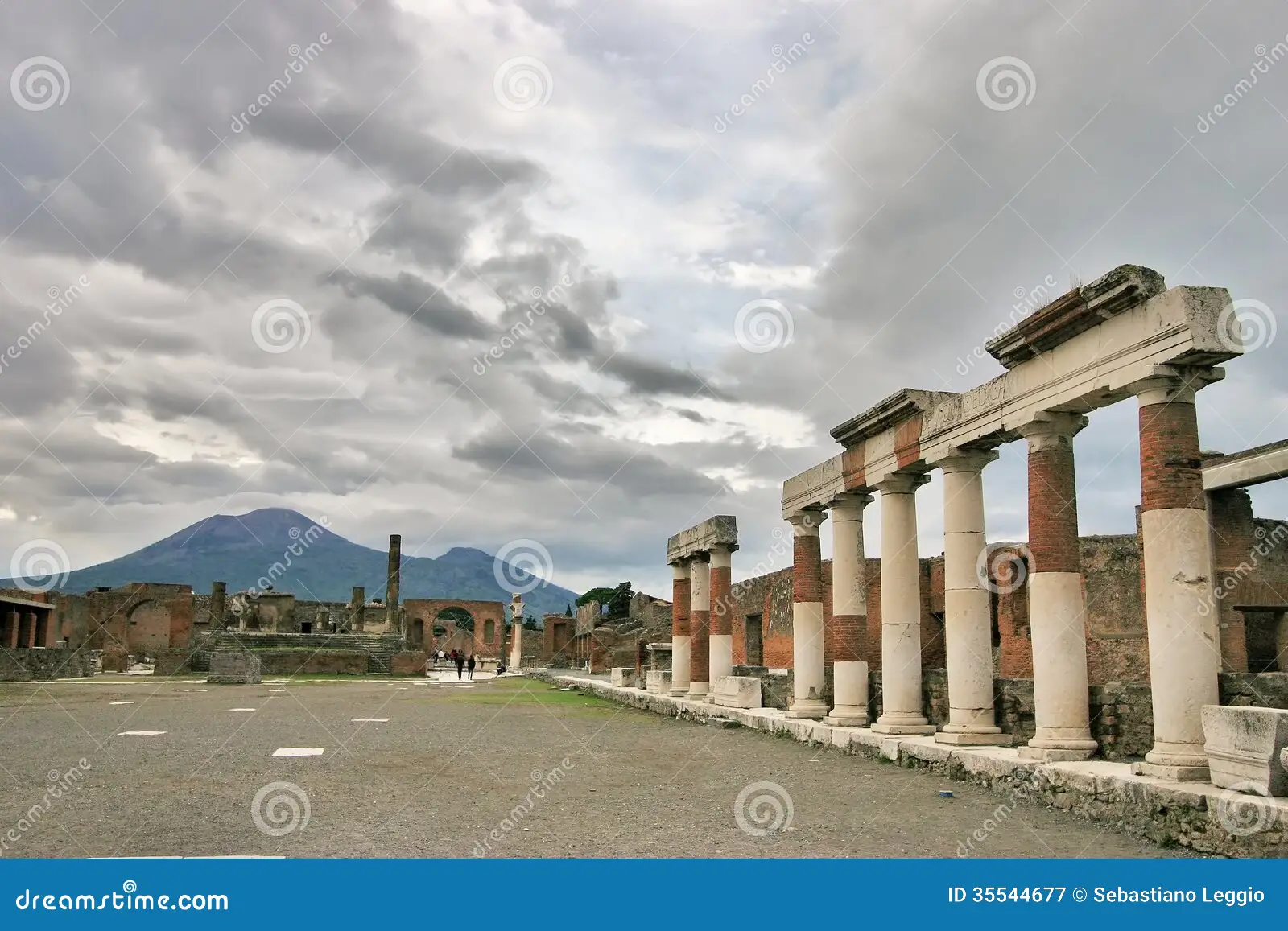
The civic and religious center of ancient Pompeii, this rectangular plaza was laid out between the 3rd and 2nd centuries BC and lined with the Temple of Jupiter, the Basilica, and public markets. Its western end frames a direct sightline to Mount Vesuvius, the volcano that buried the city in 79 AD.

House of the Vettii

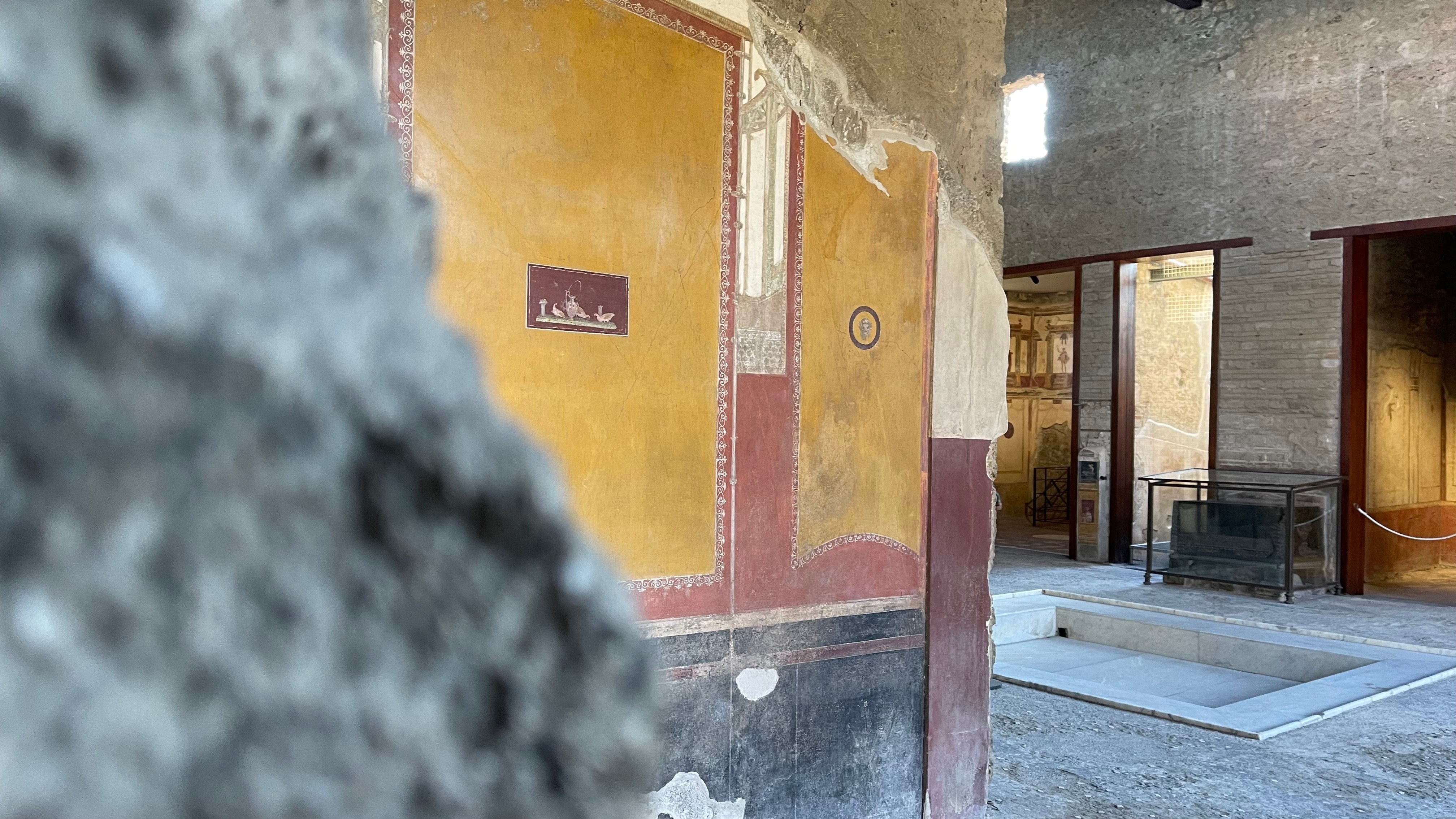
Unearthed in 1894 and reopened to the public in 2023 after restoration, this domus belonged to two freedmen brothers and preserves some of Pompeii's most vivid fresco cycles, including a controversial image of the god Priapus. Its peristyle garden still shows 18 painted columns and several fountain statues.

Villa of the Mysteries

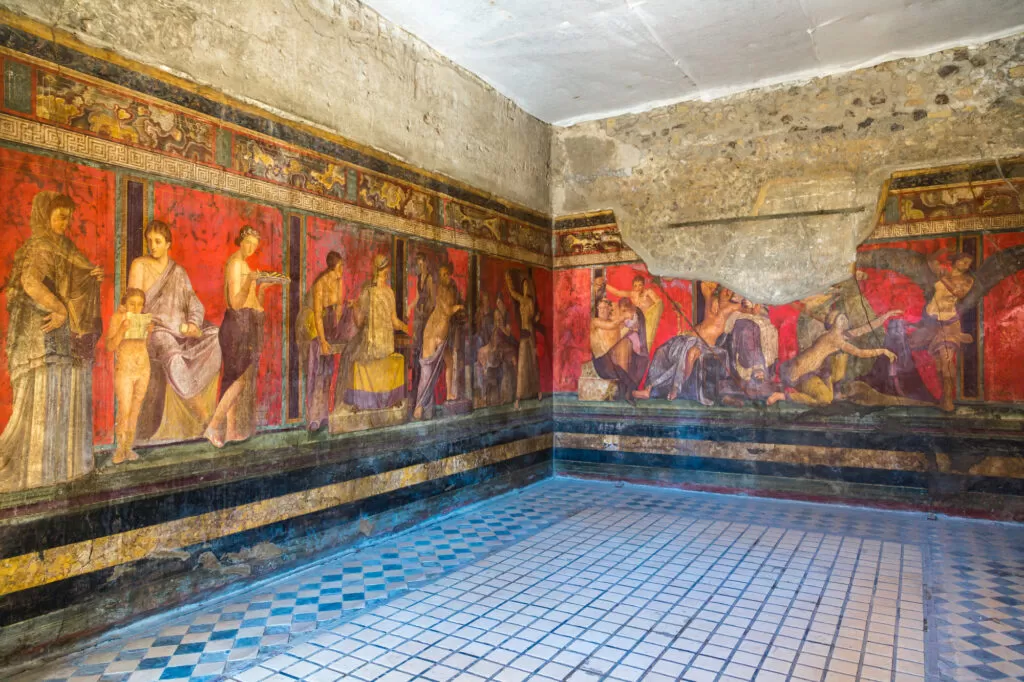
Just beyond the city walls along the Street of Tombs, this suburban villa holds a single room wrapped in 29 near-life-size figures painted on a deep red ground, believed to depict a woman's initiation into the Dionysiac Mysteries. The frescoes are entirely original and remain in their excavated location.

Amphitheatre of Pompeii

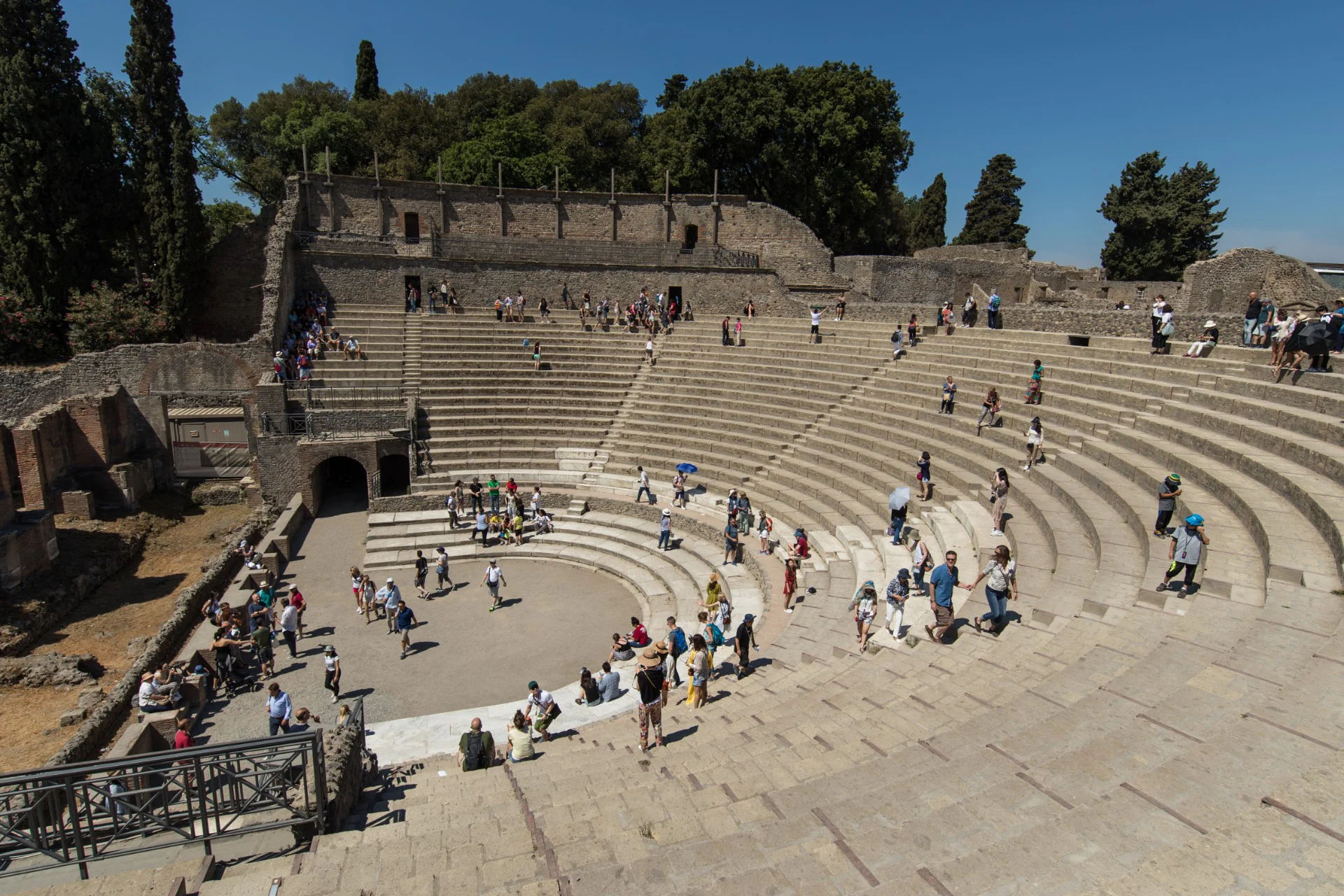
Built around 70 BC, this is the oldest surviving stone amphitheatre in the Roman world, predating the Colosseum by more than a century. It held roughly 20,000 spectators, close to the entire population of the ancient city.

House of the Faun

Covering an entire city block, this is one of the largest private residences ever excavated in Pompeii, named for the bronze dancing faun statue found in its atrium. The original Alexander Mosaic discovered here now resides in the Naples Archaeological Museum.

Garden of the Fugitives

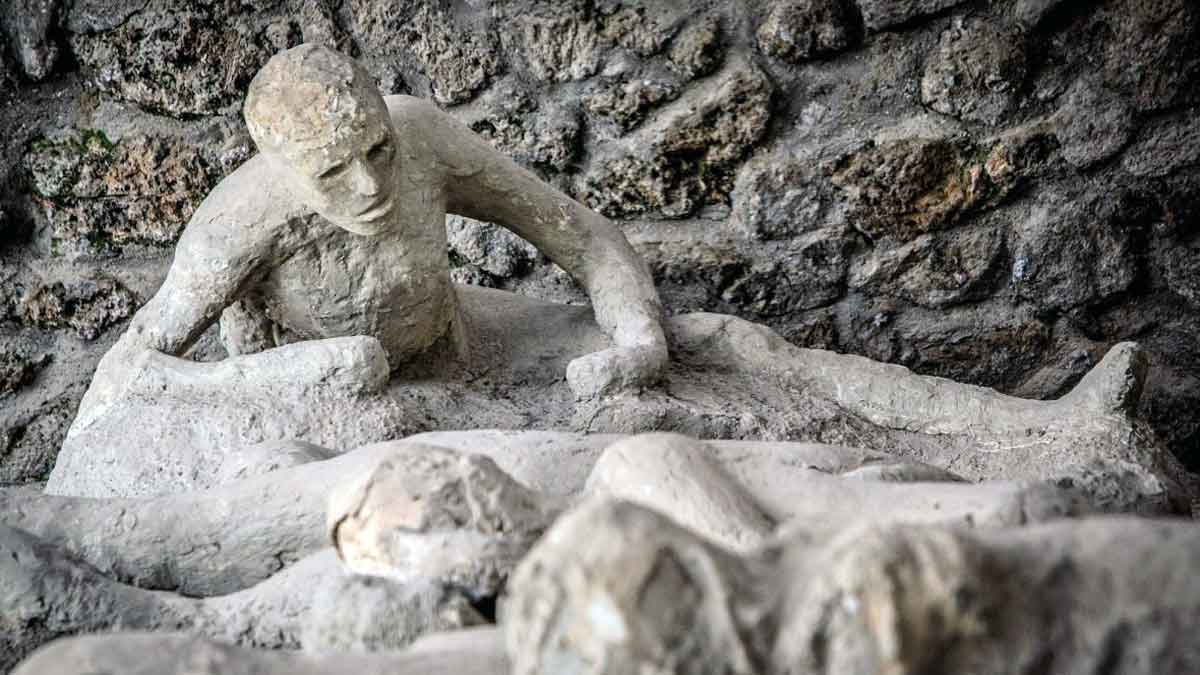
A plaster-cast display showing the contorted forms of thirteen victims who died together in a single garden plot, created by pouring plaster into the voids left by decomposed bodies in the volcanic ash. The casts remain in the position in which the victims were found in 1961.

The experience

What the visit is really like

You enter at Via Villa dei Misteri and the modern town falls away behind you. The paving underfoot is original basalt, grooved by cartwheels, and you feel the slight camber built to drain rainwater toward stepping stones set across each junction. On a pompeii guided tour you turn first toward the Forum, where the columns of the Temple of Apollo frame Vesuvius on the horizon — the mountain that did this, still watching. You pause at a thermopolium, the ancient fast-food counter, and trace the round hollows where jars of hot food once sat. Further along, you step into the House of the Faun and stand in its atrium, the floor opening to sky. You bend to read graffiti scratched at eye level, some of it crude, most of it startlingly familiar. By mid-morning the light sharpens. You climb into the amphitheatre and sit on the stone tiers where twenty thousand once watched the games. You find the plaster casts, and the pace of your walk slows without your deciding it. Arrive between 09:00 and 11:00, when temperatures stay cool and the tour groups have not yet filled the main axis. Wear real shoes; the ruins are wide and the stone is uneven. You will leave through the same gate, but you carry the streets with you.

Everything You Need to Know

Your complete experience guide

All the details about your upcoming adventure in one place

Your Pompeii Guided Tour Experience

A pompeii guided tour walks you through the streets, frescoes, and plaster casts of the Roman city buried by Vesuvius in 79 AD, with a licensed archaeological guide interpreting the Forum, bathhouses, and preserved villas. Skip-the-line access to the Pompeii archaeological park means your pompeii guided tour tickets get you past the queue at Porta Marina and straight into the excavations. These Pompeii ruins tours are the clearest way to read the ancient street plan and mosaics that make this UNESCO site among the region's defining Roman landmarks.

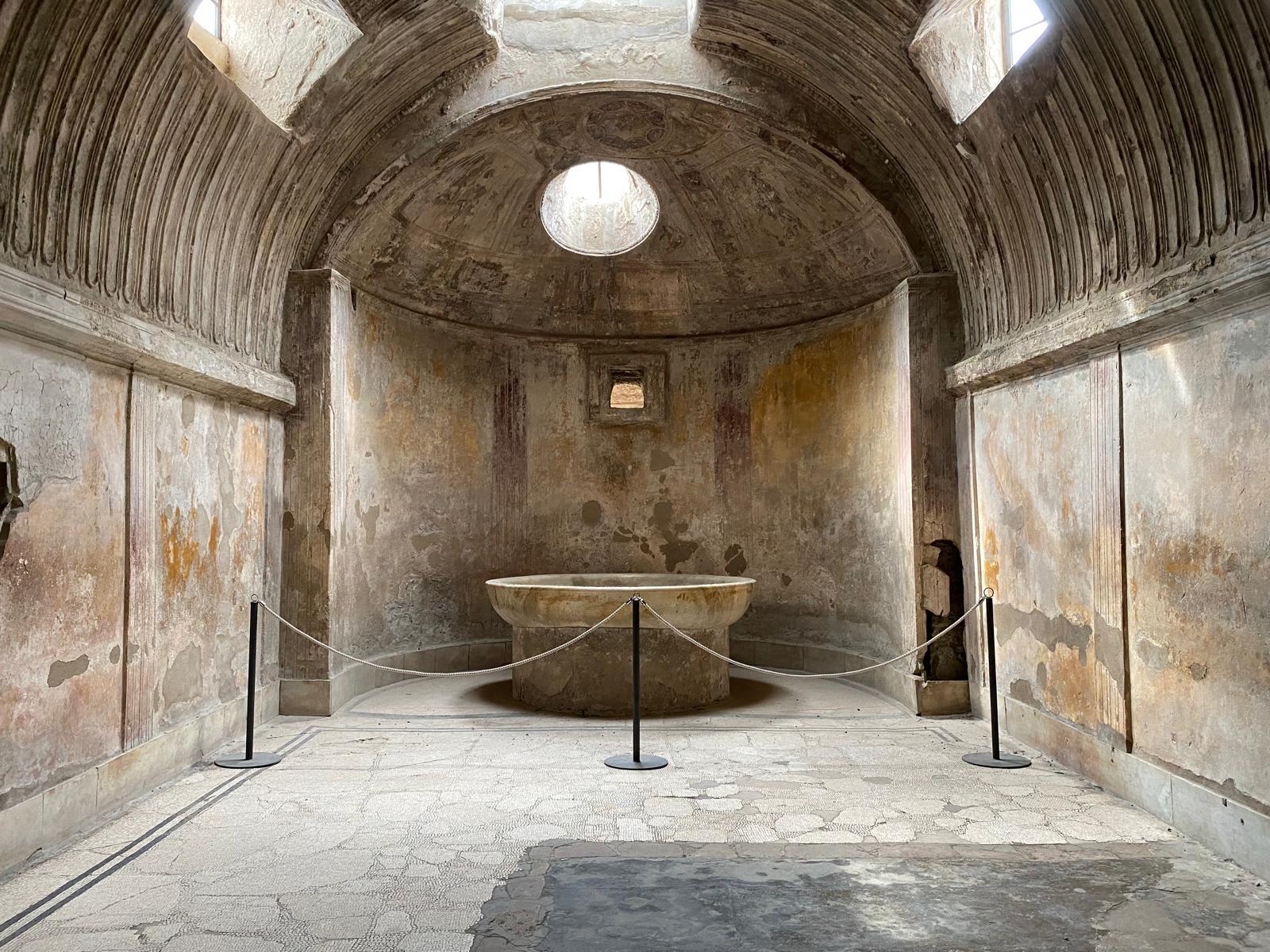
In AD 79, the eruption of Mount Vesuvius buried Pompeii under roughly six metres of volcanic ash and pumice within eighteen hours, sealing an entire Roman town at a single moment of ordinary life. What the tour guidato di pompei reveals today is not a ruin in the conventional sense but a preserved municipality: bakeries with carbonised loaves still in their ovens, election slogans painted across house facades, and wheel ruts worn into basalt paving stones. The city stretches across some 66 hectares behind its entrance at Via Villa dei Misteri, and a pompeii guided tour moves through a grid of streets first laid out in the sixth century BC. The Forum anchors the civic core, framed by the Temple of Jupiter and the basilica where legal and commercial business once passed. Beyond it, the Stabian Baths retain their stucco ceilings and heating channels, while the House of the Faun — one of the largest private residences in the Roman world — once held the celebrated Alexander Mosaic, now in Naples. What makes the site significant is its completeness. Few places on earth record daily Roman existence with such fidelity: shop counters inlaid for wine amphorae, frescoes graded from modest bedrooms to the theatrical Villa of the Mysteries, and the plaster casts formed by pouring into the voids left by decayed bodies. These casts, developed by Giuseppe Fiorelli in the 1860s, remain among the most affecting objects in any archaeological collection. The architecture rewards slow attention. Domestic houses turn inward around an atrium and its impluvium, drawing light and rainwater to the centre while presenting blank walls to the street. Colonnaded peristyle gardens, the amphitheatre of 70 BC — the oldest surviving stone example — and the twin theatres together map how a provincial Roman town balanced public spectacle with private retreat. Managed by the Archaeological Park of Pompeii and part of a UNESCO World Heritage listing since 1997, the excavations continue: recent digs in the Regio V and Regio IX quarters have uncovered fresh frescoes and inscriptions as lately as 2026. A pompeii ruins tour therefore visits a place still yielding its record, where conservation and discovery proceed side by side. For visitors drawn to the ancient landmarks near Naples, the appeal lies in this immediacy — a Roman street entered on foot, its thresholds and doorways intact, its scale unmistakably human rather than monumental.

A Roman street entered on foot, its thresholds and doorways intact, its scale unmistakably human rather than monumental.

Dress code

Wear closed, sturdy shoes with grip, as the original Roman paving stones and stepping-stone crossings are uneven and can be slippery when wet. Lightweight, breathable clothing and a wide-brim hat are recommended, since most of the archaeological park is unshaded and summer surface heat is intense between 11:00 and 15:00. Modest dress is not enforced site-wide, but bring a light layer for the cooler interiors of frescoed houses like the House of the Vettii.

Bags & security

Bags are screened at metal detectors at the main entrances (Porta Marina, Piazza Anfiteatro, Piazza Esedra), and large backpacks or suitcases over roughly 30 x 30 x 15 cm must be checked at the free or paid cloakroom before entry. Only one bag per visitor is generally permitted inside the excavations, and staff may ask you to open bags at checkpoints near sensitive fresco rooms such as the Villa of the Mysteries.

Photography

Personal photography and non-flash video are permitted throughout the open excavation areas, including the Forum, Amphitheatre, and most domus interiors. Flash photography is prohibited inside fresco-covered rooms to protect pigments, and tripods, selfie sticks, and drones require prior written authorization from the Parco Archeologico di Pompei. Commercial or professional shoots need a separate permit arranged in advance through the official site.

Families & strollers

Strollers can follow the same accessible route used by wheelchair users, though most of the ancient street grid is unsuitable for wheels, so a carrier is often easier for infants. Baby Points (small huts marked on the site map) near the main entrances offer private changing and feeding space on request.

Accessibility

The dedicated "Pompeii for All" path runs roughly 3.5 km from Piazza Anfiteatro to the Sanctuary of Venus over ramped, smoother surfaces and does not require an elevator, though the Antiquarium exit near Piazza Esedra does have a lift. Wheelchairs can be requested at the main entrances, but availability is not guaranteed, so travelers with mobility needs are advised to bring their own chair; most of the wider street network still involves original uneven Roman paving.

Food & drink

There is no full-service restaurant inside the excavations, but a self-service cafeteria and vending points operate near the Forum, and free water fountains are located at the main entrances and along the Via dell'Abbondanza. Picnicking is allowed only in designated rest areas such as the Quadriportico dei Teatri, and since re-entry is not permitted, most visitors eat before entering or plan a single midday break inside the park.

Not allowed

× Drones without permit × Tripods without permit × Flash photography in fresco rooms × Glass bottles × Large suitcases and backpacks (must be checked) × Selfie sticks without permit × Sharp objects and knives × Alcohol × Climbing on ruins or walls × Touching frescoes and mosaics × Smoking inside excavated buildings × Pets other than service animals × Loudspeakers or amplified audio

What to bring

✓ Valid photo ID matching your ticket ✓ Printed or digital ticket confirmation ✓ Sturdy closed-toe walking shoes ✓ Sun hat and sunscreen ✓ Refillable water bottle ✓ Light rain jacket in shoulder season ✓ Portable phone charger ✓ Small day bag under the size limit

Opening hours

Mon 09:00 – 19:00
Tue 09:00 – 19:00
Wed 09:00 – 19:00
Thu 09:00 – 19:00

Midweek tends quietest

Fri 09:00 – 19:00
Sat 09:00 – 19:00

Busier with weekend groups

Sun 09:00 – 19:00

Families and day-trippers peak midday

Closures & exceptions

  • ·Dec 25 — Christmas Day
  • ·Jan 1 — New Year's Day, reduced hours

At a glance

Hours: 09:00–19:00 daily, last entry 90 minutes before close

location

Getting there

Public transport · 30–40 min from Naples · Around EUR 3–4 one-way

Take the Circumvesuviana train from Naples Garibaldi or Sorrento to the "Pompei Scavi – Villa dei Misteri" stop, which sits directly outside the Porta Marina entrance.

Car · 35–45 min from Naples · EUR 5–10 for parking

Take the A3 Napoli–Salerno motorway to the Pompei exit, then follow signs for Scavi di Pompei; paid parking lots operate near Piazza Anfiteatro and Porta Marina.

Taxi · 35–50 min from Naples · Roughly EUR 60–80

A metered or pre-booked taxi from central Naples runs directly to the Porta Marina gate, avoiding train transfers.

Walk · 2–3 min from station · Free

From the Pompei Scavi train station platform it is a short walk across the road to the main entrance turnstiles.

Cancellation policy

Most Pompeii guided tour bookings allow free cancellation up to 24 hours before the scheduled start time, with a full refund of the 18 EUR entry component issued to the original payment method. Cancellations made within 24 hours of the tour, or no-shows, are typically non-refundable.

Plan your time

How long do you need?

Recommended time

3-4 hours

A well-paced pompeii guided tour covering the Forum, House of the Faun, Stabian Baths, and the Amphitheatre typically runs 3-4 hours, while a full skip-the-line Pompeii archaeology tour taking in quieter quarters and the Villa of the Mysteries frescoes can stretch into half a day. Add an hour if you want unhurried time at each stop or a guide who lingers on details; subtract time only if you're strictly hitting three or four headline sights. Queues are a real factor: they build steadily once tour buses from Naples and Sorrento start arriving, so entering during the 09:00-11:00 window keeps both walking pace and ticket-line waits manageable.

Crowd levels through the day

Opening rush Light
Mid-morning Building
Late morning Busy
Early afternoon Peak
Mid-afternoon Moderate
Early evening Light
Plan ahead

When to go — year at a glance

Weather · crowds · average price — dots go green to amber to red as each metric rises.

Spring

March through May brings mild 15–22°C days and blooming gardens along the Via dell'Abbondanza, with lighter crowds than summer. Easter week is a notable exception when domestic visitor numbers spike.

Summer

June through August sees temperatures regularly above 30°C with little shade across the 66-hectare site, and peak coach-tour traffic from Naples cruise arrivals. Early morning or the last two hours before closing offer the most tolerable conditions.

Autumn

September and October combine warm 20–25°C afternoons with thinner crowds after the August peak, making this widely considered the most comfortable season for a Pompeii guided tour.

Winter

November through February has cooler 8–15°C days and the lightest crowds of the year, though some outdoor fresco viewing can feel rushed given shorter daylight hours.

Insider tips

Helpful tips for your visit

Book timed entry online

Reserve your Pompeii guided tour ticket in advance through the official Vivaticket or Parco Archeologico channel, since the site caps daily visitor numbers and August tickets can sell out.

Match ID to your ticket

Tickets are nominative, so bring the passport or ID used at booking, since names are checked against tickets at the turnstile.

Pack a paper map or app

Wifi coverage is limited to areas near the entrances and Forum, so download an offline map of the 66-hectare site before you go.

Use the shaded rest stops

The Quadriportico dei Teatri and the porticoed Forum edges offer some of the only shade on-site, useful for a break between the Forum and the Amphitheatre.

Skip re-entry surprises

Once you exit through any gate you cannot re-enter on the same ticket, so plan restroom and food breaks before leaving the perimeter.

Check the Villa of the Mysteries hours

This annex closes earlier than the main site and needs a separate Plus ticket or add-on fee, so visit it before finishing your loop rather than saving it for last.

Call ahead for group logistics

The park's visitor information line, +39 081 857 5347, can confirm same-day entrance changes or accessibility arrangements before your Pompeii guided tour begins.

Where to meet

Meeting points

Porta Marina Superiore

Via Villa dei Misteri 2, 80045 Pompei, Napoli

Main entrance for most Pompeii guided tour groups, opposite the Hortus bar

Get directions

Piazza Esedra (Porta Marina Inferiore)

Piazza Esedra, 80045 Pompei

Dedicated skip-the-line access lane, near the Circumvesuviana Villa dei Misteri stop

Get directions

Piazza Anfiteatro entrance

Via Plinio, 80045 Pompei

Alternate gate near the accessible "Pompeii for All" route start

Get directions
The story

The history behind the site

Pompeii began as a settlement of the Oscan people around the 7th century BC, later shaped by Etruscan and Greek influence. By 80 BC the general Sulla established it as a Roman colony, Colonia Cornelia Veneria Pompeianorum. The town prospered on wine, olive oil, and trade along the Sarno river. A severe earthquake in AD 62 damaged temples, baths, and private houses; repairs were still underway seventeen years later. This dated groundwork underpins every pompeii guided tour, because the streets visitors walk were paved in this exact period. On 24 August AD 79 — a date many scholars now revise toward October — Vesuvius erupted. Pliny the Younger recorded the disaster in two letters to the historian Tacitus. Pyroclastic surges buried Pompeii under roughly six metres of ash and pumice, sealing frescoes, graffiti, and human forms. His uncle, Pliny the Elder, died at nearby Stabiae. The Pompeii archaeological tour told to visitors today rests on his eyewitness account. The city lay forgotten until 1748, when engineer Rocco Gioacchino de Alcubierre began digging under Bourbon king Charles III. Giuseppe Fiorelli, appointed director in 1863, introduced systematic stratigraphy and the plaster-cast method that captured bodies in their final positions. His grid of regiones and insulae still organises the site. Roughly two-thirds of the 66-hectare town has now been uncovered, and a deliberate one-third remains buried for future methods. Excavation continues into 2026. The Regio V dig, active since 2018, has produced new frescoes, a thermopolium counter, and fresh inscriptions that refined the eruption date. Poor 20th-century restoration and the 2010 collapse of the House of the Gladiators drew UNESCO scrutiny; the Great Pompeii Project since 2012 has stabilised structures. A thoughtful Pompeii ruins tour weaves these discoveries into a single narrative. Whether booked as pompeii guided tour tours or self-led with an audio guide, the visit traces a working Roman town frozen mid-repair. These Pompeii landmarks remain among Italy's most studied ruins.

7th c. BC

Oscan settlers found Pompeii near the Sarno river.

80 BC

Sulla makes Pompeii a Roman colony under Latin law.

AD 62

A powerful earthquake damages temples, baths, and houses.

AD 79

Vesuvius erupts, burying the town under ash and pumice.

1748

Bourbon-era digging under Charles III uncovers the buried city.

1863

Fiorelli introduces stratigraphy and the body-cast technique.

2012

The Great Pompeii Project begins stabilising the ruins.

2018

The Regio V excavation yields new frescoes and inscriptions.

Photo spots

Best photo spots

Forum with Vesuvius Backdrop

Best light · Golden hour, early morning

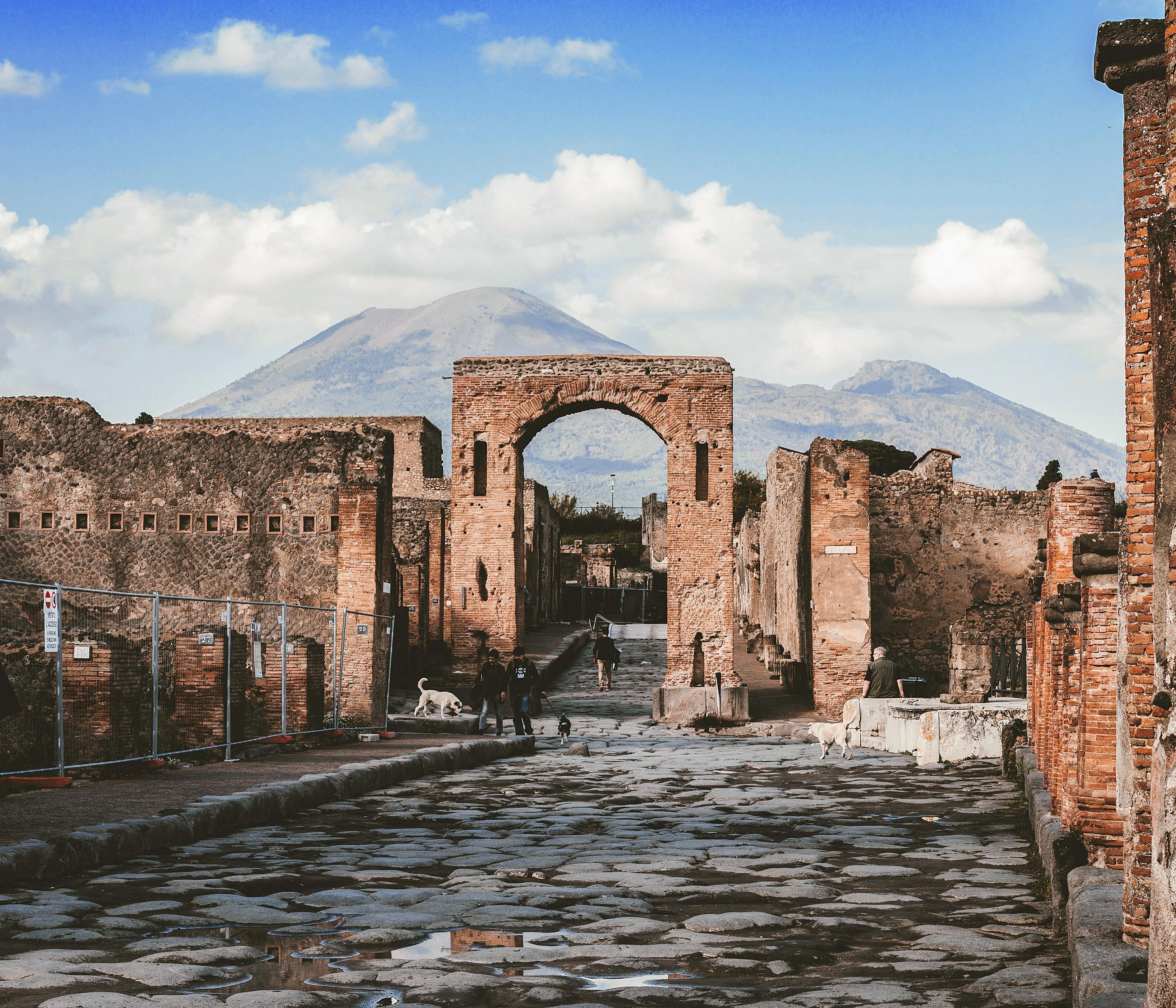
Stand at the northern end of the Forum's paved rectangle and frame the Doric and Corinthian columns with Mount Vesuvius rising directly behind them, a favorite composition on nearly every pompeii guided tour. Best captured from ground level looking north; the open plaza leaves no obstructions between lens and mountain.

Garden of the Fugitives

Best light · Before 09:00

A quiet enclosed courtyard near the Nocera Gate holding glass-cased plaster casts of victims caught mid-flight during the AD 79 eruption. Shoot through the glass from directly in front for a straight-on view with minimal reflection, keeping some distance out of respect for the scene. Morning light works best before glare builds up on the cases.

House of the Faun Mosaic Courtyard

Best light · Midday for even light

One of Pompeii's grandest private residences, its atrium and peristyle offer a wide symmetrical shot framed by surviving columns, with the bronze Dancing Faun statue replica as a central focal point. Stand at the entrance threshold on Via della Fortuna for the classic axial view straight through the rooms.

Quadriporticus of the Theatres

Best light · Late afternoon

A vast four-sided colonnaded courtyard behind the Large Theatre, once a gathering space and later gladiator barracks, where rows of surviving columns create long converging lines. Position yourself in a corner of the quadrangle to catch the full colonnade recede toward the far side, with pine trees breaking up the horizon.

Via dell'Abbondanza Street View

Best light · Morning, soft light

Pompeii's main thoroughfare, lined with shopfronts, raised stepping stones, and wheel ruts worn into the volcanic stone, gives a long straight perspective shot down the ancient street. Stand at one of the raised pedestrian crossings and shoot along the road's centerline toward the Forum for depth and scale, an angle popular beyond any single skip-the-line pompeii guided tour itinerary.

Gallery

Moments from the experience

With kids

Visiting with kids

A pompeii guided tour rewards families who plan around the ruins' scale rather than fight it, since 66 hectares of ancient stone streets ask a lot of small legs. Kids aged six and up tend to engage best, following stories about eruption and daily Roman life without tiring too fast.

Best ages

Children around 6 to 12 get the most out of it, connecting well with the eruption story and casts. Toddlers can manage shorter loops but tire quickly on uneven ground, so keep expectations modest.

Uneven streets

Pompeii's original stone paving has gaps and raised crossing-slabs throughout the site. Closed, cushioned shoes matter more than any other packing choice for young walkers.

Pacing

Split the visit into 90-minute blocks with a seated break between each, rather than attempting the whole circuit in one push. A skip-the-line Pompeii ticket saves queue time you can reinvest in rest stops.

Shortening the route

Focus on the Forum, Amphitheatre, and one or two houses instead of every domus; this keeps highlights intact while cutting total walking roughly in half. Ask staff near Piazza Anfiteatro about the smoother connecting path if a child is struggling.

Facilities

Three baby-changing points sit along Via dell'Abbondanza, Via di Nola, and Via Stabiana, with keys available at the entrances. Water fountains are scattered through the site, useful for refilling bottles between rest stops.

Customer Reviews

What travelers say

Real experiences from real travelers

4.5
Based on undefined reviews
1 ★ 520
2 ★ 410
3 ★ 940
4 ★ 2600
5 ★ 12800
M
Marcus H.
United States · 2026-06-14

Vesuvius still looming

Our pompeii guided tour started early enough that the July heat hadn't peaked, and the guide walked us through the Forum with Vesuvius sitting right there on the horizon. Seeing the plaster casts and the old bakery ovens in person made the scale of the eruption feel real. Comfortable shoes matter on that uneven basalt.

S
Sofia R.
Spain · 2026-05-02

Frescoes were the highlight

The visita guiada a Pompeya we booked included the Villa dei Misteri, and the deep red frescoes there were far more intact than I expected. Our guide pointed out the lead water pipes and the grooves cut by cart wheels in the stone streets. A calm morning with a light breeze made the two hours fly by.

T
Thomas B.
Germany · 2026-03-19

Dense with history

A well-run Pompeii archaeological tour that covered the amphitheatre, the baths, and a couple of frescoed houses. It was cloudy the day we went, which kept things cool but muted the light on the stone. The guide handled a large group well, though I'd have liked a little more time at the Forum.

A
Aiko T.
Japan · 2026-07-08

Worth the early start

We chose a small-group pompeii guided tour and I'm glad we did, since our guide could actually answer questions about the graffiti carved into the walls. Standing in the House of the Faun with the mosaic threshold underfoot was a quiet, moving moment. Bring water because there's little shade by midday.

L
Lucas F.
Brazil · 2026-04-27

Ancient streets came alive

Walking the Via dell'Abbondanza on our Pompeii ruins tour, the guide explained how the stepping stones let people cross without touching the muddy road. The stone was warm underfoot in the afternoon sun and the whole site smelled faintly of dry grass and pine. Skip-the-line entry saved us a long wait at Porta Marina.

E
Emma W.
United Kingdom · 2026-02-11

Guide made the difference

Booked a skip-the-line Pompeii tour on a crisp February morning and had whole streets nearly to ourselves. Our guide brought the casts of the fugitives to life without being macabre about it. The Pompeii guided tour tickets were easy to redeem at the gate with a phone screenshot.

N
Nadia K.
Netherlands · 2025-11-30

Cold but rewarding

Late November meant fog rolling off Vesuvius and a chill that crept through the open courtyards. The Pompeii landmarks tour still delivered, with a thorough stop at the Stabian Baths and the old fast-food counters. Wear layers, as the exposed site holds no warmth once the sun drops.

C
Carlos M.
Mexico · 2026-06-29

Two hours very well spent

One of the better Pompeii guided tour tours I've joined, with a guide who paced the walk so we never felt rushed through the Forum or the theatre district. Midsummer light in the late afternoon turned the columns a warm gold. The audio headsets meant I heard every word even at the back of the group.

I
Ingrid A.
Sweden · 2026-01-22

Frescoes and mosaics

Our pompeii guided tour tour lingered at the House of the Vettii, freshly reopened, where the wall paintings glowed under the winter sun. The guide's stories about daily Roman life stuck with me more than any textbook had. Uneven ground throughout, so this isn't ideal for anyone with mobility trouble.

P
Peter L.
Australia · 2025-09-08

Vast and humbling

I hadn't grasped how large the excavated city was until we spent a full morning on a Pompeii archaeological tour crossing from the amphitheatre to the western gate. September sun was strong but a hat and water sorted that out. The bakery with its stone mills and the carbonised loaves left the strongest impression.

FAQ

Frequently asked questions

Everything you need to know for your journey

Around the corner

Nearby landmarks worth a detour

Antiquarium of Pompeii

5 min walk

museum

A small on-site museum displaying plaster casts of victims, everyday objects, and jewelry recovered from the excavations. It sits near the Piazza Esedra entrance and works well as a pre- or post-visit stop.

Sanctuary of Venus

10 min walk

landmark

A ruined temple complex dedicated to Pompeii's patron goddess, positioned on a terrace with wide views toward the Bay of Naples. It anchors the western end of the accessible "Pompeii for All" route.

Necropolis of Porta Ercolano

15 min walk

landmark

A row of elaborate Roman tombs lining the road toward the Villa of the Mysteries, belonging to some of the city's most prominent families. The monuments range from simple altars to elaborate columned facades.

Mount Vesuvius Observatory viewpoint area

15 min drive

viewpoint

An overlook area near the base of the volcano offering photographs of the crater rim that dominates Pompeii's skyline. Access typically requires a short shuttle or taxi ride from the archaeological park.

Where to stay

Where to stay nearby

Pompei town center

10 min walk

mid-range

A cluster of small hotels and B&Bs around Piazza Bartolo Longo, within easy reach of both the Sanctuary of Pompei and the Porta Marina entrance.

Sorrento district

40 min by train

boutique

A cliffside resort town with boutique hotels overlooking the Bay of Naples, commonly used as a base for day trips to Pompeii.

Naples city center

30 min by train

budget

Naples offers the widest range of hostels and budget guesthouses near Garibaldi station, with direct Circumvesuviana connections to Pompeii.

Ready for Adventure?

Join thousands of happy travelers who have discovered this incredible experience

Book Your Experience Now