Beneath the ash that fell in 79 AD, Pompeii kept its bread in the ovens. Carbonized loaves, stamped with the baker's name, were recovered from the House of the Chaste Lovers, and they remain among the most quietly startling objects in the entire archaeological park.
Read moreShow less
This is the promise of Pompeii Tickets: not the grandeur of a single temple, but the intimacy of an ordinary city interrupted mid-sentence.
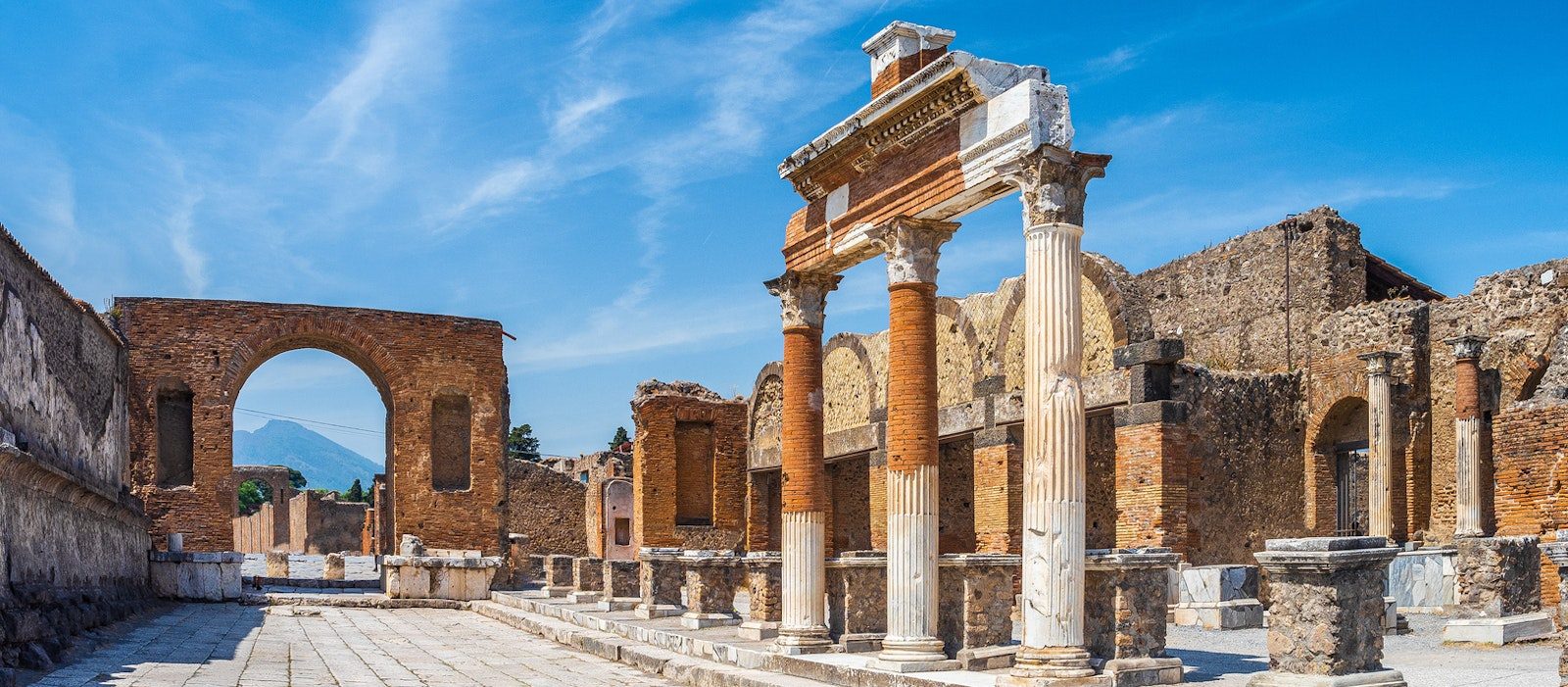
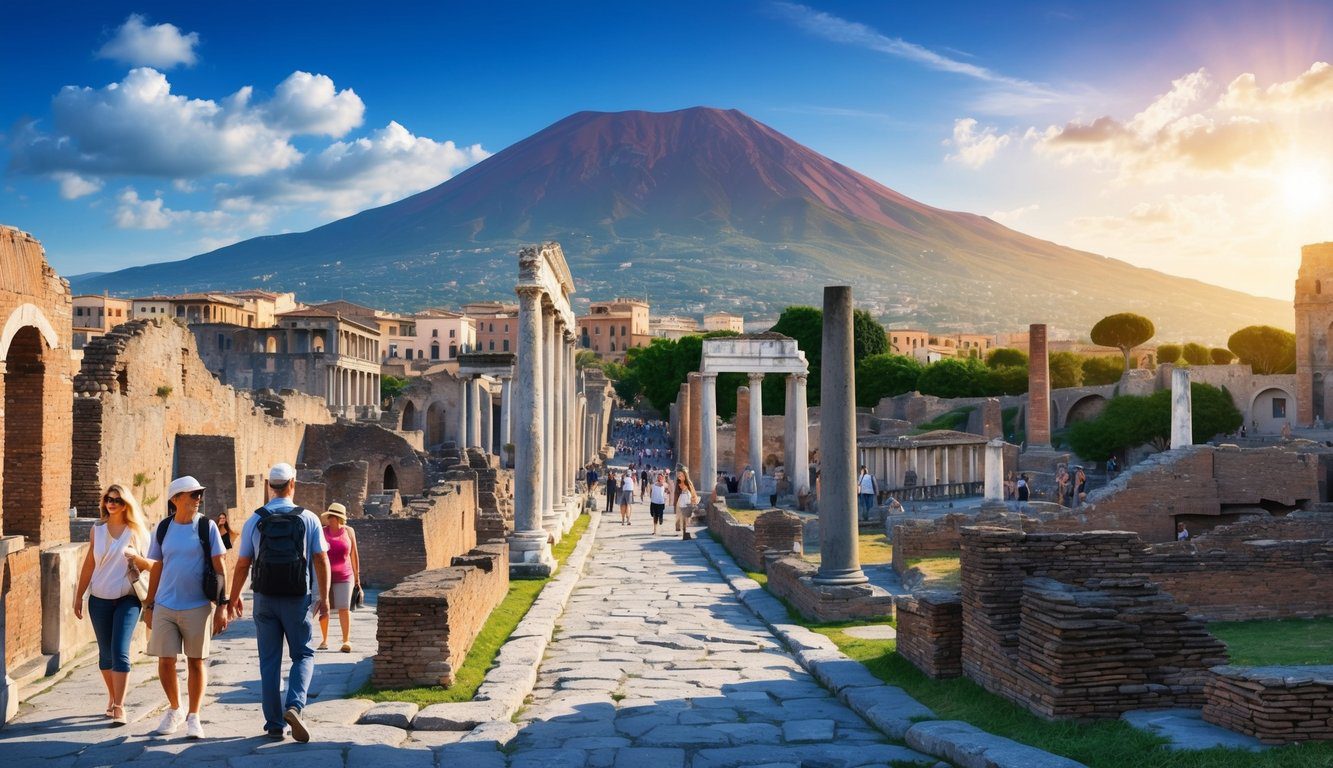
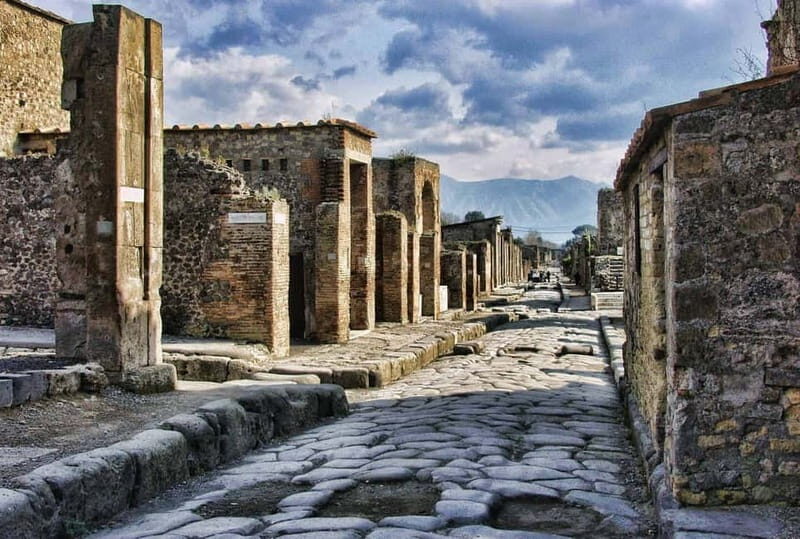
Roman Pompeii grew from an Oscan settlement into a prosperous port and market town before Vesuvius sealed it. What defines the place today is completeness. The visitor walks the Via dell'Abbondanza past election slogans still painted on the walls, past counters where wine and hot food were once served, past the ruts that carts wore into the basalt paving. The Forum still holds its position at the civic center, columns aligned toward the volcano. Nearby, the Stabian Baths preserve their vaulted changing rooms, and the Amphitheatre, one of the oldest surviving in the Roman world, sits at the eastern edge where gladiators once fought. Farther out, beyond the walls, the Villa of the Mysteries guards its cycle of red-ground frescoes, their meaning still argued over by scholars.
The site is vast enough that no two visits trace the same path. Those with limited hours gravitate toward the Forum, the theatre district, and the Lupanar; those who linger reach the House of the Faun with its mosaic floors and the Garden of the Fugitives, where plaster casts hold the shapes of the dying. The way these places connect matters. A guided walk threads the House of the Vettii, the public baths, and the bakeries into a single story of Roman domestic life, which is why so many travelers pair their skip-the-line Pompeii ruins entry with an expert on the ground. Pompeii guided tours and private Pompeii tours open doors that self-guided visitors often miss, while combined Pompeii and Herculaneum tours set the town against its smaller, better-preserved neighbor.
Pompeii suits the curious more than the hurried. It rewards patience, good shoes, and a willingness to look closely at graffiti, thresholds, and household shrines. Families find it tangible in a way few ruins are; students of antiquity find a textbook made three-dimensional. Whether reserved as straightforward Pompeii Tickets tickets or as a full-day Pompeii Tickets tour with a scholar, the visit leaves the same impression, that of a living town stopped, mid-breath, and never quite let go. A well-planned Pompeii Tickets tours experience turns a famous name into a walkable morning.
“An ordinary city interrupted mid-sentence, stopped mid-breath and never quite let go.”
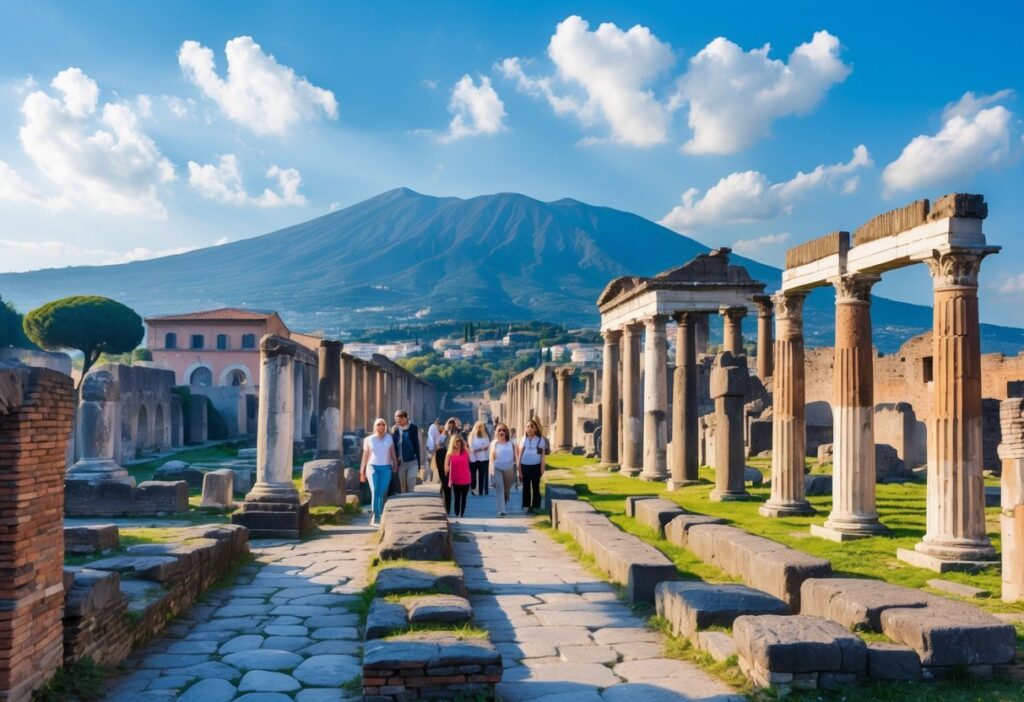
Complete Roman Streetscape
Pompeii preserves a full ancient town, from shop counters and taverns to frescoed homes and public baths, rather than a lone ruin.
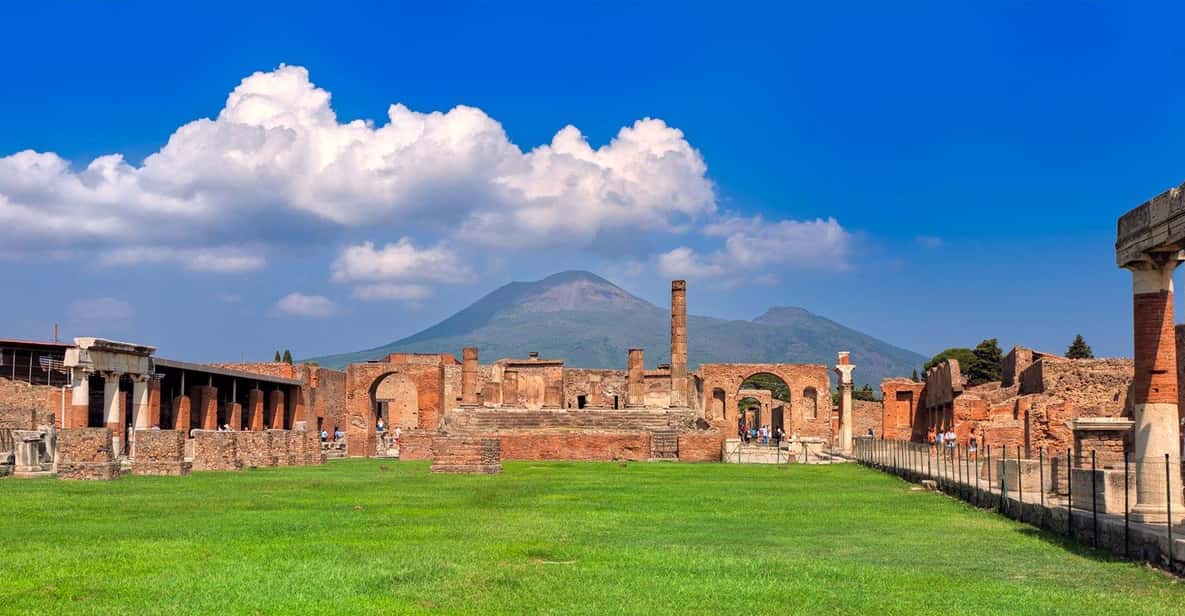
The Forum and Vesuvius
The civic heart of the city opens toward the volcano that buried it, framing the landscape that shaped Pompeii's fate.
Painted Villas and Plaster Casts
Vivid wall frescoes at the Villa of the Mysteries and haunting body casts bring the eruption's final day into sharp focus.
Most popular
Top attractions in Pompeii
Every route into Pompeii starts with one decision: how much hand-holding and how far afield you want to go. This grid maps the ways to reach the ruins, from self-guided entry to expert-led circuits and multi-site combinations. Choose by your starting point, your appetite for context, and whether the archaeological park alone satisfies you or you want a wider Bay of Naples sweep. Each page below covers a distinct format, so match the entry style to how you like to travel rather than defaulting to the first option.
Pompeii Tickets: 1-Day, 2-Day, and 3-Day Itinerary Plans
Pompeii rewards whatever time you give it, from a two-hour express loop near the main gate to a three-day pairing with Herculaneum and Vesuvius. These plans sequence the site by walkable proximity so you cover ground once rather than backtracking. Pick the length that fits, then anchor each day with a timed entry ticket to avoid queuing at the gate.
Book a timed ticket for the Porta Marina gate and enter within the first hour to walk the main streets before midday. Allow two hours for a focused loop.
Follow Via dell'Abbondanza from the Forum through the civic core, hitting the main plaster casts and public buildings. This covers the headline stops in about 90 minutes.
Arrive at opening with a full-day ticket and start at the western quarter around the Forum baths and theatres. Budget five to six hours for the complete circuit.
Walk east along Via dell'Abbondanza to the Amphitheatre and Great Palaestra at the far corner. It is a 15-minute walk from the Forum, so save it for after lunch.
3
Afternoon
Lunch break inside the site
Stop at the on-site café near the Forum or bring a packed lunch, as options thin out toward the eastern gate. Refill water before the afternoon stretch.
Getting to Pompeii Tickets Entrances: Train, Car, and Station Options
Pompeii's ruins sit directly opposite a train station, so the entire approach hinges on picking the right stop for the gate you plan to enter. Naples, Sorrento, and Salerno all connect by direct commuter rail with no transfers required.
Metro
€3.30 single
The EAV Circumvesuviana Naples-Sorrento line runs from Napoli Garibaldi (lower level of the central station) to Pompei Scavi-Villa dei Misteri, the stop directly across from the Porta Marina entrance. Journey time from Naples is about 35 minutes, and the same line reaches Pompei Scavi from Sorrento in roughly 30 minutes.
Walking
free
From Pompei Scavi-Villa dei Misteri station it is a 5-minute walk to Porta Marina Superiore, with the Porta Marina Inferiore (Piazza Esedra) gate a few meters further on. The Piazza Anfiteatro entrance is better reached from the Moregine or Pompei town side rather than this station.
Taxi
€1.06/km, €3.50 flag fall
Fixed-rate taxis cover the short hop from Naples city center to the station area for travelers connecting from the airport shuttle or arriving with luggage. Metered fares apply once outside the fixed-rate zone.
Bus
varies by route
BUSITALIA regional coaches (including express service from Salerno via the motorway) serve Pompeii for travelers coming from the Salerno side rather than Naples or Sorrento.
Bike
paid lots, hourly rate
Car travelers on the A3 Napoli-Salerno motorway should take the Torre Annunziata Sud or Boscoreale exit; several supervised lots near Porta Marina and Piazza Esedra handle both short stays and full-day parking, and arriving before 10:00 fills up less.
From the airport: From Naples International Airport (Capodichino), the Alibus shuttle reaches Naples Garibaldi in about 20 minutes for €5, from where the Circumvesuviana continues to Pompei Scavi in 35 minutes for €3.30; a fixed-rate taxi to the Naples city center takes about 15 minutes for €18-23, with train or private transfer onward to Pompeii.
Save money
Pompeii Tickets Combined with Herculaneum: Is the Pass Worth It
The official Pompeii+Herculaneum combined ticket bundles entry to both archaeological parks into one purchase, valid across a 48-hour window, against buying two separate single-site tickets.
Individual tickets
Pompeii and Herculaneum bought separately
Top pick
Pompeii+Herculaneum combined ticket
One ticket, two sites, 48 hours
Price
Pompeii ~€18-22 plus Herculaneum ~€13, paid as two transactions
Approximately €22 for both sites combined, sold as a single ticket on pompeiisites.org
What's included
One entry to Pompeii only, or one entry to Herculaneum only, each requiring a separate booking
One entry to Pompeii and one entry to Herculaneum, usable on different days within the validity window
Transit included?
No, transit is separate (see cityGettingAround)
No, transit is separate (see cityGettingAround)
Validity window
Single-use, no re-entry, no time flexibility between sites
48 hours from first use, so the second site can be visited the same day or the next
Best for
Visitors doing only Pompeii, or Herculaneum on a separate trip from Naples
Visitors planning both sites within two days, since the bundle costs less than the sum of two single tickets
Verdict: Anyone visiting both Pompeii and Herculaneum within a 48-hour span should buy the combined ticket rather than two single entries; see the pompeii-tickets and pompeii-herculaneum-tours pages for booking links and tour add-ons.
When to go
Best Time for Pompeii Tickets: Shoulder Season vs Summer Heat
April, May, September and October give the best balance of comfortable temperatures and the long 7 PM closing time (last entry 5:30 PM), before summer heat and after the shortened winter hours cut visiting time short.
April-May
13-20C, mild with occasional showersRising but manageable crowds
Wildflowers soften the ruins and the site holds its 5:30 PM last-entry cutoff, but Easter and Liberation Day (April 25) bring domestic-tourism spikes.
June-August
Hot, 25-32C highs, little shade on siteHeaviest crowds of the year
The vast open excavation offers almost no natural shade at midday, so summer visits reward an early 9 AM start even though last entry still runs to 5:30 PM.
September-October
21-25C easing to 17-21C by late OctoberBusy but thinning after mid-October
September keeps summer warmth while crowds start to ease, and the 5:30 PM last entry still applies through October 31 for a full-length visit.
November-March
12-18C, cooler with more rainLightest crowds of the year
Mild weather and thin crowds come at the cost of a shortened day, since last entry drops to 3:30 PM and the park closes at 5 PM.
Beyond the city
Day Trips Beyond Pompeii Tickets: Herculaneum, Vesuvius, and Naples
Pompeii's ruins pair naturally with several nearby sites, letting travelers extend a single trip into the ash-buried town of Herculaneum, the crater above it, or the artifacts that once filled its houses. For deeper planning on two of these, see the pompeii-vesuvius-tours and pompeii-herculaneum-tours pages.
Herculaneum
30 min
Circumvesuviana train from Pompei Scavi (change may be required via Naples-bound service)
Smaller and better preserved than Pompeii, with multi-story buildings and carbonized wood still intact, making it a compact half-day add-on.
Mount Vesuvius
about 1 hour
EAV bus 808 from Pompei Villa dei Misteri or Piazza Anfiteatro
A steady uphill walk to the crater rim gives views over the Bay of Naples and a direct sense of the volcano that buried the city below.
Naples Archaeological Museum
about 40 min
train from Pompei Scavi to Napoli Garibaldi, then a short walk or metro to the museum
Houses the mosaics, frescoes, and everyday objects removed from Pompeii and Herculaneum, filling in context that the excavation sites themselves leave out.
Sorrento
about 30 min
Circumvesuviana train from Pompei Scavi toward Sorrento
A coastal town with cliffside views over the Bay of Naples, useful as a base or a relaxed final stop after a day among the ruins.
The story
The History Behind Pompeii Tickets: From Eruption to UNESCO Site
In 79 CE, Vesuvius erupted, burying the Roman town under six metres of ash and pumice. Pliny the Younger, watching from Misenum, recorded the column of smoke rising like a stone pine. The volcanic layer sealed streets, frescoes, and bread left in ovens. What destroyed the city also preserved it, which is why any exploration of Pompeii Tickets begins with catastrophe rather than commerce.
The town lay forgotten until 1748, when Bourbon king Charles III ordered systematic digging on behalf of the Kingdom of Naples. Engineer Rocque Joaquín de Alcubierre led the early trenches. Later, Giuseppe Fiorelli, appointed director in 1863, introduced the plaster-cast technique that captured the voids left by decomposed bodies, giving the dead their recognisable postures. His careful stratigraphy turned looting into archaeology. Modern Pompeii Tickets tours still follow the grid Fiorelli mapped. Guided Pompeii Tickets tickets grant entry through the same excavation era he professionalised.
In 1997, UNESCO inscribed the archaeological areas of Pompeii, Herculaneum, and Torre Annunziata together on the World Heritage List, recognising a Roman civilisation frozen mid-life. A single Pompeii Tickets tour threads this long arc, from imperial calamity to conservation science. Visitors browsing Pompeii landmarks and skip-the-line Pompeii sites walk the outcome of two millennia.
Today the visitor still sees the ash-set ruts of cart wheels, the red Villa dei Misteri frescoes, and the plaster casts in the Antiquarium. The stepping stones crossing the Via dell'Abbondanza remain where Roman feet last touched them, the eruption's silence made permanent in stone and street.
79 CE
Vesuvius erupts, burying Pompeii under ash and pumice.
1748
Charles III of Bourbon orders systematic excavation of the buried town.
1763
An inscription confirms the site's identity as ancient Pompeii.
1863
Giuseppe Fiorelli becomes director and develops the plaster-cast method.
1997
UNESCO inscribes Pompeii, Herculaneum, and Torre Annunziata on the World Heritage List.
FAQ
Pompeii — frequently asked questions
Pompeii primarily features ancient archaeological ruins, including incredibly preserved Roman homes, grand temples, public baths, the massive Amphitheatre, and the poignant plaster casts of Mount Vesuvius's victims.
Plan your route based on your interests and time. History enthusiasts should prioritize the Forum, the Lupanar, and the Villa of the Mysteries. If you are short on time, booking a guided tour is the best way to see the highlights without getting lost.
The best time to explore the ruins is early in the morning right when the gates open, or late in the afternoon. Spring and autumn offer the most comfortable weather, as the site has very little shade during the hot summer months.
It is highly recommended to book your entry tickets and guided tours online in advance. This allows you to skip the notoriously long ticket office queues, secure your preferred entry time, and sometimes access exclusive online discounts.
Pompeii offers a special accessible pathway called 'Pompeii for All' that is designed to be easier for wheelchair users and families with strollers. However, many original Roman roads feature large, uneven stones, so sturdy walking shoes are a must.
The archaeological park itself is entirely pedestrian, so walking is the only way to move between the ruins. To arrive at the park, the most convenient transport is the Circumvesuviana train from Naples or Sorrento to the 'Pompei Scavi-Villa dei Misteri' station.
Yes, visitors can purchase passes like the Campania Artecard, or book combination tickets that bundle Pompeii with guided trips up Mount Vesuvius or entry to the nearby preserved city of Herculaneum for a comprehensive historical experience.
To avoid the largest tour groups, try entering through the Piazza Anfiteatro gate instead of the busy Porta Marina entrance. Head to the furthest edges of the park, like the Villa of the Mysteries, first thing in the morning.
Ready to Explore?
Choose from amazing attractions and create unforgettable memories in this beautiful city