2 hr
Pompeii Private Archaeological Walking Tour
- Private experience
- Personal attention
- Premium amenities
- Free cancellation
Pompeii Private Tour — Guided Access to the Buried Roman City
Ash preserved a whole city, silence walks its stone streets.
Compare fares, pick the fit — all bookings are mobile-voucher and eligible for free cancellation where shown.
2 hr
2 hr
3 hr
Worth it for first-time visitors short on time
A pompeii private tour typically runs €120–250 per group on top of the €18 standard adult entry, so the real question is what that premium buys across a 66-hectare site. What you get is personalised pacing and a guide who reads the room: they steer you to the frescoed villas and bathhouses that reward close looking, decode the ruins you'd otherwise walk past, and answer questions on the spot. A small-group Pompeii guided tour splits the guide cost and lands cheaper, but you inherit someone else's route and speed. Self-guided at €18 works if you research beforehand and enjoy wandering unhurried. The private option pays off for those who want the excavations explained without a crowd, and for anyone who dislikes navigating vague signage. For budget travellers happy with an audio guide, the skip-the-line Pompeii convenience matters more than commentary.
Bottom line: If it's your first visit and understanding beats budget, private pompeii private tour tickets earn their cost; otherwise a small-group Pompeii Express walk covers most of the ground.
Most travelers weighing a pompeii private tour against Herculaneum find the two sites complement rather than compete, since Pompeii offers scale while Herculaneum offers depth of preservation in a fraction of the space.
|
Top pick Pompeii |
Herculaneum | |
|---|---|---|
| Site size and scope | 66 hectares, 44 excavated | 4.5 hectares excavated, far more compact |
| State of preservation | Roofless in most areas, stone and mosaics | Upper storeys, wood, and roofs survive |
| Crowd levels | High, especially midday tour groups | Lower, roughly 500,000 visitors a year |
| Typical visit duration | 3–4 hours for a full walk-through | 1.5–2.5 hours covers the site |
| Combining both in one day | Doable if Pompeii starts early | Best slotted in the afternoon |
| Getting there | On-site at Via Villa dei Misteri 2 | Circumvesuviana train, 20 min from Pompeii |
| See tickets & prices |
Verdict: Choose the sprawling Pompeii archaeological park for scale and a full day of exploring skip-the-line Pompeii sites, and add Herculaneum's tighter, better-preserved ruins if you have an extra half day in Naples.
Hand-picked experiences loved by thousands of travelers
2 hours
Free Cancellation
Explore the preserved streets of Pompeii with a private, expert-led tour featuring priority entry.
3 hours
Free Cancellation
Uncover the secrets of a city frozen in time by Vesuvius on a private, expert-led tour.
3 hours
Free Cancellation
Uncover the secrets of a frozen Roman city with a professional guide on this exclusive private walking tour.
Begin a pompeii private tour at the main gate, historically the city's sea-facing entrance
Explore the civic and religious heart of the ancient city
View one of the largest private residences with famed mosaic floors
See the frescoed initiation-rite murals on the site's edge
Visit one of the oldest surviving Roman amphitheatres
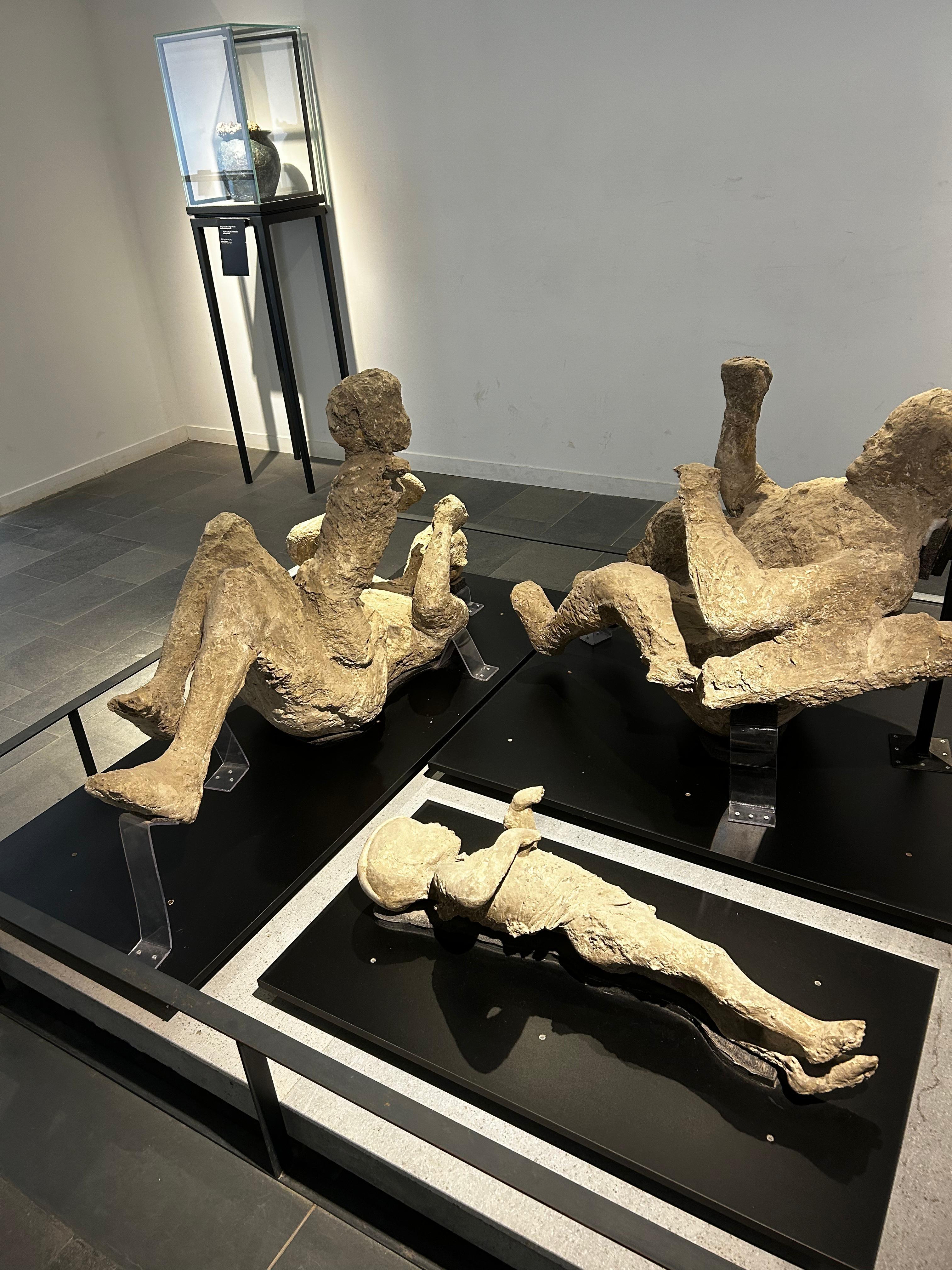
View the plaster casts of victims from the 79 AD eruption
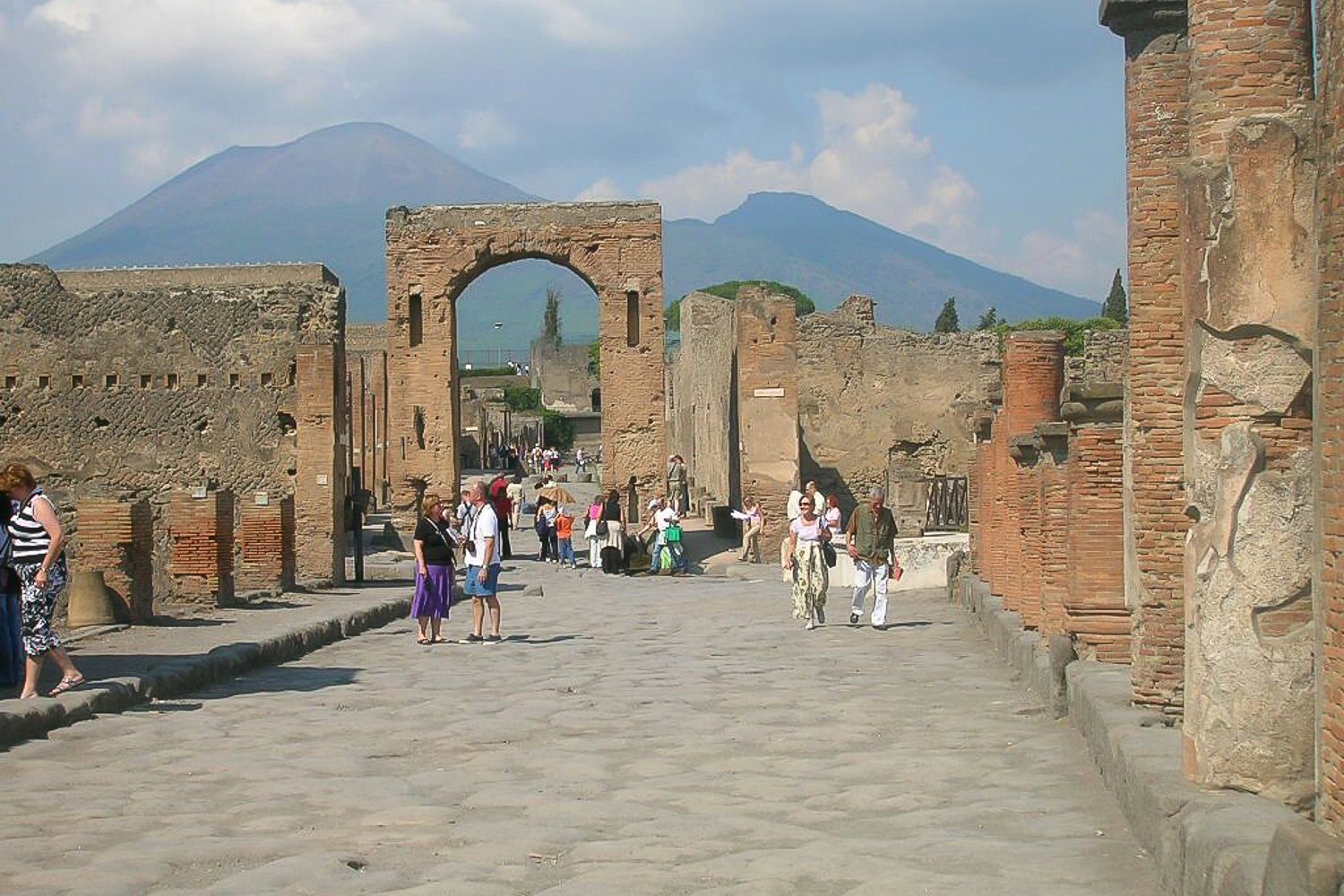
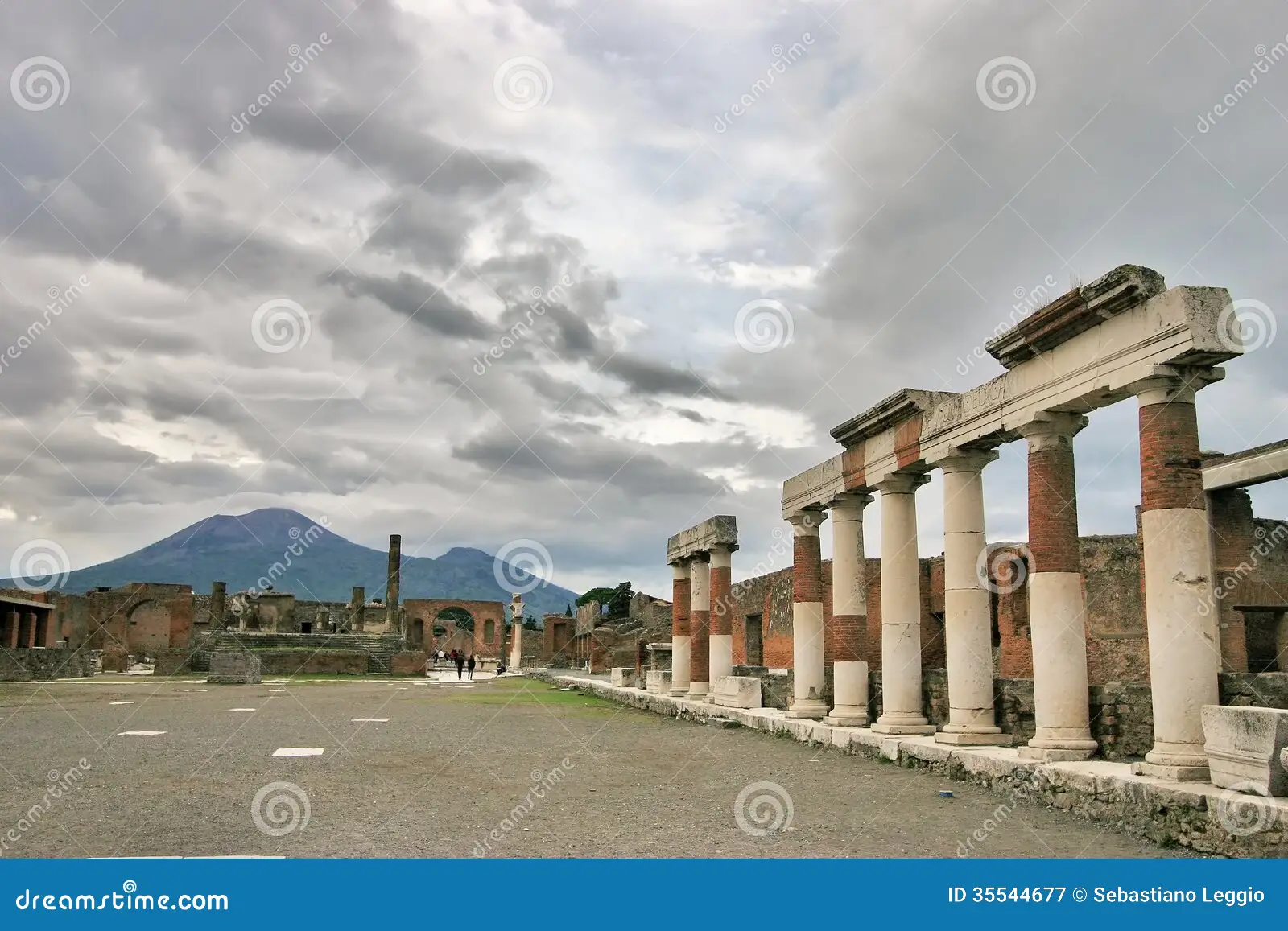
The civic, religious, and commercial center of ancient Pompeii, framed by the Temple of Jupiter and surrounded by colonnaded porticoes. Excavations here in the 18th century first revealed the scale of the buried city to modern archaeologists.
One of the largest private residences in Pompeii, covering nearly 3,000 square meters and named for its bronze Dancing Faun statue. Its famous Alexander Mosaic, depicting a battle between Alexander the Great and Darius III, used roughly 1.5 million tiny tesserae.
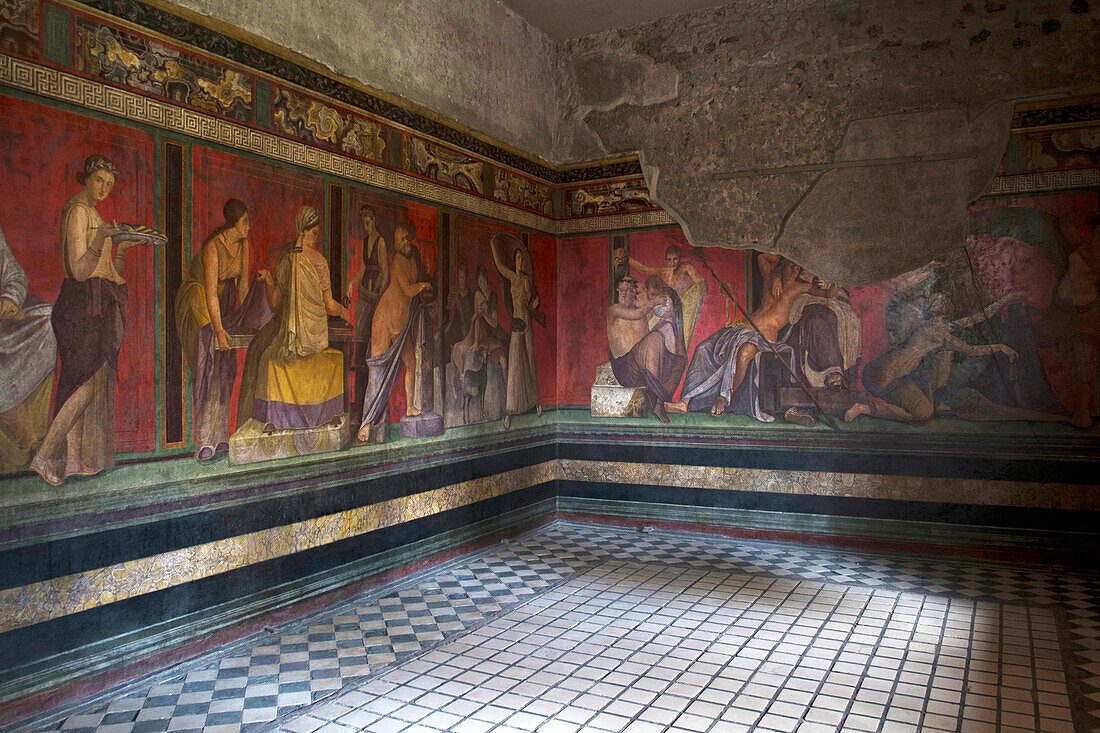
A suburban villa just outside the city walls, famous for a nearly complete cycle of frescoes believed to depict a Dionysian initiation rite. The paintings survived largely intact under volcanic ash for nearly 1,900 years.
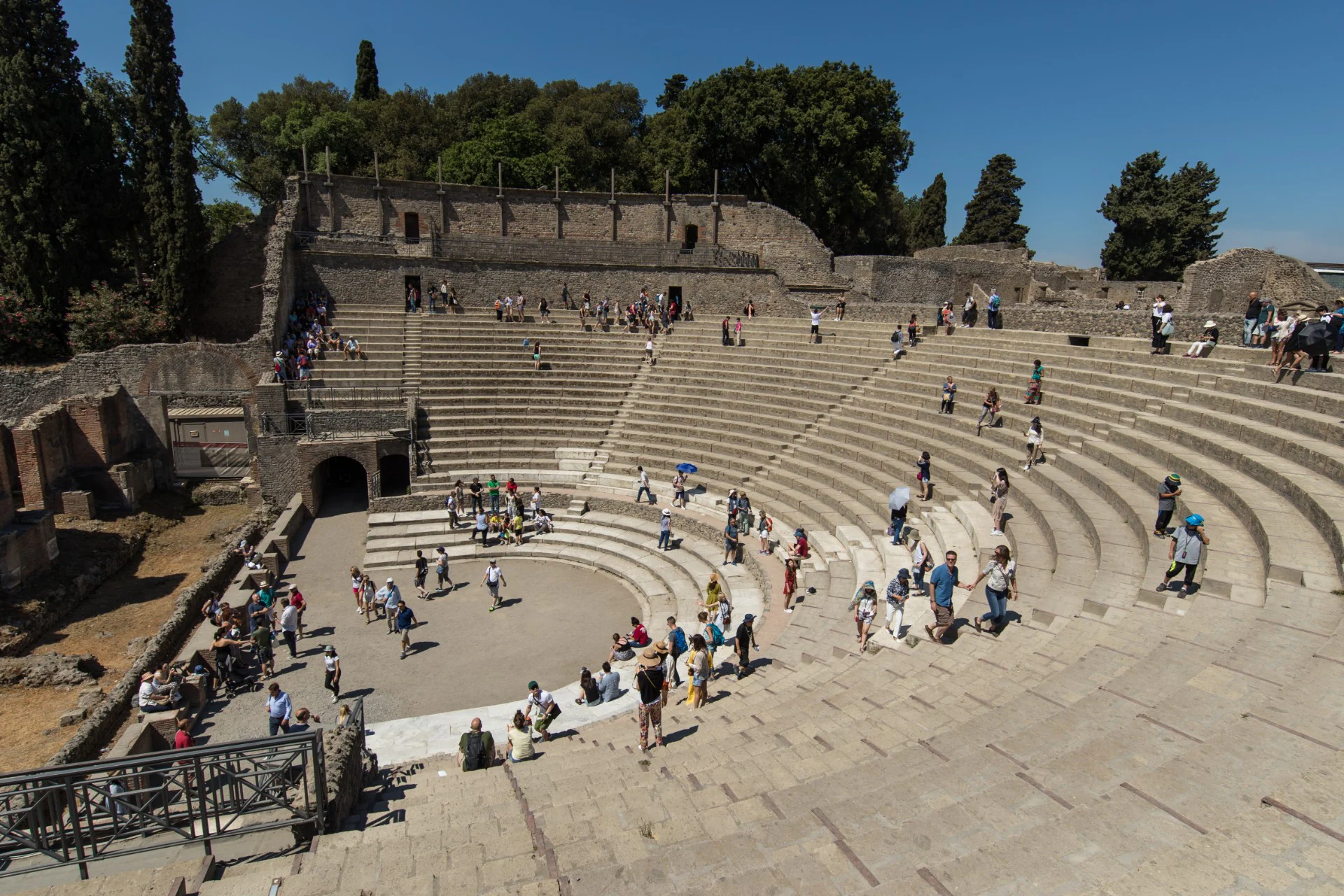
Built around 70 BC, it is among the oldest surviving Roman amphitheatres and could hold roughly 20,000 spectators. A riot between Pompeian and Nucerian fans here in 59 AD led Emperor Nero to ban games at the venue for a decade.
Home to plaster casts of victims caught fleeing the 79 AD eruption, made using a technique pioneered by archaeologist Giuseppe Fiorelli in the 1860s. Thirteen casts were recovered from this single vineyard area.
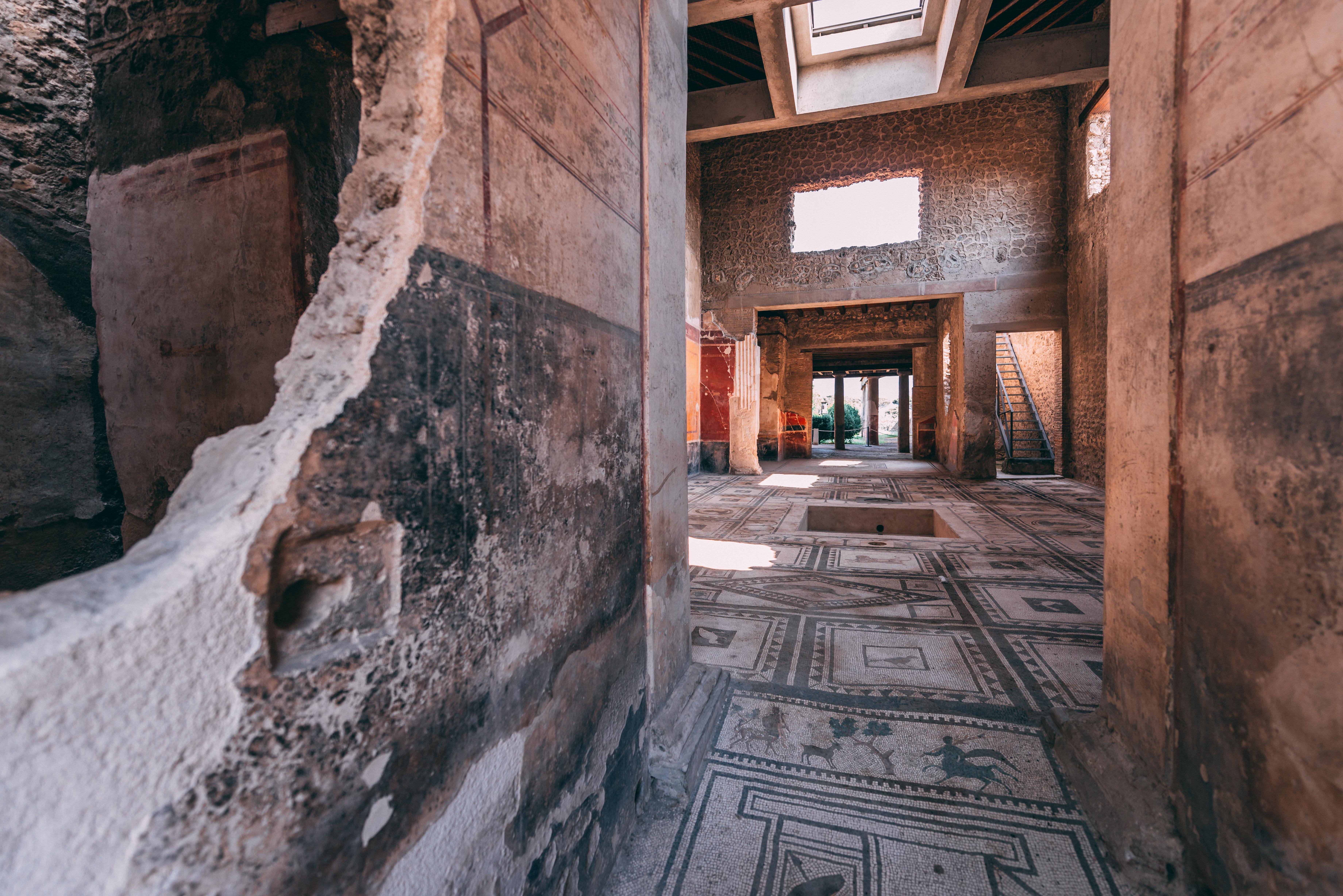
A richly decorated merchant's residence reopened to the public after a major restoration, notable for vivid mythological frescoes in near-original color. Its atrium fountain and painted walls rank among the best-preserved domestic decoration in the city.
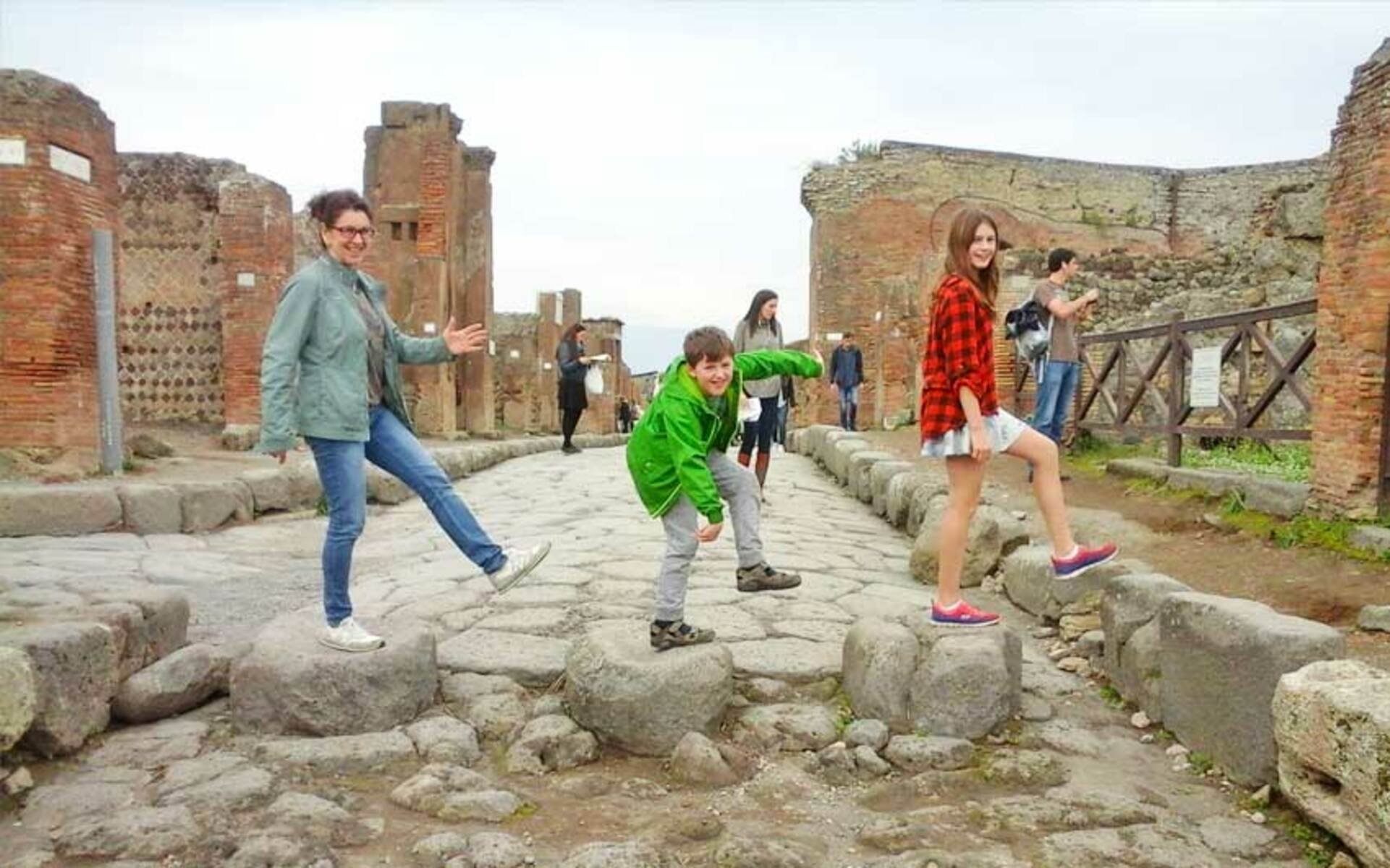
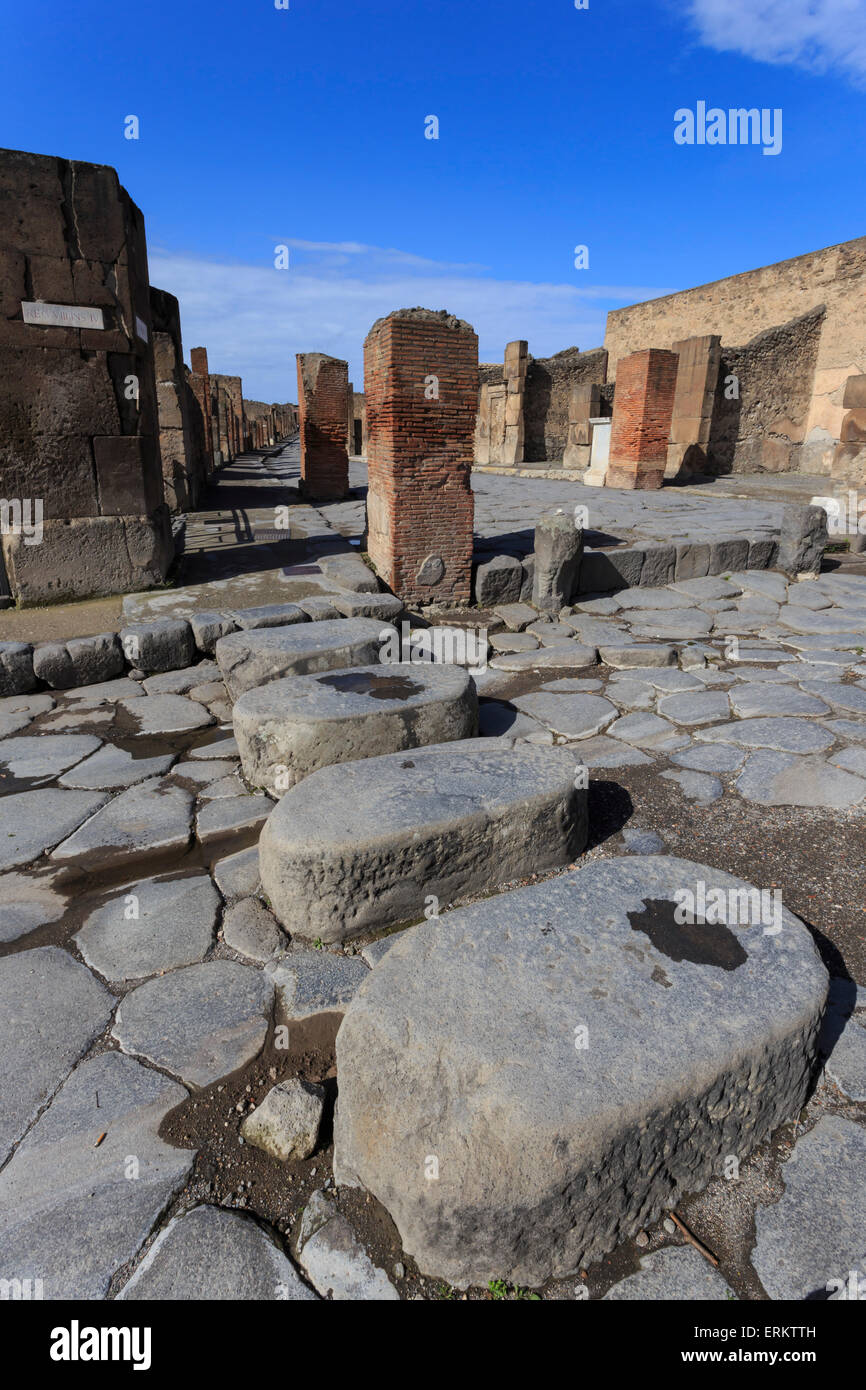
You arrive at Via Villa dei Misteri 2 and pass through the entrance into the old harbour gate, the Porta Marina, where the road tilts upward under your feet. Within minutes you reach the Forum, and Vesuvius stands at the far end exactly as it did for the people who died looking at it. You walk east along the Via dell'Abbondanza, tracing the basalt ruts and stepping across the raised stones that let ancient pedestrians clear the gutters. Your guide stops you at a thermopolium, points to the sunken jars in the counter, and explains how the city ate. You duck into the House of the Faun, cross its mosaic threshold, and stand where a bronze dancer once caught the light. By late morning you climb toward the amphitheatre, the oldest surviving stone arena of its kind, and your footsteps echo where twenty thousand once roared. You pause at a glass case holding a plaster cast, and the pompeii private tour goes quiet around you. In the Villa of the Mysteries you circle the frescoed room slowly, following the red-walled procession figure by figure. You leave through the same gate you entered, dust on your shoes, the ruins receding behind you into their long, deliberate silence.
All the details about your upcoming adventure in one place
A pompeii private tour pairs you with a licensed archaeological guide who leads you through the Forum, the Villa of the Mysteries, and the plaster casts left by the eruption of Vesuvius in 79 AD. Small-group pompeii private tour tours move at your own pace, with skip-the-line entry into the excavation site and time to see frescoes, thermal baths, and stone-paved streets up close.
In 79 AD, the eruption of Vesuvius buried Pompeii under roughly six metres of ash and pumice within a single day, sealing an entire Roman town in mid-breath. The volcanic layer that killed the city also became its preserver, holding bakeries, brothels, election slogans, and dinner tables in a stillness that lasted more than sixteen centuries. A pompeii private tour today walks streets that were never meant to be seen again. Rediscovered systematically from 1748, the site remains among the largest continuous excavations on earth, sprawling across some 44 hectares near the modern town of Pompei in the province of Naples. What survives is not a ruin in the ordinary sense but an urban fabric: rutted basalt roads worn by cart wheels, stepping stones set above the gutters, and stone counters at the thermopolia where hot food was once sold to passers-by. The Forum still opens toward Vesuvius, framed by the columns that once bounded the civic heart of the city. The architecture rewards close attention. Frescoes in the Villa of the Mysteries carry pigment still saturated with red and ochre, their megalographic figures ranked around the walls in a sequence scholars have argued over for a century. Bathhouses retain their vaulted caldaria and the ducts that carried heat beneath raised floors. Plaster casts, formed by pouring into the voids left by decomposed bodies, record the postures of the dead with an intimacy that unsettles every generation of visitors. The House of the Faun, the Lupanar, the amphitheatre of 70 BC — each names a different register of ordinary Roman life, from luxury to labour. Inscribed on the UNESCO World Heritage list in 1997 alongside neighbouring Herculaneum and the Torre Annunziata villas, the archaeological park matters not because it is beautiful in ruin but because it is complete. Few places allow the past to be entered rather than merely observed. A guided pompei tour privato threads the significance together, linking a graffito on a wall to the political life it recorded, or a carbonised loaf to the oven that held it. Many pompeii private tour tours are structured around this connective work, and skip-the-line pompeii access reduces the friction of a vast site to something a visitor can actually absorb. The city speaks in fragments; a good guide supplies the grammar. That is what draws travellers along the Bay of Naples to stand, unhurried, inside a Roman afternoon.
The volcanic layer that killed the city also became its preserver, holding an entire Roman town in mid-breath.
Wear closed-toe walking shoes since a pompeii private tour covers uneven volcanic-stone roads and thresholds worn smooth by centuries of foot traffic. Light, breathable clothing and a hat are recommended in summer; shoulders should be covered when entering smaller shrine interiors out of respect. There is minimal shade across the 170-acre site, so sun protection matters more than formality.
Bags larger than 30x30x15 cm must be left at the free cloakroom near the main entrances before starting a pompeii private tour, and all visitors pass through a security check at the gates. Backpacks are permitted inside if within size limits, but large suitcases and rolling luggage are not allowed on site. Staff may inspect bags at Porta Marina, Piazza Anfiteatro, and Piazza Esedra entrances.
Personal photography and video without flash or tripods is permitted throughout the excavations, including inside most houses and the amphitheatre, for anyone on a pompeii private tour. Tripods, selfie sticks, and drones require prior written authorization from the Archaeological Park office. Flash photography is prohibited in rooms with fragile frescoes to prevent pigment damage.
Children under 18 (EU citizens) or under 18 with valid ID enter free, and strollers are permitted only on the accessible route sections. Shaded rest areas and water fountains near the Forum help families pace a pompeii private tour with younger visitors.
A designated accessible route links Piazza Anfiteatro, the Forum, and several restored domus using ramps and firmer paving, though many original basalt streets remain uneven for wheelchairs. Free wheelchairs can be reserved in advance at the ticket office for a pompeii private tour, and accessible restrooms are located near the main entrances. Not every building is reachable due to raised stone thresholds and steps original to the ancient city.
Sealed water bottles and small snacks may be carried, but eating is only allowed at the designated picnic and refreshment areas near Piazza Esedra and the Forum, not inside roofed houses or near frescoed walls. Refillable bottles can be topped up at public fountains scattered across the site, which is especially useful given the limited shade during a pompeii private tour in summer.
Quietest midweek day
Busiest day, tour bus groups
Locals' free-entry Sundays possible
Hours
Open daily 09:00–19:00
Address
Via Villa dei Misteri 2, 80045 Pompei, Naples, Italy
Access
Uneven ancient roads, partial wheelchair routes
Climate
Little shade, strong summer sun on stone streets
Storage
Free/paid lockers near Porta Marina and Piazza Anfiteatro
Layout
170-acre site, multiple gates, allow a full day
Public transport · About 35 minutes · Around 3.40 EUR one-way
Take the Circumvesuviana train from Napoli Garibaldi station to Pompei Scavi-Villa dei Misteri, which sits a short walk from the Porta Marina entrance. Trains run roughly every 30 minutes throughout the day.
Car · About 30-40 minutes from Naples · Parking typically 5-10 EUR for a few hours
Drive via the A3 Napoli-Salerno motorway, exiting at Pompei, with paid parking lots available near Piazza Anfiteatro and Porta Marina.
Taxi · About 35-45 minutes depending on traffic · Roughly 60-90 EUR one-way
A taxi from central Naples or Naples Airport runs directly to the site entrance, useful for groups or those with heavy luggage.
Bike · About 1.5-2 hours · Free aside from bike rental
Cyclists can follow the coastal SS18 route from Naples toward Pompei, though traffic on this road is heavy and not beginner-friendly.
Most pompeii private tour bookings can be cancelled free of charge up to 24 hours before the scheduled start time for a full refund. The 18 EUR Pompeii Express standard adult ticket portion is generally non-refundable once issued for a specific date and time slot.
Recommended time
2-3 hours
A pompeii private tour typically runs 2 to 3 hours, enough for the Forum, House of the Faun, an amphitheatre, and Villa of the Mysteries frescoes with an archaeologist guide setting the pace. Add an extra hour or two if you want to wander independently afterward, since the full 66-hectare park rewards half a day for anyone going beyond the highlights. With 09:00–19:00 hours, arriving at opening keeps queues at the Porta Marina turnstiles short; by late morning, coach groups stack up and entry can slow considerably.
Crowd levels through the day
Weather · crowds · average price — dots go green to amber to red as each metric rises.
March to May brings mild temperatures around 15-22°C and moderate crowds before peak summer arrivals. Wildflowers grow among the ruins, adding contrast to the excavated streets.
June through August sees temperatures often exceeding 30°C with minimal shade across the open site. Crowds peak with cruise-ship and coach groups, especially midday.
September and October offer cooling temperatures near 20-25°C and thinner crowds after the summer peak. Late-day light works well for viewing the plaster cast figures.
November through February is the quietest season with temperatures around 8-14°C, though occasional rain can close muddy or unstable excavated areas.
During high season, entry is capped and divided into morning and afternoon bands, so reserving online avoids being turned away at the gate.
This entrance sits closest to the Forum and offers the clearest initial layout of the ancient street grid.
Some cloakroom and small facility fees at the site are easier to pay with coins or small notes.
Individual houses or insulae occasionally close for conservation work, so confirm specific buildings are open before planning a route.
A standard Pompeii Express ticket may include reduced or combined access to nearby sites within the Campania region archaeological network.
Even in cooler months, the open stone streets offer little natural shade during a pompeii private tour.
Via Villa dei Misteri 2, 80045 Pompei, Naples, Italy
Main entrance closest to Pompei Scavi train station
Get directionsPiazza Anfiteatro, 80045 Pompei NA, Italy
Secondary gate near the amphitheatre, often less crowded
Get directionsPiazza Esedra, 80045 Pompei NA, Italy
Entrance near ticket office and visitor services
Get directionsOn 24 August 79 AD, Vesuvius erupted. Pliny the Younger watched the column rise from Misenum and later described it to the historian Tacitus. Ash and pumice fell for hours. Then pyroclastic surges swept the streets. Pompeii vanished beneath roughly six metres of volcanic debris. The town lay sealed for over sixteen centuries, its bakeries, frescoes, and forum preserved in the very moment of catastrophe. A good pompeii private tour begins with this stillness, the guide reconstructing the final day from the plaster casts of bodies caught mid-flight. Rediscovery came slowly. In 1748, engineers under the Bourbon king Charles III began digging on behalf of the crown, tunnelling for treasure rather than knowledge. Systematic method arrived only in 1863, when Giuseppe Fiorelli took charge. Fiorelli imposed a grid of regions and insulae, recorded findings in a journal, and devised the technique of pouring plaster into the voids left by decomposed victims. His work turned looting into archaeology. Fiorelli's casts remain the emotional centre of most Pompeii ruins tour itineraries, and a private guide will name each region as you cross it. Excavation never truly finished. Decades of exposure, poor drainage, and the 1943 Allied bombing damaged the fragile site. In 2010 the Schola Armaturarum collapsed, prompting international alarm. The response was the Great Pompeii Project, launched in 2012 with 105 million euros of European funding. Since 2018, director Gabriel Zuchtriegel and his predecessor Massimo Osanna have overseen fresh digs in Regio V, uncovering a thermopolium counter, the House of the Chaste Lovers, and vivid painted walls. A well-timed pompeii private tour tour lets you stand at these active frontiers. Any operator selling pompeii private tour tickets should route you through both the classic forum and the newest trenches. When buying pompeii private tour tickets, ask whether the itinerary reaches Regio V, since that is where the story is still being written. Reputable pompeii private tour tours pair the ancient calamity with the modern rescue, and the Pompeii archaeological park among Naples landmarks rewards the visitor who understands both.
Vesuvius erupts and buries Pompeii under metres of ash and pumice.
Bourbon king Charles III begins the first organised excavations at the site.
Giuseppe Fiorelli introduces the grid system and the plaster-cast technique.
Allied bombing raids damage several excavated structures during the war.
The Schola Armaturarum collapses, triggering international preservation concern.
The 105-million-euro Great Pompeii Project is launched with EU funding.
Regio V digs reveal a thermopolium and the House of the Chaste Lovers.
Stand at the north end of the Forum to line up the broken columns with Mount Vesuvius framed directly behind the Temple of Jupiter. This is the most photographed view in the park, and a guide booking a pompeii private tour can time the group's arrival before the plaza fills with day-trippers. Wide-angle lenses capture the full colonnade sweep.
A quiet, plant-lined path holds rows of plaster casts of victims caught in their final moments, shot low and close for an intimate, somber frame. Access sits at the southeastern edge of the site near the Nocera Gate, off the main crowd flow.
The entrance hall preserves the famed Alexander Mosaic replica and geometric floor patterns, best shot straight down from standing height through the roped-off doorway. Natural light through the open atrium roof works well without flash.
Climb the earthen banks on the western side for an elevated shot down into the oval arena, one of the oldest surviving Roman amphitheatres. The empty grass bowl photographs well against the surrounding stone tiers.
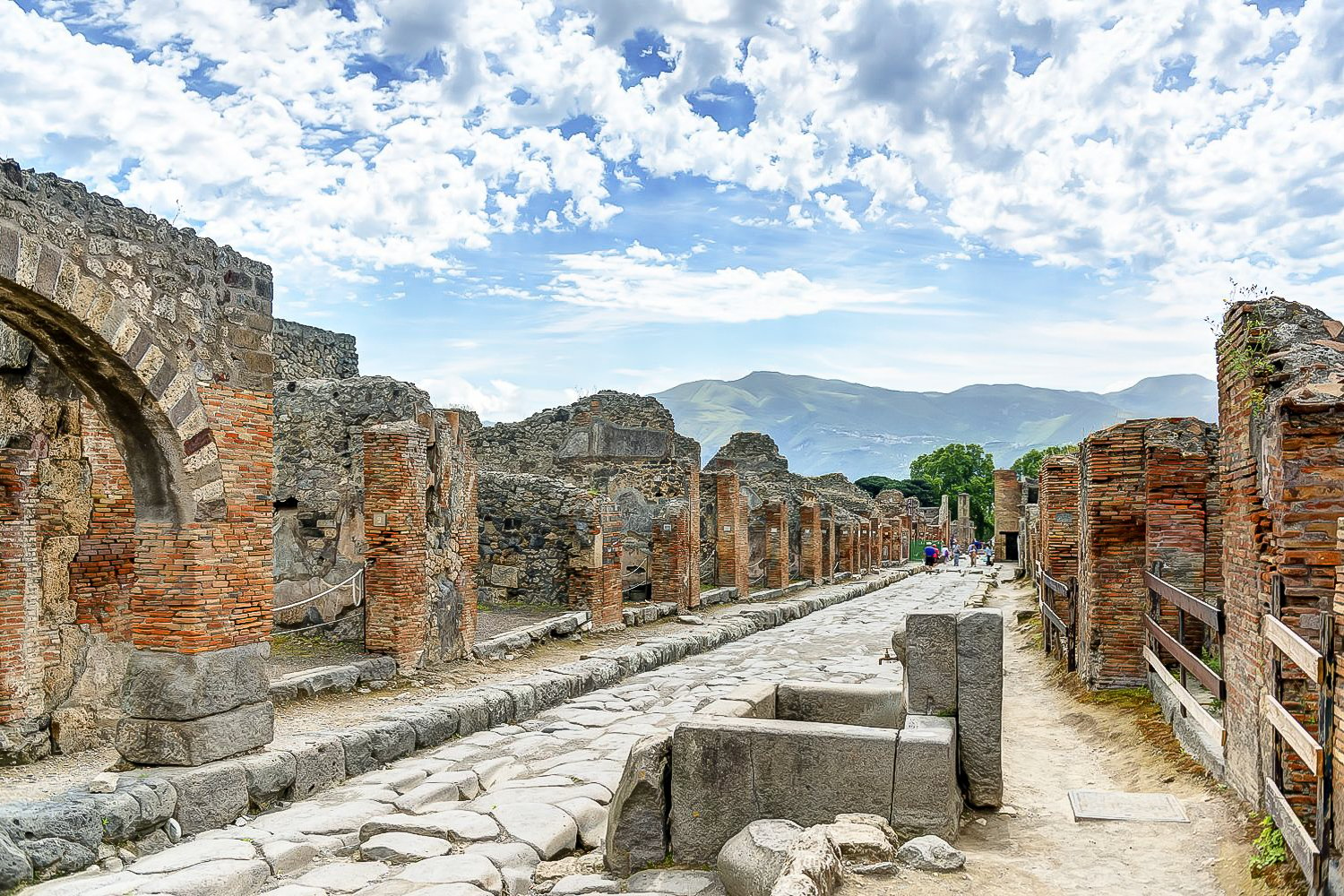
This long paved street of shopfronts and fountains offers a classic low-angle perspective shot down the wheel-rutted stones toward distant ruins. Include a figure walking ahead for scale and depth.
Rows of tall brick-and-stucco columns inside the roofless Basilica create strong vertical lines and shadow patterns, especially when shot from ground level looking up. It sits just off the Forum's southwest corner.
A pompeii private tour with children works best when the guide treats the ruins as a story, not a lecture, pausing at the amphitheatre and the plaster body casts where kids naturally stop and stare. Uneven stone streets mean the visit is more of a walking adventure than a museum stroll, so realistic pacing matters more than covering every corner.
Pompeii's original stone-paved streets have deep wheel ruts and frequent steps, so strollers get stuck constantly outside the limited Pompeii for All route; a private guide can plan around this and most families do better with a baby carrier.
Children around 7 and up tend to engage best, especially once a skilled guide leads a pompeii private tour tour built around stories of eruption, daily Roman life, and the plaster casts rather than dates and architecture terms.
Three staffed baby-changing points sit along Via dell'Abbondanza, Via di Nola, and the Via Stabiana corner, and keys must be collected at the entrance; a private guide can route the walk past one at the right moment.
A good guide breaks the visit into 20-30 minute chunks between the Amphitheatre, the Thermopolium counter, and the casts, building in shade breaks since the site has almost no natural cover across its stone terrain.
Most of the ancient city tour is outdoors with few covered areas, so a private guide will shorten the walking route and prioritize covered highlights like the Forum granary and House of the Faun during wet weather.
Snacks and water are worth carrying, since a pompeii private tour tickets purchase doesn't include food stops, and the nearest cafes sit outside the gates rather than mid-route.
The site's dining options bracket a pompeii private tour rather than sitting mid-route, so most visitors plan lunch around the Forum or right before entering at Porta Marina.
Behind the Temple of Jupiter, this is the main on-site stop for pizza, sandwiches, charcuterie, and gelato. It fills up fast between noon and 2pm since it's the only real sit-down break inside the excavations, so a pompeii private tours itinerary that times lunch before 11:30 or after 2pm avoids the queue.
Facing the Porta Marina entrance, this longtime kiosk-turned-restaurant serves panini, pasta, salads, and local wine in a shaded lemon garden. It suits a pre-tour breakfast or a post-tour lunch once you exit, and works well for anyone starting a skip-the-line pompeii tour early and wanting a proper sit-down meal before or after the crowds arrive.
Real experiences from real travelers
Booking a pompeii private tour was the right call because the site is enormous and easy to wander aimlessly. Our guide Antonio traced the eruption hour by hour and pointed out plaster casts I would have walked straight past. We started at 9am before the heat built up.
We are slow walkers and having a private guide meant no rushing to keep up with a big group. The cart-rut grooves in the stone streets surprised me most, still there after two thousand years. Bring a hat, there is almost no shade by midday.
The pompeii ruins tour covered the Forum, the brothel frescoes and the bakery mills in about three hours. My only note is the afternoon June heat was punishing, so ask for a morning slot. Guide knowledge was excellent throughout.
Our pompeii private tour tour included the Villa dei Misteri which sits a short walk beyond the main gate, and the red frescoes were far brighter in person than any photo. The guide explained the ritual scenes room by room. Comfortable shoes are essential on the uneven basalt.
Standing in the Forum with Vesuvius framed between the columns gave me chills once the guide explained how close it still is. Having a small pompeii tour meant we could ask endless questions. We went late afternoon and the light on the stone was lovely.
The skip-the-line Pompeii entry was the difference between a good morning and an hour in a queue. Our guide met us at the Porta Marina gate and had tickets sorted in minutes. The excavated houses with intact mosaics were the standout for me.
La visita guidata a Pompei privata è stata molto curata e il nostro archeologo conosceva ogni dettaglio. Only downside was the site map they gave us was hard to follow on our own afterwards. Still, three hours flew by among the ancient Pompeii landmarks.
Walking past the body casts in the granary stopped our whole group in silence. Our guide paced the pompeii private tour so we saw the amphitheatre without feeling herded. Go early, the stone reflects heat by noon.
We compared notes with friends who did a big bus group and our private guide covered twice as much. The pompeii private tour tickets included the House of the Faun where the mosaic floors are astonishing. Water fountains are scattered around so refill often.
Our small-group Pompeii landmarks walk lasted nearly four hours and never dragged. The guide brought old photographs to show how each street looked mid-excavation. Wear sturdy shoes because the ancient paving is deeply uneven.
Everything you need to know for your journey
The archaeological park is open daily from 09:00 to 19:00. Confirm the exact last-entry cutoff when booking, since it can be earlier than closing time.
The Pompeii Express standard adult ticket costs 18 EUR per person; a pompeii private tour with a guide typically adds a separate guiding fee on top of this entrance cost.
A partial accessible route connects the Forum, Piazza Anfiteatro, and several restored domus, though many original stone streets remain uneven. Free wheelchairs can be reserved in advance at the ticket office.
Large suitcases, tripods without a permit, drones without authorization, glass bottles, and flames or lighters are among the items not allowed inside. Bags over 30x30x15 cm must be left at the free cloakroom near the main gates.
Personal photography without flash or tripods is permitted throughout most of the site during a pompeii private tour, including inside many houses. Flash is restricted near fragile frescoes to prevent pigment damage.
Arriving between 09:00 and 11:00 gives the coolest temperatures and smallest crowds before tour buses arrive; spring and autumn months also see thinner crowds than midsummer.
Closed-toe walking shoes are strongly recommended due to the uneven ancient roads, and shoulders should be covered when entering smaller shrine interiors.
Sealed water and small snacks are allowed, but eating is limited to designated picnic areas near Piazza Esedra and the Forum rather than inside roofed structures.
The Circumvesuviana train runs from Napoli Garibaldi station directly to Pompei Scavi-Villa dei Misteri, about a 35-minute ride, with the entrance a short walk from the platform.
Yes, families regularly join a pompeii private tour, and EU minors under 18 typically enter free with valid ID; shaded rest areas and fountains help with pacing.
Most bookings allow free cancellation up to 24 hours before the scheduled time for a full refund, though the 18 EUR entrance ticket portion is generally non-refundable once dated.
Herculaneum, the Antiquarium museum, and the Sanctuary of the Virgin of the Rosary in modern Pompei town all pair well with a visit to the ruins.
A compact on-site museum displaying artifacts, frescoes, and everyday objects recovered from the excavations. It reopened after renovation and helps contextualize finds seen throughout the ruins.
A large basilica in modern Pompei town known for its venerated Madonna painting and bell tower with panoramic views. It draws religious pilgrims separate from the archaeological crowds.
Historic volcanology observation point offering views toward the volcano that destroyed Pompeii in 79 AD.
The central square of modern Pompei town, flanked by the sanctuary and cafes, distinct from the ancient ruins.
A nearby coastal town with a working port and views of the Gulf of Naples.
Family-run hotel within walking distance of the archaeological park entrance.
Cluster of budget guesthouses and B&Bs around Piazza Bartolo Longo.
High-end coastal resorts in Sorrento and Positano for those combining ruins with coastline stays.
Wide range of boutique and budget hotels near Napoli Garibaldi station for train access.
Join thousands of happy travelers who have discovered this incredible experience
Book Your Experience Now